
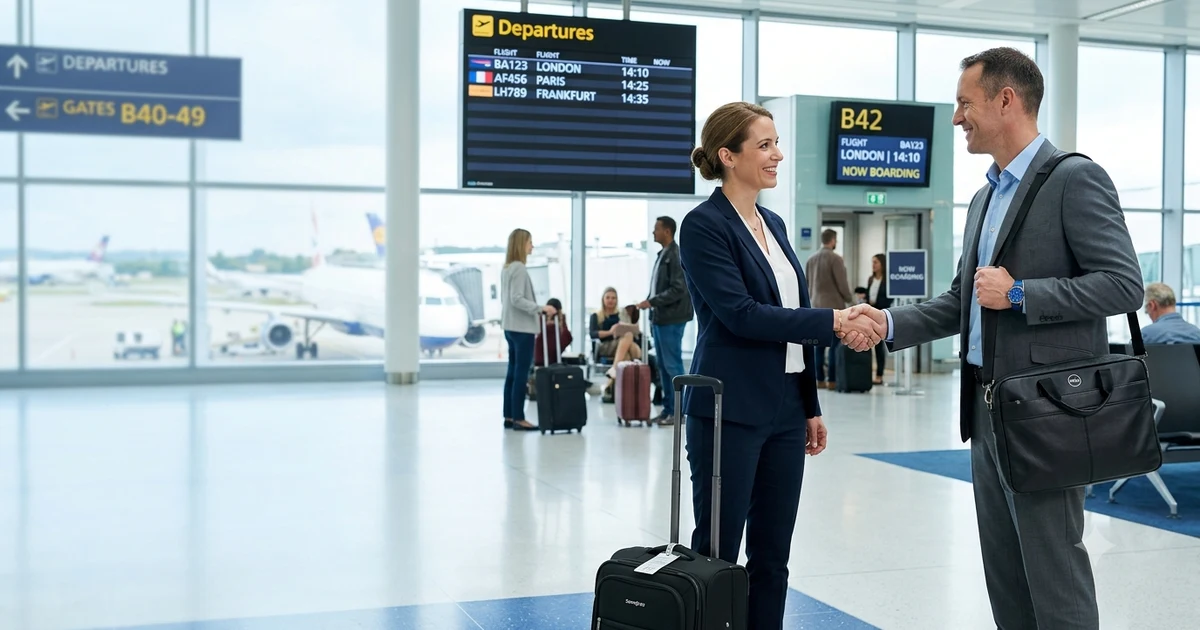
Wishing someone a safe journey is a thoughtful gesture, but the phrase safe travels can sometimes feel too casual for business emails or workplace messages. If you want a more polished or professional alternative, there are plenty of options that sound warm, respectful, and appropriate for different situations.
This guide shares professional ways to wish someone well before a trip, explains when to use each phrase, and provides practical examples you can adapt for work, client communication, and formal messages.
Quick Answer
There are many professional alternatives to safe travels, including Have a safe trip, Wishing you a smooth journey, Travel safely, I hope your trip goes well, and Best wishes for your journey. The best choice depends on your relationship with the recipient and whether your message is formal, friendly, or somewhere in between.
TL;DR
- Meaning: A professional way to wish someone a safe and pleasant journey.
- Tone: Polite, thoughtful, and respectful.
- Common use: Business emails, workplace chats, client messages, and farewell notes.
- Where it appears: Emails, LinkedIn messages, Microsoft Teams, Slack, and greeting cards.
- Formality: Most alternatives are suitable for professional communication.
What Other Ways to Say Safe Travels Professionally Means
People often search for alternatives because they want to sound more polished than simply saying safe travels.
A professional travel wish should:
- Show genuine goodwill.
- Match the formality of the situation.
- Feel natural instead of overly formal.
- Fit business relationships, clients, colleagues, or managers.
The goal is not to sound fancy. It’s to choose wording that feels appropriate for the person and the situation.
Basic Explanation
Safe travels is already a polite expression. It simply means you hope someone reaches their destination safely and has a pleasant trip.
In professional settings, however, you may want wording that better fits the context. For example:
| Situation | Better Alternative |
|---|---|
| Business email | Wishing you a safe and successful trip |
| Client communication | I hope your travels go smoothly |
| Manager traveling | Have a productive and safe journey |
| Colleague attending a conference | Best wishes for a successful trip |
| International travel | Wishing you a smooth and safe journey |
These alternatives keep the same caring message while sounding more suitable for workplace communication.
Professional Alternatives to Safe Travels
Here are some of the best options you can use.
| Alternative | Tone | Best For |
|---|---|---|
| Have a safe trip | Friendly professional | Colleagues |
| Wishing you a safe journey | Formal | Clients and managers |
| Travel safely | Simple | Emails and chats |
| I hope your trip goes well | Warm | Coworkers |
| Best wishes for your journey | Formal | Business correspondence |
| Wishing you smooth travels | Professional | International travel |
| Have a successful trip | Business-focused | Conferences and meetings |
| I hope everything goes smoothly | Friendly | General workplace communication |
| Enjoy your trip and travel safely | Warm | Team members |
| Wishing you a pleasant journey | Formal | Professional emails |
| Have a wonderful and safe journey | Warm professional | Farewell messages |
| Best of luck with your travels | Friendly | Colleagues |
| Safe journey ahead | Concise | Cards and short messages |
| Have a comfortable trip | Friendly | Long-distance travel |
| Wishing you safe and pleasant travels | Formal | Clients and executives |
How People Use These Phrases in Professional Messages
Professional travel wishes appear in many types of workplace communication.
A travel wish often appears near the closing of an email.
Example:
I hope your meetings go well next week. Wishing you a smooth and safe journey.
Microsoft Teams or Slack
Shorter messages work well in workplace chat.
Example:
Good luck with the conference. Travel safely and see you next week.
LinkedIn Messages
When someone announces a business trip or speaking event, a professional travel wish adds a thoughtful touch.
Example:
Best wishes for your upcoming trip. I hope everything goes smoothly.
Client Communication
A polite closing helps maintain a professional relationship.
Example:
Thank you again for your time today. Wishing you a pleasant and successful trip.
Farewell Messages
If a coworker is traveling for training, meetings, or relocation, adding a travel wish makes your message feel more personal.
Example:
We appreciate your hard work. Have a safe trip, and we look forward to hearing about your experience when you return.
Tone and Emotional Meaning
Although every alternative shares the same basic intention, each carries a slightly different tone.
| Phrase | Tone |
|---|---|
| Have a safe trip | Friendly and natural |
| Wishing you a safe journey | Respectful and formal |
| Travel safely | Short and direct |
| I hope your trip goes well | Warm and conversational |
| Best wishes for your journey | Formal and thoughtful |
| Wishing you smooth travels | Professional and supportive |
| Have a successful trip | Business-oriented |
| Enjoy your trip | Friendly and positive |
Choosing the right tone depends on your relationship with the recipient. A close coworker may appreciate a casual message, while a client or senior executive may expect something a bit more formal.
Common Situations Where These Phrases Appear
Professional alternatives to safe travels work well in many everyday situations.
- A colleague is flying to a conference.
- A manager is visiting another office.
- A client is returning home after a meeting.
- A team member is traveling for training.
- Someone is leaving for an international business trip.
- A coworker is relocating to another office.
- You are ending a business email before someone’s vacation.
- A business partner is attending an industry event.
- A consultant is traveling to meet a client.
- An employee is leaving for an important project meeting.
Using the right phrase in these moments shows professionalism while also expressing genuine consideration for the other person’s journey.
Examples in Real Conversations
Here are realistic examples that fit common workplace situations.
Situation: A coworker is attending a conference
Example
Good luck with your presentation next week. Wishing you a safe and successful trip.
Meaning
You are wishing them both a safe journey and success at the event.
Situation: Your manager is traveling to another office
Example
I hope everything goes smoothly during your visit. Have a safe trip.
Meaning
The message sounds respectful without feeling overly formal.
Situation: A client is flying home
Example
Thank you for meeting with us today. Wishing you a pleasant journey home.
Meaning
A polite closing that leaves a positive impression.
Situation: A teammate is leaving for training
Example
Safe travels. We look forward to hearing what you learned when you’re back.
Meaning
The message combines encouragement with a warm farewell.
Situation: A business partner is traveling overseas
Example
Best wishes for a smooth journey. We look forward to speaking after your trip.
Meaning
Professional, supportive, and appropriate for international business relationships.
Situation: A colleague is going on vacation
Example
Enjoy your vacation, travel safely, and have a wonderful time.
Meaning
A friendly message that still feels suitable for the workplace.
Situation: Ending a professional email
Example
Thank you again for your time. I hope your trip goes well, and I look forward to reconnecting next week.
Meaning
A courteous email closing that feels genuine and polished.
Similar Terms and How They Compare
Many travel wishes share a similar meaning, but they are not always interchangeable.
| Phrase | Best Use | Difference |
|---|---|---|
| Safe travels | General use | Friendly and widely accepted |
| Have a safe trip | Everyday communication | Slightly more conversational |
| Travel safely | Short messages | Direct and concise |
| Wishing you a safe journey | Formal emails | More polished and respectful |
| Enjoy your trip | Vacation or leisure travel | Focuses on enjoyment rather than safety |
| Bon voyage | Social settings | More traditional and less common in business |
| Best wishes for your journey | Formal correspondence | Suitable for professional relationships |
| Wishing you smooth travels | Business travel | Emphasizes a hassle-free trip |
Each phrase has the same overall purpose, but choosing one that matches the situation helps your message sound more natural.
When You Should Use These Alternatives
Professional travel wishes work well whenever someone is leaving for a trip and you want to end your message on a thoughtful note.
Good opportunities include:
- Business trips
- Client visits
- Conferences and trade shows
- Training programs
- Company meetings
- International assignments
- Work-related relocations
- Professional networking events
- Vacation messages to coworkers
- Farewell cards from the team
Adding a brief travel wish often makes an email feel warmer without becoming overly personal.
When You Should Avoid Them
Although these expressions are versatile, there are situations where another closing works better.
Avoid using travel wishes when:
- The person is not actually traveling.
- The conversation is about a difficult event where a travel wish may seem out of place.
- You need an urgent or action-focused email.
- The message is extremely formal and unrelated to travel.
- The recipient has already completed their trip.
In these cases, a standard closing such as Best regards or Thank you may be more appropriate.
Is It Formal or Informal?
Most alternatives fall somewhere between friendly and professional.
| Phrase | Formality |
|---|---|
| Have a safe trip | Semi-formal |
| Safe travels | Semi-formal |
| Travel safely | Neutral |
| Wishing you a safe journey | Formal |
| Best wishes for your journey | Formal |
| I hope your trip goes well | Friendly professional |
| Enjoy your trip | Casual to semi-formal |
For business emails, phrases such as Wishing you a safe journey or Best wishes for your trip usually fit well.
For coworkers you know well, Have a safe trip or Travel safely often sounds more natural.
Common Misunderstandings
Even simple travel wishes can be misunderstood if they do not match the situation.
Some people assume:
- Safe travels only applies to air travel. In reality, it works for any type of journey.
- Formal alternatives sound cold. A sincere message can still feel warm.
- Longer messages are always better. Often, one thoughtful sentence is enough.
- Every client expects very formal wording. Many modern workplaces prefer clear, natural language over overly formal expressions.
The key is matching your wording to the relationship and context.
How These Phrases Are Used in the USA and Other English-Speaking Countries
These expressions are widely understood across the United States, Canada, the United Kingdom, Australia, and New Zealand.
There are a few regional preferences:
- United States: Have a safe trip and Safe travels are both common in professional and personal conversations.
- Canada: Wishing you a safe journey and Have a safe trip are both widely used.
- United Kingdom: Have a safe journey is slightly more common than Safe travels in formal settings.
- Australia and New Zealand: Travel safely and Have a safe trip sound natural in both workplace and everyday conversations.
Regardless of location, people generally appreciate travel wishes that are sincere, brief, and appropriate for the relationship.
Quick Reference Table
| Context | What It Means | Tone | Best Use | Avoid If |
|---|---|---|---|---|
| Business email | Wishing someone well before travel | Professional | Clients, managers, coworkers | The person is not traveling |
| Team chat | Friendly farewell | Casual professional | Internal communication | Very formal announcements |
| Client meeting | Polite closing | Respectful | Business relationships | Urgent follow-up emails |
| Conference travel | Encouragement before a work trip | Supportive | Colleagues attending events | Travel has already ended |
| Vacation message | Hope for a pleasant journey | Friendly | Coworkers and teammates | Sensitive or serious situations |
| International travel | Wish for a smooth and safe journey | Professional | Business partners and executives | Non-travel conversations |
Conclusion
Using other ways to say safe travels professionally helps your messages sound thoughtful without feeling repetitive. Whether you’re writing to a client, coworker, manager, or business partner, the right phrase can leave a positive final impression.
For formal emails, options like Wishing you a safe journey or Best wishes for your trip work well. For colleagues and teammates, Have a safe trip or Travel safely often feels more natural. The best choice depends on your relationship with the recipient and the tone of your message.
A simple, sincere travel wish is often all you need to end a professional conversation on a courteous note.
FAQs
What are other ways to say safe travels professionally?
Some professional alternatives include:
- Have a safe trip
- Wishing you a safe journey
- Travel safely
- I hope your trip goes well
- Best wishes for your journey
- Wishing you smooth travels
- Have a successful trip
These phrases work well in business emails, workplace chats, and client communication.
Can I use safe travels in a professional email?
Yes. Safe travels is polite and widely accepted in professional communication. If you want a slightly more formal tone, consider using Wishing you a safe journey or Best wishes for your trip.
Is safe travels formal or informal?
Safe travels is generally considered semi-formal. It fits most workplace situations but may sound slightly casual in highly formal business correspondence.
What is the best professional alternative for a client?
For clients or senior professionals, these options are appropriate:
- Wishing you a safe and pleasant journey
- Best wishes for your trip
- I hope your travels go smoothly
- Wishing you a successful and safe trip
These sound respectful while remaining warm.
What should I write to a coworker before a business trip?
A simple message is often the best choice.
Examples include:
- Have a safe trip and good luck with the conference.
- Travel safely. Looking forward to hearing how everything goes.
- Wishing you a smooth journey and a successful meeting.
Is Have a safe trip more professional than Safe travels?
Neither is inherently more professional. Have a safe trip sounds slightly more conversational, while Safe travels is concise and widely accepted. Both are appropriate for most workplace situations.
Can I say Enjoy your trip in a business message?
Yes, especially if the person is traveling for vacation or if you have a friendly professional relationship. For more formal business travel, pairing it with a travel wish works well, such as:
Enjoy your trip, and travel safely.