
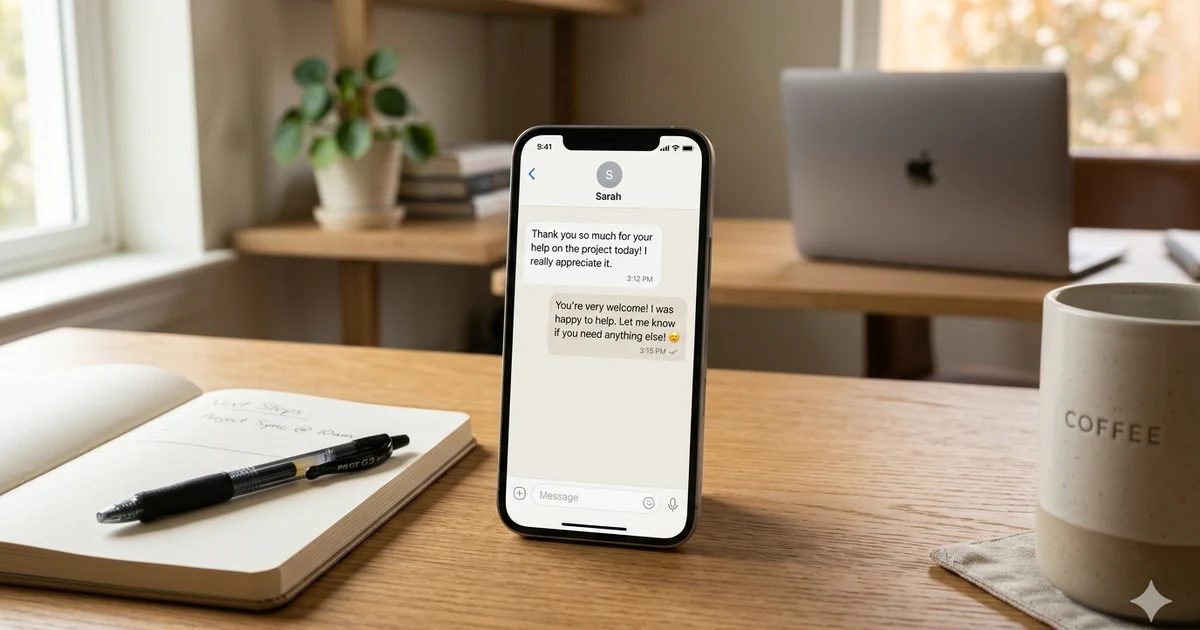
Many people search for other ways to say you are welcome when they want to sound more natural, polite, or less repetitive in conversations. The phrase is common in English, but it is not the only response you can use when someone thanks you. Different situations need different tones, especially in texting, workplace chats, or casual conversations.
This guide explains simple alternatives, how they work in real communication, and when each one fits best.
Quick Answer
Other ways to say you are welcome include phrases like no problem, happy to help, anytime, and glad I could help. These responses show politeness and acknowledgement after someone thanks you. The tone changes depending on the situation, from casual texting to professional communication.
Too Long; Didn’t Read it
- Meaning: Polite response after someone says thank you
- Tone: Can be casual, friendly, or professional
- Common use: Text messages, workplace chats, daily conversation
- Where it appears: Texting, email replies, social media comments
- Formality: Ranges from informal to formal depending on phrase
What Other Ways to Say You Are Welcome Means
The phrase refers to different expressions people use instead of saying you are welcome. It is a way to reply when someone shows gratitude.
Instead of repeating the same response, people choose variations that match the situation. For example, casual chats often use shorter replies, while professional settings prefer more polite wording.
Basic Explanation
You are welcome is a standard response to thank you. It shows that you accept the appreciation politely.
Other expressions carry the same meaning but adjust tone and style. Some sound more relaxed, while others sound more respectful or service oriented.
Examples of common alternatives include:
- No problem
- You got it
- Happy to help
- Anytime
- My pleasure
- Glad I could help
How People Use It in Texting or Online Conversation
In digital communication, people prefer shorter and more natural responses. That is why alternatives are very common in texting, social media replies, and chat apps.
- In casual texting, people often use no problem or anytime
- In workplace chat tools, happy to help is common
- In customer service messages, my pleasure is often used
- In social media comments, glad I could help feels natural
These variations make conversation feel smoother and less repetitive.
Tone and Emotional Meaning
Different alternatives carry different emotional tones:
- Friendly tone: no problem, anytime
- Helpful tone: happy to help, glad I could help
- Polite tone: my pleasure, you are very welcome
- Casual tone: you got it, sure thing
The choice depends on how formal or relaxed the conversation is.
Common Situations Where It Appears
- Replying to a thank you message from a friend
- Responding to a coworker in chat
- Customer support replies after solving an issue
- Social media comments after helping someone
- Group chat conversations after sharing information
Examples in Real Conversations
1-Situation: Friend thanks you for sending notes
Example: Anytime, glad it helped
Meaning: Friendly and casual acknowledgment
2-Situation: Customer support reply
Example: My pleasure, let us know if you need anything else
Meaning: Professional and polite response
3-Situation: Coworker thanks you for assistance
Example: Happy to help
Meaning: Respectful and workplace appropriate
4-Situation: Online comment reply
Example: No problem, glad I could help
Meaning: Casual and friendly tone
Similar Terms or Related Phrases
- No problem: more casual than you are welcome
- Anytime: shows openness to help again
- My pleasure: more formal and service oriented
- Happy to help: balanced and professional
- You got it: very casual and informal
The difference mainly lies in tone and setting.
When You Should Use It
- When replying to thank you in chats or messages
- When you want a friendly tone instead of formal wording
- When talking with coworkers or clients in a polite way
- When keeping conversation short and natural
When You Should Avoid It
- Formal writing where full professional language is required
- Legal or official documents
- Very serious or sensitive situations where tone matters heavily
- Academic writing where neutral language is expected
Is It Formal or Informal?
Other ways to say you are welcome can be both formal and informal.
- Informal versions include no problem and you got it
- Formal versions include my pleasure and happy to help
Choosing the right one depends on context and audience.
Common Misunderstandings
Some people think casual replies like no problem sound rude. In reality, in many English speaking countries, it is widely accepted and neutral.
However, in more formal environments, using a polite phrase like my pleasure is safer. Context matters more than the phrase itself.
USA and Tier 1 Country Usage
In the United States, United Kingdom, Canada, and Australia, people commonly use short and casual responses in everyday texting. No problem and anytime are especially common in spoken and digital communication.
In professional settings, especially customer service or corporate email, my pleasure and happy to help are preferred.
Quick Reference Table
| Context | What It Means | Tone | Best Use | Avoid If |
|---|---|---|---|---|
| No problem | It was not an issue | Casual | Friends, texting | Formal emails |
| Happy to help | Willing assistance | Neutral | Work chats | Very formal documents |
| My pleasure | Glad to assist | Formal | Customer service | Casual texting |
| Anytime | Always ready to help | Friendly | Daily chats | Official reports |
| You got it | Understood and done | Very casual | Friends | Professional settings |
Conclusion
Other ways to say you are welcome give flexibility in conversation. They help match tone to the situation, whether casual, professional, or polite. Choosing the right response depends on who you are talking to and how formal the communication needs to be.
FAQs
What does other ways to say you are welcome mean in text?
It refers to alternative replies used after someone says thank you, such as no problem or happy to help.
What is the most common alternative in texting?
No problem and anytime are among the most commonly used casual responses.
Is it rude to say no problem?
In most English speaking countries, it is not rude and is widely accepted in casual conversation.
Can I use these phrases in professional messages?
Yes, but it is better to use polite versions like happy to help or my pleasure in formal settings.
What is the difference between you are welcome and my pleasure?
You are welcome is neutral, while my pleasure sounds more formal and service oriented.
Which phrase sounds most friendly?
Anytime and no problem usually sound the most relaxed and friendly.
Are these phrases used in USA English?
Yes, all common alternatives are widely used in American English, especially in texting and casual speech.