
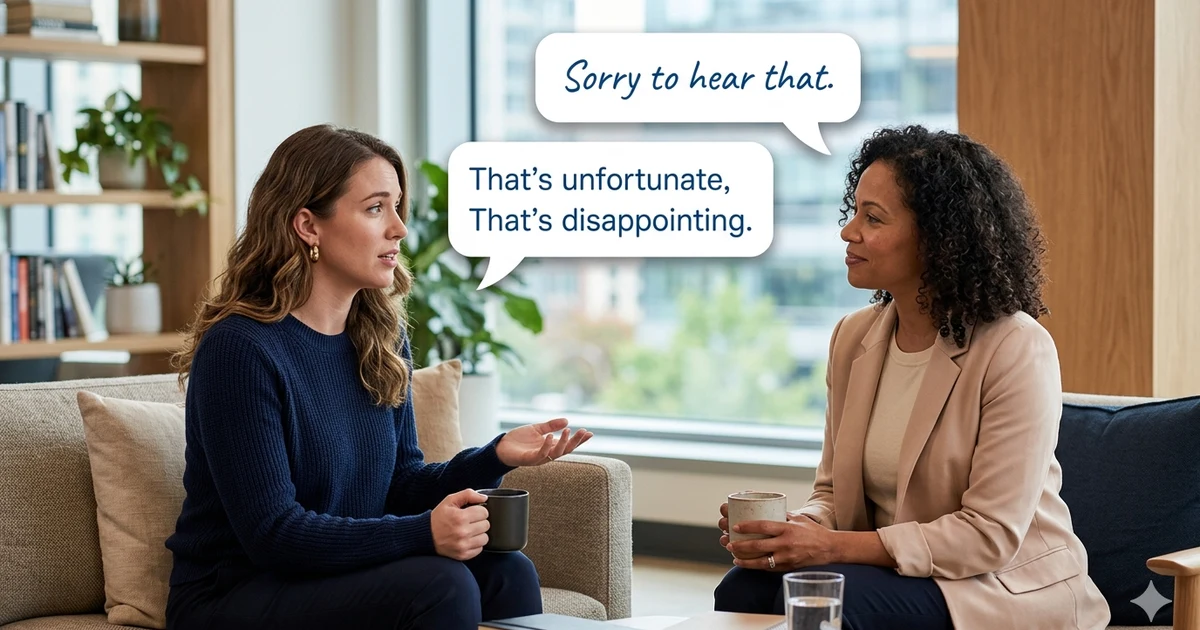
If you’ve ever wanted to express disappointment without saying that sucks, you’re not alone. The phrase is common in casual conversation, texting, and social media, but it can sound too informal, rude, or repetitive depending on the situation.
Whether you’re talking to friends, replying to a text, commenting online, or communicating in a professional setting, there are many better alternatives that match different tones and contexts.
Quick Answer
Other ways to say that sucks include that’s unfortunate, that’s rough, that’s disappointing, sorry to hear that, that’s too bad, what a bummer, and that’s frustrating. The best alternative depends on how casual, sympathetic, or professional you want to sound.
TL;DR
- Meaning: Expresses disappointment, frustration, or sympathy
- Tone: Usually casual and informal
- Common use: Texting, conversations, and social media
- Professional use: Usually not appropriate
- Better alternatives: That’s unfortunate, that’s disappointing, sorry to hear that
- Can sound rude in formal situations
What Other Ways to Say That Sucks Mean
The phrase that sucks is a slang expression people use when something bad, disappointing, unfair, or frustrating happens.
Examples include:
- Losing a job
- Missing a flight
- Failing a test
- Getting sick before a vacation
- Breaking a phone
When people say it, they usually mean:
- That’s unfortunate
- That’s really disappointing
- I feel bad for you
- That’s a frustrating situation
Because it is informal slang, many people look for alternative phrases that sound more polite, professional, or thoughtful.
Basic Explanation
Unlike internet abbreviations, that sucks is not an acronym or shorthand.
It is simply a casual expression used to show sympathy or disappointment about a negative situation.
Over time, it became a common phrase in American English and spread widely through texting, social media, and everyday conversation.
Today, many people use it automatically when responding to bad news.
Best Alternatives to That Sucks
Here are some of the most common replacements.
| Alternative | Tone | Best For |
|---|---|---|
| That’s unfortunate | Professional | Workplace, formal conversations |
| That’s disappointing | Neutral | Most situations |
| Sorry to hear that | Caring | Friends, family, coworkers |
| That’s too bad | Casual | Everyday conversations |
| That’s rough | Informal | Friends and texting |
| What a bummer | Friendly | Casual situations |
| That’s frustrating | Empathetic | Work and personal issues |
| That’s terrible | Stronger sympathy | Serious situations |
| I can imagine that’s difficult | Compassionate | Emotional conversations |
| That’s really unfortunate | Professional and supportive | Workplace communication |
How People Use It in Texting or Online Conversation
In texting and online chats, people often want quick ways to react to bad news.
Instead of repeating the same phrase every time, they use alternatives such as:
- That’s rough
- Sorry to hear that
- That’s tough
- What a bummer
- That’s disappointing
Examples in texting:
Friend: My car broke down again.
Reply: That’s rough. Hope you get it fixed soon.
Friend: I didn’t get the promotion.
Reply: Sorry to hear that. I know you worked hard for it.
These responses sound more thoughtful than a simple one-line reaction.
Tone and Emotional Meaning
Different alternatives carry different emotional tones.
Sympathetic
- Sorry to hear that
- I feel for you
- That must be difficult
Professional
- That’s unfortunate
- That’s disappointing
- I understand your concern
Casual
- That’s rough
- That’s too bad
- What a bummer
Strong Emotional Response
- That’s awful
- That’s terrible
- That’s heartbreaking
Choosing the right phrase helps match the seriousness of the situation.
Common Situations Where It Appears
People often use alternatives when responding to:
- Job rejections
- Financial problems
- Relationship issues
- Illness or injury
- Travel disruptions
- School challenges
- Sports losses
- Missed opportunities
- Technical problems
- Family difficulties
The context usually determines which wording sounds most appropriate.
Examples in Real Conversations
Situation
A friend missed a concert.
Example
That must be disappointing. You were really looking forward to it.
Meaning
Shows empathy and understanding.
Situation
A coworker lost an important file.
Example
That’s unfortunate. Hopefully the backup version is available.
Meaning
Professional and supportive response.
Situation
Someone failed an exam.
Example
That’s rough. Are you planning to retake it?
Meaning
Casual sympathy with interest in helping.
Situation
A family member got sick.
Example
Sorry to hear that. I hope they recover quickly.
Meaning
Expresses concern and compassion.
Situation
A flight was canceled.
Example
What a bummer. Hopefully the airline finds another flight soon.
Meaning
Friendly acknowledgment of disappointment.
Similar Terms and Related Phrases
Several expressions communicate a similar idea.
| Phrase | Difference |
|---|---|
| That’s too bad | Slightly softer |
| That’s rough | More casual |
| That’s unfortunate | More formal |
| What a shame | More traditional |
| What a bummer | Friendly and conversational |
| That’s disappointing | Neutral and versatile |
| That’s frustrating | Focuses on annoyance |
| That’s terrible | Stronger emotional reaction |
Each phrase works best in different situations.
When You Should Use It
Alternatives are useful when:
- You want to sound more professional
- You want to show empathy
- You are speaking with clients
- You are writing emails
- You want a more thoughtful response
- You are communicating with someone you do not know well
Choosing a suitable alternative often improves communication.
When You Should Avoid It
Some expressions may not fit every situation.
Avoid overly casual phrases when:
- Writing professional emails
- Communicating with senior management
- Responding to serious illness
- Discussing major personal loss
- Writing academic assignments
For serious situations, use compassionate language instead of slang.
Is It Formal or Informal?
That sucks is generally considered informal.
Appropriate For
- Friends
- Family
- Text messages
- Social media comments
- Casual online conversations
Not Ideal For
- Business emails
- Client communication
- Academic writing
- Formal presentations
- Professional reports
In professional messages, alternatives like that’s unfortunate or sorry to hear that usually work better.
Common Misunderstandings
Some people interpret the phrase differently depending on age, culture, and setting.
Potential misunderstandings include:
- Sounding dismissive instead of caring
- Appearing unprofessional
- Seeming too casual
- Not expressing enough empathy
Adding a supportive follow-up often helps.
For example:
That’s disappointing. Let me know if I can help.
This sounds more thoughtful than a short reaction alone.
USA and Tier 1 Country Usage
In the United States, Canada, the United Kingdom, Australia, and other English-speaking countries, that sucks is widely understood as casual slang.
Most native English speakers recognize it as a way to react to bad news or frustration.
However, workplace communication in these countries generally favors more professional alternatives such as:
- That’s unfortunate
- That’s disappointing
- Sorry to hear that
- I understand that must be frustrating
The level of formality depends on the relationship between the people communicating.
Quick Reference Table
| Context | What It Means | Tone | Best Use | Avoid If |
|---|---|---|---|---|
| Friend loses a game | Sympathy | Casual | Texting | Formal settings |
| Coworker has a problem | Understanding | Professional | Workplace chats | Serious personal tragedy |
| Travel delay | Frustration | Neutral | Everyday conversation | Formal reports |
| Family issue | Compassion | Caring | Personal support | None |
| Business email | Concern | Professional | Client communication | Casual slang |
| Social media comment | Reaction | Informal | Friendly interaction | Corporate accounts |
Conclusion
Finding other ways to say that sucks can help you communicate more effectively. While the phrase works well among friends and in casual texting, it may sound too informal in professional or sensitive situations. Alternatives such as that’s unfortunate, that’s disappointing, sorry to hear that, and what a bummer allow you to match the tone to the situation and express empathy more naturally.
FAQs
What does that sucks mean in text?
It means something is disappointing, frustrating, unfair, or unfortunate.
Is that sucks rude?
It is not usually considered rude among friends, but it can sound too casual or unprofessional in formal situations.
What is a professional alternative to that sucks?
Good professional alternatives include that’s unfortunate, that’s disappointing, and sorry to hear that.
What can I say instead of that sucks in a text message?
You can say that’s rough, that’s too bad, what a bummer, or sorry to hear that.
Is that sucks formal or informal?
It is an informal slang expression commonly used in casual conversations and texting.
What is the difference between that’s unfortunate and that sucks?
That’s unfortunate sounds more professional and polite, while that sucks is casual slang.
Can I use that sucks at work?
It depends on workplace culture, but professional alternatives are usually safer and more appropriate.