

If you use no worries often, you may want a few fresh alternatives that better match different situations. While the phrase is friendly and reassuring, it is not always the best fit for every conversation. A different expression can sound more natural in a business email, a text message, or a conversation with a friend.
This guide covers the best other ways to say no worries, explains when to use each one, and includes practical examples to help you choose the right response.
Quick Answer
There are many other ways to say no worries, including you’re welcome, no problem, happy to help, of course, my pleasure, anytime, absolutely, and don’t mention it. The best choice depends on the situation, the level of formality, and the relationship you have with the other person.
TL;DR
- Meaning: Alternatives that reassure someone or respond politely after thanks or an apology.
- Tone: Usually friendly, reassuring, and positive.
- Common use: Everyday conversations, texting, customer service, and workplace communication.
- Where it appears: Text messages, emails, social media, online chats, and face-to-face conversations.
- Formal or informal: Some are casual, while others work well in professional settings.
What Other Ways to Say No Worries Means
The phrase no worries tells someone there is no problem, no inconvenience, or no reason to feel concerned. People often say it after receiving an apology, completing a favor, or responding to someone’s thanks.
Instead of repeating the same expression, you can choose another phrase that matches the tone of the conversation.
For example:
- Someone thanks you for your help.
- A coworker apologizes for a small mistake.
- A friend worries about asking a favor.
- A customer appreciates your assistance.
Each situation may call for a slightly different response.
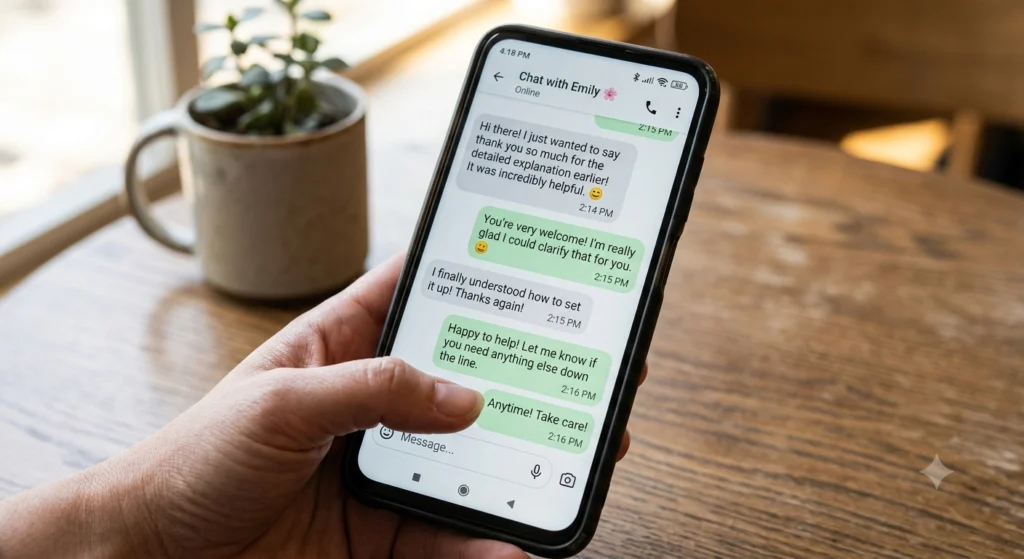
Is No Worries Formal or Informal?
No worries is generally considered an informal expression. It is common in everyday English, especially in Australia, New Zealand, Canada, the United Kingdom, and the United States.
Although many workplaces accept it, some professional settings prefer alternatives such as:
- You’re welcome
- Happy to help
- My pleasure
- Certainly
- Of course
These options sound more polished while keeping the same friendly meaning.
Best Other Ways to Say No Worries
Here are some of the most natural alternatives.
| Alternative | Best Used For | Tone |
|---|---|---|
| You’re welcome | Replying to thanks | Neutral |
| No problem | Casual conversations | Relaxed |
| Happy to help | Work and customer service | Friendly |
| My pleasure | Formal situations | Polite |
| Of course | Everyday conversations | Warm |
| Absolutely | Confirming a request | Positive |
| Anytime | Friends and coworkers | Casual |
| Don’t mention it | Responding to appreciation | Friendly |
| Glad to help | Workplace conversations | Warm |
| It was nothing | Small favors | Casual |
| Certainly | Professional communication | Formal |
| I’m happy to assist | Business communication | Professional |
You’re Welcome
You’re welcome is the most common replacement.
Best for
- Business emails
- Everyday conversations
- Customer service
- Professional communication
Example
Person: Thanks for sending the report.
Reply: You’re welcome. Let me know if you need anything else.
Why it works
It fits almost every situation and never sounds out of place.
No Problem
No problem is one of the closest alternatives.
Best for
- Friends
- Coworkers
- Casual messages
Example
Thanks for covering my shift.
No problem. I was happy to help.
Why it works
It reassures the other person that helping was easy.
Happy to Help
This phrase feels warm without sounding overly casual.
Best for
- Customer service
- Workplace conversations
- Emails
Example
Happy to help. Please reach out if you have more questions.
Why it works
It shows willingness and professionalism.
My Pleasure
My pleasure sounds more formal than no worries.
Best for
- Clients
- Business meetings
- Professional emails
Example
It was my pleasure assisting you today.
Why it works
It leaves a courteous impression.
Of Course
Of course tells someone their request was perfectly reasonable.
Best for
- Friends
- Coworkers
- Family
- Team chats
Example
Of course. I’ll send you the file this afternoon.
Why it works
It sounds natural and supportive.
Absolutely
Absolutely expresses enthusiasm while agreeing to help.
Best for
- Confirming requests
- Positive responses
- Customer support
Example
Absolutely. I’ll take care of that today.
Why it works
It communicates confidence and willingness.
Anytime
Anytime works best with people you know well.
Best for
- Friends
- Long-term coworkers
- Regular clients
Example
Thanks again for your help.
Anytime. I’m always happy to help.
Why it works
It suggests you’re willing to help again in the future.
Don’t Mention It
This classic expression politely downplays your effort.
Best for
- Small favors
- Everyday conversations
- Friendly interactions
Example
Thanks for picking up the package.
Don’t mention it.
Why it works
It shifts attention away from the favor and keeps the conversation relaxed.
Glad to Help
Glad to help is another friendly workplace alternative.
Best for
- Team communication
- Customer service
- Emails
Example
Glad to help. I hope everything goes smoothly.
Why it works
It feels sincere without sounding overly formal.
How People Use These Alternatives in Texting and Online Conversations
In text messages and online conversations, people usually choose short, friendly replies.
Common examples include:
- No problem
- Of course
- Anytime
- Happy to help
- You’re welcome
- Absolutely
Text example
Friend: Thanks for driving me home.
Reply: Anytime.
Workplace chat
Coworker: Thanks for reviewing the presentation.
Reply: Happy to help.
Social media comments
Follower: Thanks for answering my question.
Reply: You’re welcome. Glad it helped.
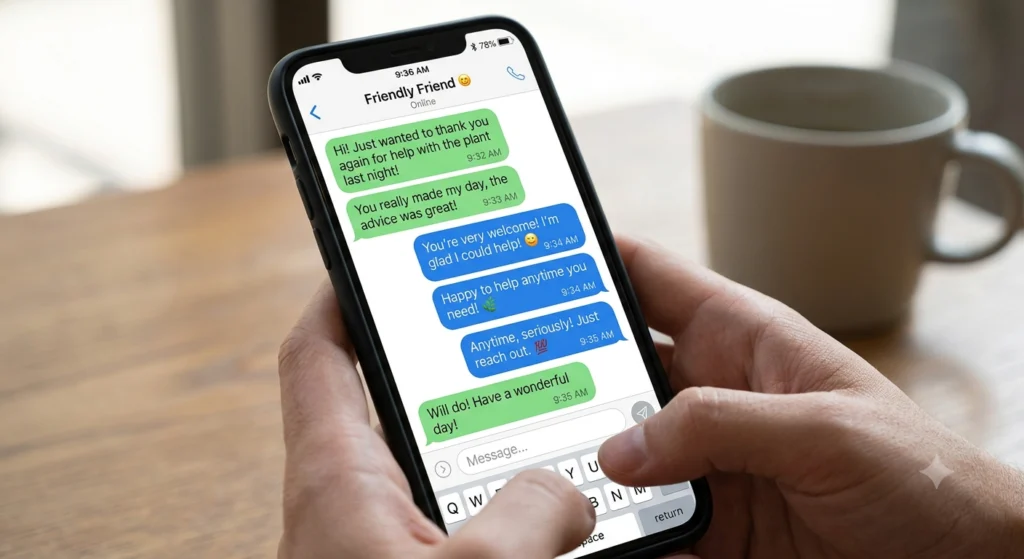
These replies keep conversations friendly while matching the tone of the platform
Tone and Emotional Meaning
Although these expressions have similar meanings, each creates a different impression.
| Phrase | Emotional Tone |
|---|---|
| You’re welcome | Respectful |
| Happy to help | Warm |
| My pleasure | Courteous |
| No problem | Relaxed |
| Of course | Supportive |
| Absolutely | Positive |
| Anytime | Friendly |
| Glad to help | Genuine |
| Don’t mention it | Humble |
| Certainly | Professional |
Choosing the right tone helps your response feel natural instead of repetitive. Different situations call for different levels of formality, so having several alternatives makes everyday communication easier.
Common Situations Where These Phrases Appear
People use these alternatives in many everyday situations. Choosing the right one helps your response sound natural.
After someone says thank you
These are the most common replies:
- You’re welcome.
- Happy to help.
- My pleasure.
- Glad to help.
- Don’t mention it.
After someone apologizes
These expressions reassure the other person.
- No problem.
- No worries.
- It’s okay.
- That’s all right.
- It’s all good.
At work
Professional alternatives work best.
- Certainly.
- I’m happy to assist.
- Happy to help.
- You’re welcome.
In customer service
Service professionals often use:
- My pleasure.
- Happy to help.
- I’m glad I could help.
- You’re very welcome.
Among friends
Casual responses sound the most natural.
- Anytime.
- No problem.
- Of course.
- It was nothing.
Examples in Real Conversations
Situation
A coworker thanks you for helping with a presentation.
Example
Coworker: Thanks for helping me finish the slides.
Reply: Happy to help. I’m glad everything came together.
Meaning
You acknowledge their appreciation while showing a positive attitude.
Situation
A client thanks you for answering questions.
Example
Client: Thanks for explaining the process.
Reply: My pleasure. Please let me know if you need anything else.
Meaning
The reply sounds polite and professional.
Situation
A friend apologizes for being late.
Example
Friend: Sorry I’m running behind.
Reply: No problem. I just got here myself.
Meaning
You reassure them that the delay is not a concern.
Situation
A manager asks for help.
Example
Manager: Could you update the spreadsheet today?
Reply: Absolutely. I’ll have it ready this afternoon.
Meaning
You confidently accept the request.
Situation
Someone thanks you online.
Example
Comment: Thanks for the recommendation.
Reply: You’re welcome. I hope you enjoy it.
Meaning
A simple and friendly response.
Similar Terms and Related Phrases
Many expressions carry the same general meaning but differ slightly in tone.
| Phrase | Best Use | Difference |
|---|---|---|
| No worries | Casual reassurance | Friendly and relaxed |
| No problem | Casual conversations | Focuses on the task not being difficult |
| You’re welcome | General response | Works almost everywhere |
| My pleasure | Formal situations | More courteous |
| Happy to help | Workplace and customer service | Shows willingness |
| Of course | Everyday conversations | Suggests the request was reasonable |
| Certainly | Business communication | More formal |
| Anytime | Friends and coworkers | Implies future willingness to help |
| Don’t mention it | Small favors | Humble response |
When You Should Use These Alternatives
These expressions work well in many situations.
Use them when:
- Someone thanks you.
- Someone apologizes for a minor issue.
- You complete a favor.
- You help a customer.
- You respond to a coworker.
- You reply to a social media comment.
- You answer questions in an email.
- You want to reassure someone.
Matching the phrase to the situation helps your communication feel genuine.
When You Should Avoid Certain Phrases
Some alternatives are too casual for formal situations.
Avoid using phrases like Anytime or It was nothing when:
- Writing legal correspondence.
- Emailing senior executives for the first time.
- Communicating with government offices.
- Sending official business proposals.
- Writing academic papers.
Instead, choose:
- You’re welcome.
- Certainly.
- My pleasure.
- I’m happy to assist.
These options sound more polished and professional.
Is It Formal or Informal?
The table below shows the typical level of formality.
| Phrase | Formal | Informal |
|---|---|---|
| You’re welcome | Yes | Yes |
| My pleasure | Yes | Sometimes |
| Certainly | Yes | Rarely |
| I’m happy to assist | Yes | No |
| Happy to help | Mostly | Yes |
| Glad to help | Mostly | Yes |
| Of course | Sometimes | Yes |
| Absolutely | Sometimes | Yes |
| No problem | Rarely | Yes |
| Anytime | Rarely | Yes |
| Don’t mention it | Sometimes | Yes |
Most modern workplaces accept a conversational tone, but formal communication still benefits from more polished wording.
Common Misunderstandings
People sometimes assume all of these phrases have exactly the same meaning. They do not.
For example:
- No worries reassures someone that everything is fine.
- No problem emphasizes that helping was easy.
- My pleasure expresses courtesy and appreciation.
- You’re welcome simply acknowledges thanks.
- Of course suggests the request was reasonable or expected.
Context matters just as much as the words themselves.
USA and Tier 1 Country Usage
These expressions are widely understood throughout English-speaking countries, but some are more common in certain regions.
- United States: You’re welcome, Happy to help, No problem, and Absolutely are common in everyday conversations.
- Canada: You’re welcome and My pleasure are popular because they sound polite and friendly.
- United Kingdom: Of course, Certainly, and Happy to help fit many workplace conversations.
- Australia and New Zealand: No worries is one of the most common everyday expressions. Professional settings may still favor You’re welcome or My pleasure for formal communication.
No matter where you are, matching your language to the situation is more important than following one fixed expression.

Quick Reference Table
| Context | What It Means | Tone | Best Use | Avoid If |
|---|---|---|---|---|
| Someone thanks you | A polite acknowledgment | Respectful | You’re welcome | None |
| Small favor | It wasn’t difficult | Casual | No problem | Formal business emails |
| Client appreciation | You were glad to help | Professional | My pleasure | Very casual conversations |
| Team communication | Happy to assist | Friendly | Happy to help | Legal or official documents |
| Accepting a request | Positive agreement | Confident | Absolutely | Highly formal correspondence |
| Workplace email | Courteous response | Professional | Certainly | Casual chats |
| Friends | Ongoing willingness | Relaxed | Anytime | Executive communication |
| Social media | Friendly reply | Casual | Don’t mention it | Formal customer complaints |
Conclusion
Knowing other ways to say no worries gives you more flexibility in everyday communication. While no worries is a friendly and reassuring expression, it is not always the best choice for every situation. If you are replying to a coworker, client, friend, or family member, choosing the right alternative helps your message match the tone of the conversation. You’re welcome, Happy to help, My pleasure, Of course, and Certainly are all excellent options, each with its own level of formality. Instead of using the same response every time, pick the one that fits the context. A thoughtful choice can make your communication sound more natural, polite, and confident.
Frequently Asked Questions
What are the best other ways to say no worries?
Some of the most common alternatives include:
- You’re welcome
- No problem
- Happy to help
- My pleasure
- Of course
- Absolutely
- Anytime
- Don’t mention it
- Glad to help
- Certainly
Each works best in different situations, from casual conversations to professional communication.
Is no worries rude?
No. No worries is generally considered a polite and friendly expression. However, some people may find it too casual in formal business settings. If you are writing to a client or someone you do not know well, a more professional alternative may be a better choice.
Can I use no worries in a professional email?
You can use it in many modern workplaces, especially when emailing coworkers. For formal emails, client communication, or job-related correspondence, phrases like You’re welcome, My pleasure, or Happy to help usually sound more polished.
What is the difference between no worries and no problem?
Both expressions reassure the other person, but they have slightly different meanings.
- No worries suggests there is nothing to be concerned about.
- No problem emphasizes that helping did not cause any inconvenience.
In casual conversations, people often use them interchangeably.
What should I say instead of no worries after someone says thank you?
Good responses include:
- You’re welcome.
- Happy to help.
- My pleasure.
- Glad to help.
- Don’t mention it.
Choose the one that best matches the level of formality.
Is Happy to help professional?
Yes. Happy to help is one of the most widely accepted alternatives in workplaces. It sounds friendly, respectful, and customer-focused without being overly formal.
Which alternative sounds the most formal?
If you need a polished response for business communication, consider using:
- My pleasure
- It was my pleasure
- Certainly
- I’m happy to assist
- You’re welcome
These expressions work well in professional emails, customer service, and client interactions.