
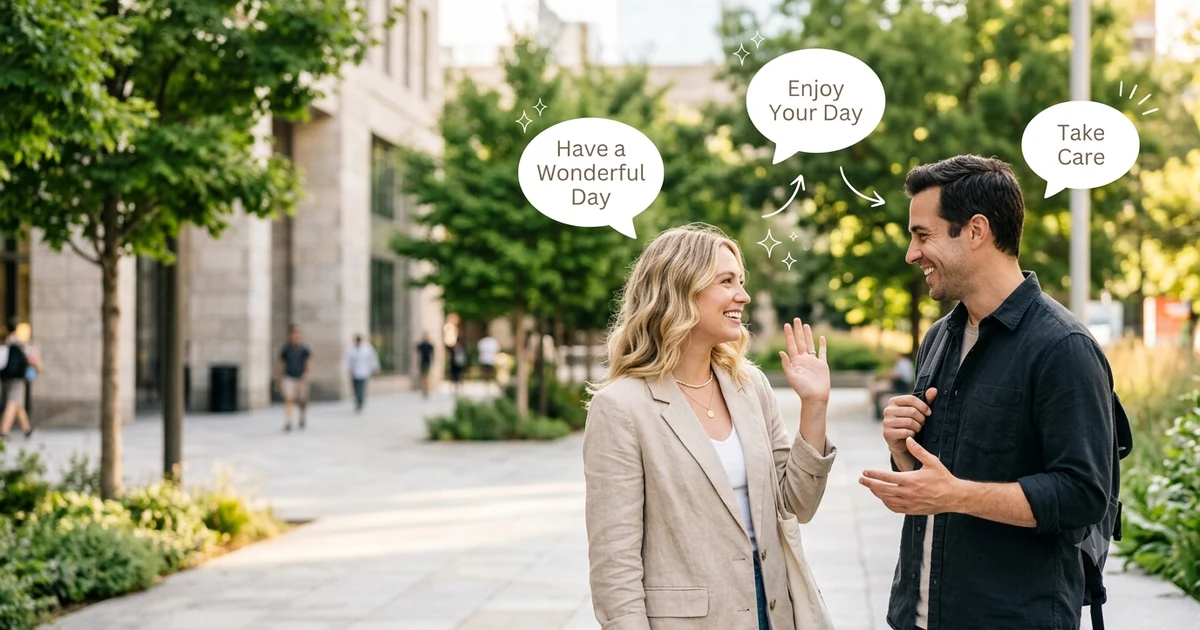
Wishing someone a great day is one of the simplest ways to end a conversation on a positive note. While Have a great day works in almost any situation, using different expressions can make your message sound warmer, more professional, more personal, or simply less repetitive. Whether you are writing an email, sending a text, chatting with a friend, or talking to a customer, knowing other ways to say have a great day helps you choose words that fit the moment.
Quick Answer
There are many friendly alternatives to Have a great day, including Enjoy your day, Have a wonderful day, Take care, Have an awesome day, and Hope you have a fantastic day. The best choice depends on your relationship with the other person, the setting, and the tone you want to create.
TL;DR
- It is a friendly way to wish someone well before ending a conversation.
- Many alternatives work in casual, professional, and personal situations.
- Some phrases sound warmer, while others feel more formal.
- These expressions appear in conversations, emails, texts, and customer service.
- Choosing the right wording helps your message feel more natural.
What Other Ways to Say Have a Great Day Means
When people look for alternatives, they usually want fresh ways to wish someone a pleasant day without repeating the same phrase every time.
The goal is not to change the meaning completely. Instead, it is about matching your words to the situation. A close friend may appreciate something playful, while a coworker or client may respond better to a polite and professional expression.
Most alternatives share the same purpose:
- Wish someone happiness during the day
- End a conversation politely
- Show kindness and goodwill
- Leave a positive impression
Understanding the Phrase
Have a great day is a simple expression of goodwill. It tells another person that you hope their day goes well.
People use it in many situations, including:
- Finishing an email
- Ending a phone call
- Leaving a store
- Saying goodbye after a meeting
- Ending a text conversation
- Responding to a customer
Although the wording is simple, it creates a friendly and respectful ending.
How People Use It in Texting and Online Conversations
In text messages and online chats, people often choose shorter or more relaxed alternatives.
Common examples include:
- Enjoy your day
- Have a good one
- Take care
- Hope today goes well
- Have an awesome day
- Have a beautiful day
- Have fun today
- Wishing you a great day ahead
On social media, these phrases often appear in:
- Instagram captions
- Facebook comments
- LinkedIn messages
- TikTok comments
- Direct messages
- Group chats
Many people also personalize the message by mentioning an event or activity.
For example:
Hope your meeting goes well today.
Enjoy your vacation.
Good luck with your presentation. Have a wonderful day.
Tone and Emotional Meaning
Most alternatives carry a warm, positive tone, but each has its own personality.
| Phrase | Tone | Best For |
|---|---|---|
| Have a wonderful day | Warm and thoughtful | Friends, coworkers, customers |
| Enjoy your day | Friendly and natural | Everyday conversations |
| Have an awesome day | Energetic and casual | Friends and younger audiences |
| Take care | Caring and supportive | Friends, family, coworkers |
| Wishing you a great day | Polite and sincere | Emails and professional messages |
| Have a beautiful day | Warm and heartfelt | Close friends and family |
| Have a good one | Relaxed and informal | Casual conversations |
| Hope your day goes well | Personal and caring | Texts and emails |
Common Situations Where These Expressions Work
Different situations call for different wording.
At work
- Ending an email
- Finishing a meeting
- Speaking with a client
- Chatting with coworkers
With friends
- Ending a text
- Saying goodbye after lunch
- Finishing a phone call
With family
- Before someone leaves for work
- Before school
- Before traveling
In customer service
- Ending a support conversation
- Completing a purchase
- Thanking a customer
On social media
- Replying to comments
- Sending direct messages
- Leaving friendly responses
Examples in Real Conversations
Situation
Leaving the office.
Example
See you tomorrow. Have a wonderful day.
Meaning
A polite and friendly goodbye.
Situation
Sending a text to a friend.
Example
Good luck with your interview. Hope you have an amazing day.
Meaning
Offering encouragement and support.
Situation
Helping a customer.
Example
Thanks for shopping with us. Enjoy the rest of your day.
Meaning
A professional and courteous closing.
Situation
Ending a video call.
Example
It was great catching up. Take care and enjoy your day.
Meaning
A warm farewell.
Situation
Talking to a family member.
Example
Drive safely and have a beautiful day.
Meaning
Showing care and affection.
Similar Phrases and Their Differences
Many expressions have nearly the same meaning, but each creates a slightly different impression.
| Phrase | Best Use | Difference |
|---|---|---|
| Have a good day | Everyday conversations | Simple and neutral |
| Have a great day | Friendly and positive | Slightly more enthusiastic |
| Have a wonderful day | Warm and thoughtful | Sounds more heartfelt |
| Enjoy your day | Encourages someone to make the most of it | More active wording |
| Take care | Shows concern for someone’s well-being | Focuses on the person rather than the day |
| Have an awesome day | Casual and energetic | Best with friends |
| Have a fantastic day | Cheerful and uplifting | More expressive than great |
When You Should Use These Alternatives
Using different expressions keeps your conversations natural.
They work well when you want to:
- Sound more personal
- Avoid repeating the same phrase
- Match a professional setting
- Encourage someone before an important event
- End conversations politely
- Leave a positive final impression
Small changes in wording often make messages feel more genuine.
When You Should Avoid Certain Alternatives
Some expressions fit better than others depending on the situation.
Avoid very casual phrases when:
- Writing formal business emails
- Speaking with senior executives
- Communicating with government offices
- Writing academic correspondence
For example, Have an awesome day may sound too informal in professional communication.
Similarly, Have a beautiful day may feel overly personal when speaking with someone you do not know well.
Is It Formal or Informal?
Most alternatives are flexible enough for everyday communication, but some sound more professional than others.
Professional choices include:
- Wishing you a pleasant day
- Have a wonderful day
- Enjoy the rest of your day
- Wishing you a productive day
- Hope you have a great day
Casual choices include:
- Have a good one
- Catch you later
- Have an awesome day
- Take it easy
- Enjoy today
Choose your words based on the relationship rather than following a fixed rule.
Common Misunderstandings
People rarely misunderstand these expressions, but tone still matters.
For example:
- Have a good one sounds friendly but may seem too casual in formal settings.
- Have a beautiful day can sound very warm and personal.
- Have an awesome day feels youthful and informal.
- Take care focuses on the person’s well-being rather than the day itself.
Context helps listeners understand your intention.
Usage in the USA and Other English-Speaking Countries
Across the United States, Canada, the United Kingdom, Australia, and New Zealand, people commonly use many of these expressions in everyday life.
Have a great day and Have a good day remain among the most common ways to end conversations politely.
In workplaces, customer service, and retail, people often say:
- Have a great day
- Enjoy your day
- Have a wonderful day
- Take care
Friends and family tend to use more personal versions depending on their relationship and personality.
Quick Reference Table
| Context | What It Means | Tone | Best Use | Avoid If |
|---|---|---|---|---|
| Business email | Polite farewell | Professional | Clients and coworkers | Using overly casual slang |
| Customer service | Friendly closing | Warm | Speaking with customers | Sounding too personal |
| Text message | Positive goodbye | Casual | Friends and family | Formal business messages |
| Social media | Friendly interaction | Relaxed | Comments and direct messages | Serious professional discussions |
| Family conversation | Caring farewell | Warm | Daily conversations | None in casual settings |
35 Other Ways to Say Have a Great Day
- Have a wonderful day
- Have a lovely day
- Have a fantastic day
- Have an amazing day
- Have a beautiful day
- Have a pleasant day
- Enjoy your day
- Enjoy the rest of your day
- Have a good one
- Take care
- Wishing you a great day
- Hope you have a great day
- Hope today treats you well
- Hope your day goes smoothly
- Hope everything goes well today
- Have a productive day
- Make today a good one
- Have fun today
- Stay safe today
- All the best today
- Best wishes for your day
- Hope you enjoy every moment
- Have a relaxing day
- Hope your day is full of good things
- Keep smiling today
- Have a cheerful day
- Have a joyful day
- Have a bright day
- Wishing you a pleasant afternoon
- Have a peaceful day
- Enjoy every minute
- Hope your plans go well
- Have a successful day
- Wishing you a happy day ahead
- Take it easy and enjoy your day
Conclusion
Learning other ways to say have a great day gives you more natural ways to end conversations with kindness and confidence. Some expressions work best in professional emails, while others fit casual texts or conversations with friends and family. By choosing words that match the situation and your relationship with the other person, you can make even a simple farewell feel thoughtful and genuine.
FAQs
What are the best other ways to say have a great day?
Some of the best alternatives include Have a wonderful day, Enjoy your day, Have a fantastic day, Have a good one, Take care, Hope you have a great day, and Wishing you a pleasant day. The best choice depends on whether your message is casual, professional, or personal.
Is Have a great day formal or informal?
It is generally neutral and works in both casual and professional settings. While it is common in workplaces and customer service, very formal business letters may call for closings such as Best regards or Kind regards instead.
Can I use these alternatives in a professional email?
Yes. Professional options include:
- Have a wonderful day
- Enjoy the rest of your day
- Wishing you a pleasant day
- Hope you have a productive day
- Wishing you all the best today
These expressions sound polite without being overly casual.
What is the difference between Have a good day and Have a great day?
Both wish someone well. Have a good day sounds simple and neutral, while Have a great day adds a little more enthusiasm and warmth.
Which alternative sounds the most friendly?
Have a wonderful day, Hope your day goes well, and Have an amazing day often sound warmer because they express a more personal wish for someone’s happiness.
Can I say Have an awesome day at work?
Yes, if your workplace has a casual culture. It works well with teammates and friendly coworkers. In formal business communication, Have a wonderful day or Enjoy your day usually sounds more professional.
What can I say instead of Have a great day in a text message?
For text messages, you can use:
- Enjoy your day
- Have a good one
- Take care
- Hope today goes well
- Have fun today
- Talk soon and enjoy your day
These options feel natural in everyday conversations.