
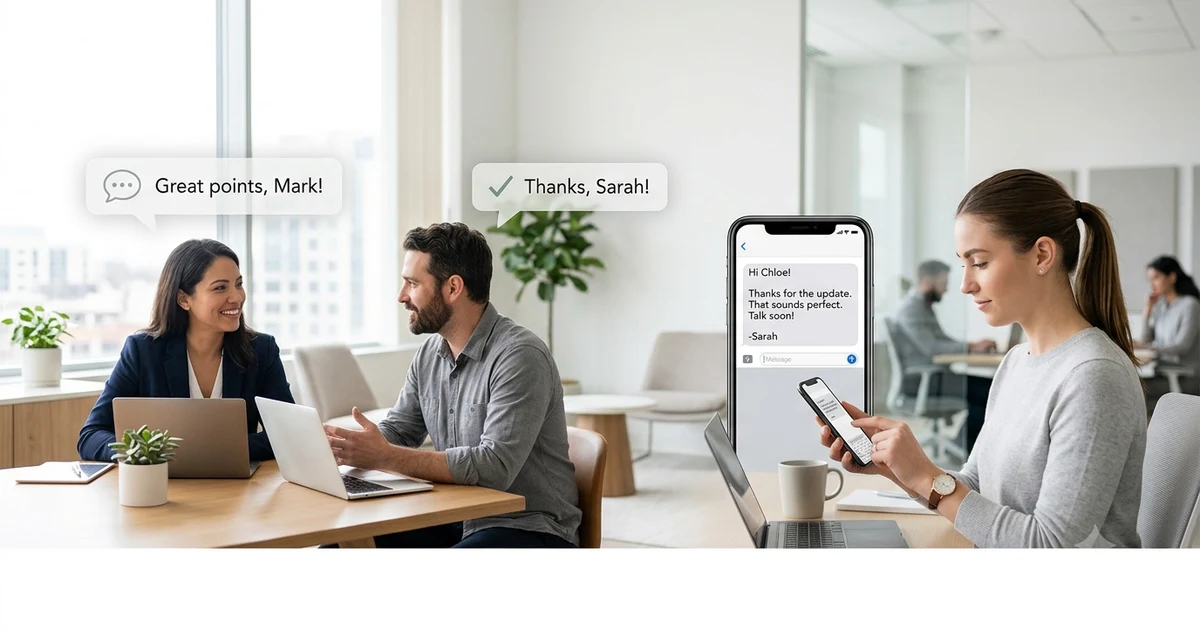
Sometimes you need to ask for help, send a follow-up message, or interrupt someone’s day. In those situations, saying sorry to bother you can sound polite, but repeating the same phrase every time may feel unnecessary or overly apologetic. Learning other ways to say sorry to bother you helps you sound more natural, confident, and appropriate for different situations.
Whether you are writing a professional email, sending a text message, or chatting with a friend, there are many alternatives that fit the tone you want.
Quick Answer
Other ways to say sorry to bother you include excuse me, I hope I’m not interrupting, when you have a moment, thank you for your time, and I appreciate your help. The best choice depends on whether you are speaking in a formal, professional, or casual setting.
TL;DR
- Meaning: A polite way to acknowledge that you are interrupting someone.
- Tone: Respectful, humble, and considerate.
- Common use: Emails, text messages, phone calls, and face-to-face conversations.
- Where it appears: Workplaces, customer service, schools, and everyday conversations.
- Formal or informal: Works in both, but many alternatives sound more confident.
What Sorry to Bother You Means
Sorry to bother you is a polite expression used before asking a question, requesting help, or interrupting someone’s time.
The phrase tells the other person that you recognize they may be busy. It shows courtesy and respect, especially if you are making an unexpected request.
For example:
- Sorry to bother you, but could you send me the report?
- Sorry to bother you. Do you have a minute?
Although the phrase is common, many communication experts encourage using it sparingly because it can make you sound more apologetic than necessary.
Basic Explanation
This expression is made up of two simple ideas:
- Sorry shows regret for causing an interruption.
- Bother means to inconvenience, interrupt, or take someone’s attention.
Together, the phrase politely acknowledges that you are asking for someone’s time.
25 Other Ways to Say Sorry to Bother You
| Alternative | Best For | Tone |
|---|---|---|
| Excuse me | Everyday conversations | Polite |
| I hope I’m not interrupting | Emails and calls | Formal |
| When you have a moment | Work messages | Professional |
| If you have a minute | Casual work chats | Friendly |
| Could I ask you something? | Everyday use | Neutral |
| May I ask a quick question? | Workplace | Polite |
| I appreciate your time | Professional emails | Respectful |
| Thank you for your help | Requests | Positive |
| I’d appreciate your advice | Seeking guidance | Professional |
| Whenever you’re available | Flexible scheduling | Considerate |
| If it’s convenient | Formal requests | Polite |
| I’d love your input | Team collaboration | Friendly |
| Can I get your opinion? | Discussions | Casual |
| Would you mind helping me? | Asking for assistance | Courteous |
| I have a quick question | Work and school | Direct |
| I was hoping you could help | Professional | Warm |
| Could you point me in the right direction? | Asking for guidance | Friendly |
| I’d be grateful for your help | Formal requests | Respectful |
| May I have a moment of your time? | Formal conversations | Professional |
| Whenever you get a chance | Emails and texts | Relaxed |
| Can you help me with something? | Friends and coworkers | Casual |
| I’d like to check something with you | Workplace | Professional |
| I’d appreciate your feedback | Reviews and projects | Professional |
| Thanks for taking a look | Follow-up emails | Friendly |
| I know you’re busy, but… | Important requests | Considerate |
How People Use It in Texting and Online Conversation
In text messages and online chats, people often prefer shorter or more relaxed alternatives.
Examples include:
- Hey, when you have a minute…
- Quick question.
- Got a moment?
- Can I ask you something?
- Whenever you’re free.
These options feel natural in messaging apps, workplace chat platforms, and social media direct messages.
Tone and Emotional Meaning
This expression usually communicates:
- Respect
- Humility
- Consideration
- Appreciation
However, using it too often may make you seem overly apologetic or less confident.
Many professionals now prefer phrases that thank the other person rather than apologizing for taking their time.
For example:
Instead of:
Sorry to bother you, but…
Try:
- Thanks for your time.
- I appreciate your help.
- When you have a moment…
These alternatives sound positive while remaining polite.
Common Situations Where It Appears
People often use this phrase when they are:
- Sending a work email.
- Asking a manager for help.
- Following up on a previous message.
- Contacting customer support.
- Interrupting someone during a meeting.
- Asking a teacher or professor a question.
- Messaging someone they do not know well.
Examples in Real Conversations
Situation
Asking a coworker for information.
Example
Hi Sarah, when you have a moment, could you send me the updated schedule?
Meaning
A polite request without sounding overly apologetic.
Situation
Following up on an email.
Example
Just checking in regarding my previous message whenever you have time.
Meaning
A respectful reminder.
Situation
Asking a friend.
Example
Hey, can I ask you something?
Meaning
Friendly and casual.
Situation
Speaking to a manager.
Example
May I have a moment of your time to discuss the project?
Meaning
Professional and respectful.
Similar Terms and Related Phrases
| Phrase | Difference |
|---|---|
| Excuse me | Usually used before interrupting someone in person. |
| Pardon the interruption | More formal, often used during meetings. |
| I hope I’m not interrupting | Suitable for emails and phone calls. |
| Thanks for your time | Focuses on appreciation instead of apology. |
| If you have a moment | Sounds confident and polite. |
| Could I ask a quick question? | Direct and conversational. |
When You Should Use It
This phrase or one of its alternatives works well when you:
- Need assistance.
- Are interrupting someone politely.
- Send an unexpected email.
- Contact a client.
- Speak with a supervisor.
- Ask someone for advice.
When You Should Avoid It
Avoid overusing it when:
- You communicate regularly with teammates.
- You are simply continuing an existing conversation.
- The request is expected as part of your job.
- You want to sound confident and direct.
Replacing repeated apologies with appreciation often creates a stronger impression.
Is It Formal or Informal?
The phrase works in both formal and informal settings.
Formal situations:
- Business emails
- Customer service
- Academic communication
- Professional meetings
Informal situations:
- Friends
- Family
- Group chats
- Casual texting
For workplace communication, alternatives such as when you have a moment or thank you for your time often sound more polished.
Common Misunderstandings
Some people think saying sorry to bother you is always the most polite choice.
In reality, frequent apologies can sometimes suggest that your request is unreasonable, even when it is perfectly appropriate.
A simple expression of appreciation often creates a warmer and more confident tone.
USA and Tier 1 Country Usage
In the United States, Canada, the United Kingdom, Australia, and other English-speaking countries, people commonly understand and use this phrase.
Modern workplace communication in these countries increasingly favors positive alternatives such as:
- Thanks for your time.
- When you’re available.
- I’d appreciate your help.
- If you have a moment.
These expressions acknowledge the other person’s time without unnecessary apology.
Quick Reference Table
| Context | What It Means | Tone | Best Use | Avoid If |
|---|---|---|---|---|
| Business email | Polite interruption | Professional | Client communication | Daily team messages |
| Text message | Asking for attention | Casual | Friends and family | Formal letters |
| Workplace chat | Quick request | Friendly | Coworkers | Major announcements |
| Customer support | Respectful request | Courteous | Service inquiries | Urgent emergencies |
| Phone call | Beginning a request | Polite | Professional conversations | Casual greetings |
Conclusion
Knowing other ways to say sorry to bother you helps you communicate with more confidence while staying polite. In many situations, replacing an apology with appreciation or a simple request creates a warmer, more professional message. Choose the wording that fits your audience, the setting, and the relationship you have with the other person.
FAQs
What are the best other ways to say sorry to bother you?
Good alternatives include excuse me, when you have a moment, I hope I’m not interrupting, I appreciate your time, and could I ask a quick question?
Is sorry to bother you rude?
No. It is generally considered polite and respectful. It only becomes less effective if you use it too often.
Can I use sorry to bother you in a professional email?
Yes. It is acceptable, although many professionals now prefer phrases such as when you have a moment or thank you for your time because they sound more confident.
What is the difference between sorry to bother you and excuse me?
Sorry to bother you usually introduces a request, while excuse me often gets someone’s attention or politely interrupts a conversation.
Is it better to thank someone instead of apologizing?
In many professional situations, yes. Saying thank you for your time or I appreciate your help focuses on gratitude rather than apology.
Can I use this phrase in text messages?
Yes. It works well in texting, although shorter alternatives like got a minute or quick question often sound more natural in casual conversations.
What is a confident alternative to sorry to bother you?
When you have a moment, could you help me, and I’d appreciate your input are confident, polite choices that work well in professional communication.