
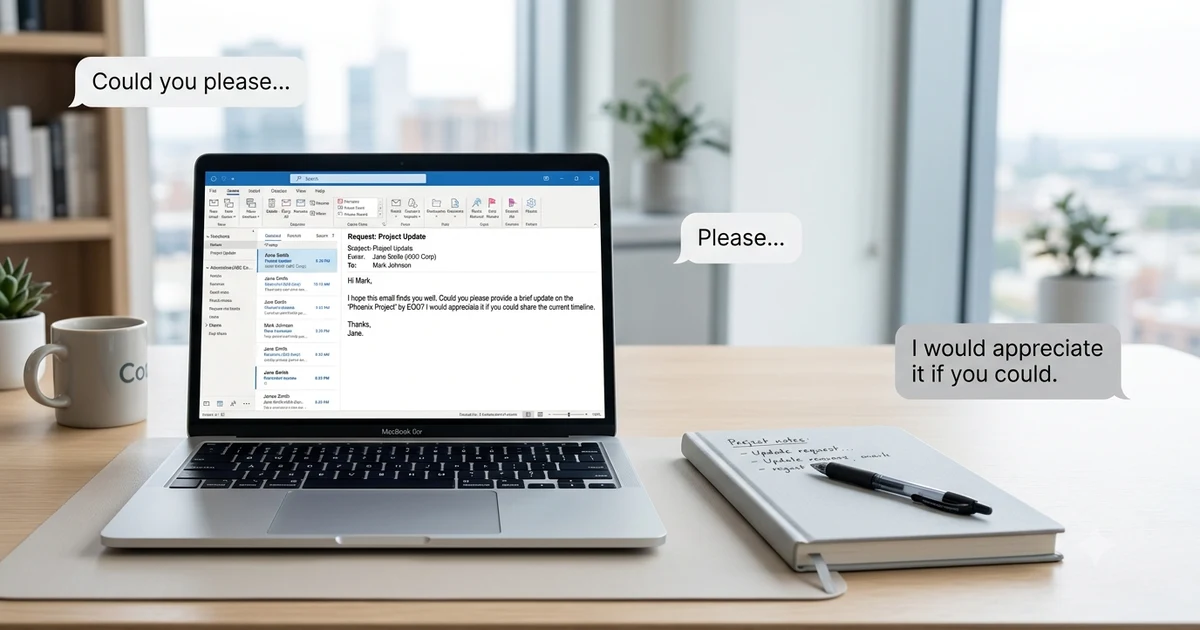
Many people search for other ways to say kindly request professionally because the phrase can sound repetitive or overly formal in emails, business letters, and workplace communication. Whether you are writing to a client, manager, coworker, or customer, choosing the right wording helps you sound polite, respectful, and confident. This guide explains what the phrase means, when to use it, and the best professional alternatives with practical examples.
Quick Answer
Other ways to say kindly request professionally include I would appreciate if you could, May I ask you to, Could you please, I respectfully request, Please consider, and I would be grateful if you could. These alternatives sound natural, polite, and suitable for professional emails, business communication, and formal requests.
TL;DR
- Meaning: A polite way to ask someone to do something.
- Tone: Respectful, courteous, and professional.
- Common use: Business emails, formal letters, and workplace communication.
- Where it appears: Offices, customer service, education, and official correspondence.
- Formal or informal: Mostly formal, though many modern alternatives sound more natural.
What Other Ways to Say Kindly Request Professionally Means
The phrase kindly request is often used when asking someone to take an action politely. It combines the word kindly, which expresses courtesy, with request, meaning to ask for something.
Although it is grammatically correct, many native English speakers prefer smoother alternatives because kindly request can sound outdated, overly formal, or repetitive. Since request already implies politeness, adding kindly sometimes feels unnecessary.
For example:
Instead of writing:
Kindly request you to submit the report by Friday.
A more natural version would be:
Please submit the report by Friday.
Or:
I would appreciate it if you could submit the report by Friday.
These alternatives sound clearer while remaining respectful.
Basic Explanation
Kindly request is not an abbreviation or slang. It is simply a formal phrase used to introduce a polite request.
People often use it in:
- Business emails
- Official letters
- Customer support messages
- Government correspondence
- Academic communication
- Workplace announcements
However, modern business writing usually favors simpler language because it feels friendlier and easier to understand.
Professional Alternatives to Kindly Request
The best replacement depends on who you are writing to and how formal the situation is.
| Alternative | Best Used For | Tone |
|---|---|---|
| Please | Everyday business emails | Friendly and professional |
| Could you please | Requests to coworkers or clients | Polite |
| I would appreciate it if you could | Formal email requests | Respectful |
| May I ask you to | Formal communication | Courteous |
| I respectfully request | Official or legal writing | Very formal |
| Please consider | Suggestions or proposals | Diplomatic |
| Would you mind | Gentle requests | Warm and polite |
| I would be grateful if you could | Important requests | Appreciative |
| Kindly provide | Common in customer service | Professional |
| Please ensure | Instructions or reminders | Direct but polite |
| I kindly ask | Softer than kindly request | Formal |
| If possible, please | Flexible requests | Friendly |
How People Use It in Professional Messages
The phrase rarely appears in casual texting or social media because it sounds too formal. Instead, it is most common in workplace communication.
You might see it in:
- Project update emails
- HR announcements
- Client communications
- Vendor correspondence
- Payment reminders
- Contract discussions
- School administration emails
Modern workplaces often replace it with shorter expressions that sound more conversational while remaining professional.
For example:
Less natural:
Kindly request you to review the attached document.
More natural:
Could you please review the attached document?
Or:
I’d appreciate it if you could review the attached document today.
Tone and Emotional Meaning
This phrase communicates respect and professionalism. It shows that the writer wants to avoid sounding demanding.
Depending on the wording, the tone can feel:
- Respectful
- Formal
- Diplomatic
- Courteous
- Slightly old-fashioned
- Sometimes overly indirect
Choosing a simpler alternative often makes your writing sound more confident and approachable.
Common Situations Where It Appears
You may use a polite request when:
- Asking for approval
- Requesting documents
- Following up on payments
- Scheduling meetings
- Asking for feedback
- Requesting signatures
- Seeking additional information
- Reminding someone about deadlines
- Requesting project updates
- Communicating with customers
Examples in Real Conversations
Situation
Requesting a report.
Example
Could you please send the monthly report by Thursday?
Meaning
A polite business request.
Situation
Following up with a client.
Example
I would appreciate it if you could confirm your availability this week.
Meaning
A respectful request for confirmation.
Situation
Asking a manager.
Example
May I ask you to review the attached proposal?
Meaning
A formal request for review.
Situation
Customer support.
Example
Please provide your order number so we can investigate the issue.
Meaning
A polite request for additional information.
Situation
Project management.
Example
Please ensure all documents are uploaded before the deadline.
Meaning
A courteous instruction.
Similar Terms or Related Phrases
Many polite expressions can replace kindly request, but each has a slightly different tone.
| Phrase | Best Use | Difference |
|---|---|---|
| Please | Everyday emails | The simplest and most natural option. |
| Could you please | Requests to coworkers or clients | Friendly and polite without sounding too formal. |
| I would appreciate it if you could | Formal business emails | Shows gratitude while making a request. |
| May I ask you to | Professional or respectful communication | Sounds courteous and slightly more formal. |
| I respectfully request | Official letters or legal documents | Reserved for highly formal situations. |
| Please consider | Suggestions or proposals | Invites someone to think about an idea rather than requiring action. |
| Would you mind | Gentle personal or workplace requests | Softer and more conversational. |
| I kindly ask | Formal correspondence | Similar meaning but less repetitive than kindly request. |
When You Should Use It
Polite request phrases work well when you want to sound respectful without appearing demanding.
Good situations include:
- Asking a client for information.
- Requesting approval from a manager.
- Following up on pending work.
- Sending reminders before deadlines.
- Contacting vendors or suppliers.
- Writing formal letters.
- Responding to customer inquiries.
- Communicating with people you do not know well.
For example:
Please review the attached proposal before our meeting.
Could you please update me on the project status?
I would appreciate it if you could send the revised invoice today.
May I ask you to confirm your attendance by Friday?
Each sentence sounds professional while remaining clear and friendly.
When You Should Avoid It
Although kindly request is polite, it is not always the best choice.
Consider using another expression when:
- You want your email to sound modern and conversational.
- You are chatting with close coworkers.
- You are writing short internal messages.
- You are sending instant messages through Slack, Microsoft Teams, or similar platforms.
- You already use several formal phrases in the same email.
For example, this feels overly formal:
Kindly request you to provide your comments at your earliest convenience.
A smoother version is:
Could you please share your comments when you have a chance?
Or:
Please send your comments by Wednesday.
These versions sound more natural to many English speakers.
Is It Formal or Informal?
Kindly request belongs on the formal side of English.
Here is how it fits different situations.
| Context | Appropriate? |
|---|---|
| Business emails | Yes |
| Official letters | Yes |
| Customer service | Yes |
| Government communication | Yes |
| Academic communication | Yes |
| Workplace chat | Sometimes, but simpler wording is often better |
| Text messages | Usually no |
| Social media | Rarely |
| Casual conversations | No |
Many companies now encourage plain English because it improves clarity. That is why words like please or could you please often replace longer formal expressions.
Common Misunderstandings
People sometimes misunderstand this phrase in a few ways.
It always sounds more polite
Not necessarily. In many workplaces, shorter and clearer language feels just as respectful.
It is required in professional emails
No. Professional writing values clarity more than complicated wording.
It is old-fashioned
Some readers think so, especially in North America and other English-speaking countries where plain language has become more common.
It sounds demanding
Usually it does not. However, if combined with many formal expressions, the overall message can sound stiff or distant.
USA and Tier 1 Country Usage
In the United States, Canada, the United Kingdom, Australia, and New Zealand, professionals generally prefer direct but courteous language.
Instead of using kindly request frequently, many people write:
- Please send the document by Friday.
- Could you please review this file?
- I’d appreciate your feedback.
- Would you mind confirming the meeting time?
- Please let me know if you have any questions.
These expressions sound natural in modern business communication while maintaining respect.
Highly formal industries, such as law, government, banking, and international business, may still use phrases like I respectfully request or kindly request, especially in official documents. However, everyday workplace emails usually favor simpler wording.
Quick Reference Table
| Context | What It Means | Tone | Best Use | Avoid If |
|---|---|---|---|---|
| Business email | Polite request | Professional | Client communication | Writing casually |
| Formal letter | Respectful request | Formal | Official correspondence | Friendly conversations |
| Customer service | Courteous assistance | Helpful | Support emails | Informal chats |
| Internal office email | Request for action | Professional | Managers and colleagues | Quick instant messages |
| Team chat | Simple request | Friendly | Short workplace conversations | Using overly formal wording |
| Social media | Rarely used | Too formal | Almost never | Casual online conversations |
| Text message | Usually unnecessary | Formal | Special situations only | Everyday texting |
Conclusion
Choosing other ways to say kindly request professionally can make your writing sound clearer, more natural, and just as respectful. While kindly request is still appropriate in formal business letters and official communication, many modern workplaces prefer simpler alternatives such as please, could you please, I would appreciate it if you could, or may I ask you to. The best choice depends on your audience, your relationship with the reader, and the level of formality you need. When writing professional emails or letters, aim for language that is polite, direct, and easy to understand. A well-worded request is more likely to receive a positive response than one that feels overly formal or complicated.
FAQs
What are other ways to say kindly request professionally?
Some of the best alternatives include:
- Please
- Could you please
- I would appreciate it if you could
- May I ask you to
- I kindly ask
- I respectfully request
- Please consider
- I would be grateful if you could
Each works well in different professional situations.
Is kindly request grammatically correct?
Yes. The phrase is grammatically correct. However, many native English speakers prefer simpler wording because it sounds more natural in modern business communication.
Can I use kindly request in a professional email?
Yes. It is acceptable in professional emails, especially when writing to clients, government offices, or people you do not know well. Still, expressions like please or could you please often sound more natural while remaining polite.
Is kindly request too formal?
It can be. In many workplaces across the United States, Canada, the United Kingdom, and Australia, the phrase may sound more formal than necessary. Plain, courteous language is often preferred.
What is the difference between kindly request and please?
Both are polite, but please is shorter, more natural, and commonly used in everyday business communication. Kindly request is more formal and is often reserved for official correspondence.
What is the most professional way to make a request?
It depends on the situation. Common professional choices include:
- Could you please…
- I would appreciate it if you could…
- May I ask you to…
- Please…
- I would be grateful if you could…
These expressions sound respectful without being overly formal.
Should I use kindly request in workplace chat?
Usually not. For platforms like Microsoft Teams, Slack, or other workplace messaging apps, shorter phrases such as please or could you please feel more natural and match the conversational style of those platforms.