
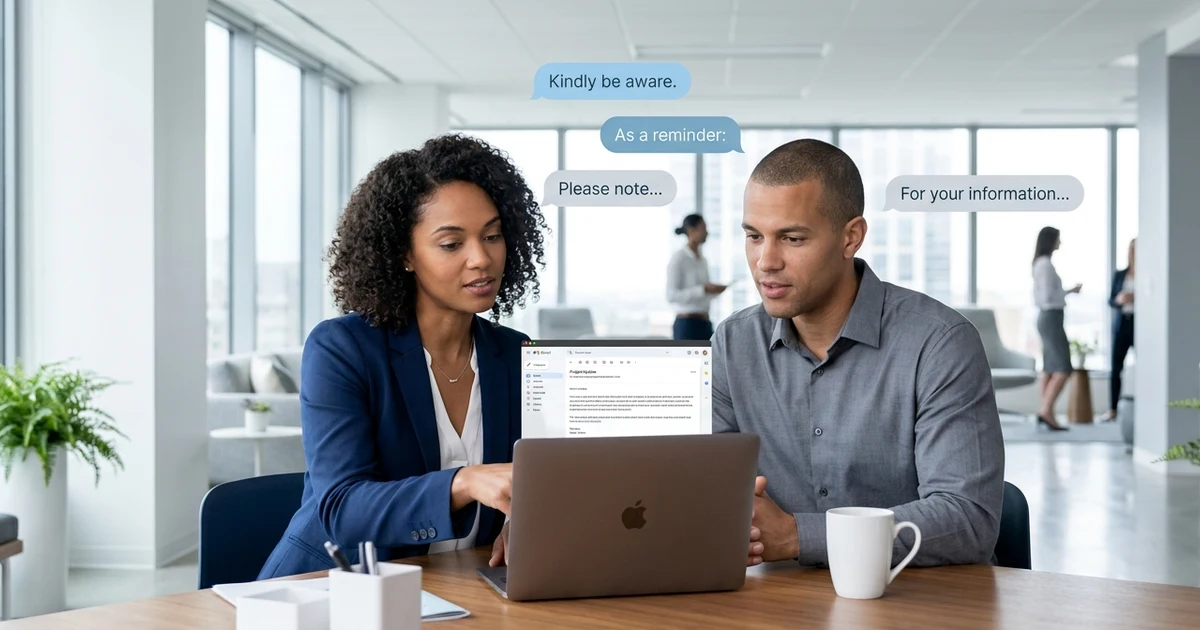
You have probably used the phrase just a heads up when sending a quick warning, reminder, or update. While it works well in casual conversations, it may sound too informal in emails, business meetings, or workplace chats. If you want to sound more polished, there are many professional alternatives that deliver the same message with the right tone. Choosing the best wording depends on who you are speaking to, the situation, and whether you want to sound formal, friendly, or neutral. This guide explains professional alternatives, when to use them, and includes practical examples you can use at work.
Quick Answer
If you are looking for other ways to say just a heads up professionally, consider phrases such as for your information, please note, I wanted to let you know, as a reminder, kindly be aware, or I thought you should know. These alternatives sound more polished and fit professional emails, workplace chats, client communication, and business meetings.
TL;DR
- Meaning: Giving someone advance information or a friendly warning.
- Tone: Usually polite, helpful, and informative.
- Common use: Emails, workplace chats, meetings, and project updates.
- Best alternatives: Please note, for your information, kindly be aware, I wanted to let you know.
- Formality: Just a heads up is informal, while many alternatives sound more professional.
What Other Ways to Say Just a Heads Up Professionally Means
The phrase just a heads up tells someone about something before it happens. It prepares the other person so they are not surprised later.
In the workplace, people often use it before sharing:
- An upcoming deadline
- A schedule change
- A meeting reminder
- A policy update
- A potential issue
- Important project information
Although many colleagues use this phrase every day, some organizations prefer more professional wording, especially when communicating with clients, senior managers, or executives.
Basic Explanation
Unlike an abbreviation, just a heads up is an everyday English expression.
Its purpose is simple. You are letting someone know about something in advance so they can prepare, make changes if necessary, or simply stay informed.
The phrase usually carries a positive intention. It is not a warning about danger. Instead, it acts as a courteous notice.
For example:
Just a heads up, the meeting starts at 9:00 instead of 10:00.
A more professional version could be:
Please note that the meeting will begin at 9:00.
25 Professional Alternatives

Here are some polished alternatives you can use instead of just a heads up.
| Alternative | Best Used For | Tone |
|---|---|---|
| Please note | Formal emails | Professional |
| For your information | Sharing updates | Neutral |
| Kindly be aware | Official communication | Formal |
| I wanted to let you know | Friendly workplace communication | Professional |
| As a reminder | Deadlines and meetings | Helpful |
| Please be advised | Legal or formal notices | Formal |
| I’d like to inform you | Business communication | Formal |
| Keep in mind | General reminders | Friendly |
| Just to let you know | Internal conversations | Casual professional |
| Please remember | Reminders | Friendly |
| I thought you should know | Informal office chats | Conversational |
| This is to inform you | Official notices | Formal |
| Be aware that | Policy or process updates | Neutral |
| Kindly note | Business emails | Professional |
| Please keep in mind | Instructions | Polite |
| I’d like to bring this to your attention | Important matters | Formal |
| Before you proceed | Instructions | Professional |
| Please expect | Upcoming events | Neutral |
| As an update | Project communication | Professional |
| To keep you informed | Status updates | Professional |
| I wanted to make you aware | Sensitive information | Professional |
| Just so you know | Internal team chats | Casual |
| It may help to know | Advice or guidance | Friendly |
| For your awareness | Corporate communication | Formal |
| I’d like to give you advance notice | Major changes | Professional |
How People Use These Alternatives in Professional Messages
Professional alternatives appear in many workplace situations.
Instead of:
Just a heads up, the report is due tomorrow.
Write:
Please note that the report is due tomorrow.
Microsoft Teams or Slack
Instead of:
Just a heads up, the server may restart this afternoon.
Write:
For your information, the server may restart this afternoon.
Client Communication
Instead of:
Just a heads up, there may be a slight delay.
Write:
I’d like to let you know that there may be a slight delay in delivery.
Project Management
Instead of:
Just a heads up, the contractor will arrive early.
Write:
Please be aware that the contractor is scheduled to arrive earlier than planned.
Meeting Invitations
Instead of:
Just a heads up, we’ll cover the budget first.
Write:
Please note that the meeting will begin with the budget review.
Tone and Emotional Meaning
Different alternatives create different impressions.
Formal
Best when communicating with clients, executives, or external partners.
Examples include:
- Please note
- Kindly be aware
- Please be advised
- This is to inform you
Friendly Professional

Suitable for coworkers and daily office communication.
Examples include:
- I wanted to let you know
- As a reminder
- For your information
- To keep you informed
Casual Workplace
These work well among teammates who communicate regularly.
Examples include:
- Just so you know
- Keep in mind
- I thought you should know
Choosing the right tone helps your message sound natural while matching your workplace culture.
Common Situations Where These Phrases Work Best
Professional alternatives fit many everyday situations.
- Reminding someone about an approaching deadline
- Informing colleagues about schedule changes
- Announcing system maintenance
- Sharing policy updates
- Giving advance notice of travel plans
- Updating clients about project progress
- Informing employees about office closures
- Preparing customers for temporary service interruptions
- Letting teammates know about staffing changes
- Explaining changes to meeting times
Examples in Real Conversations
Situation
A meeting time changes.
Example
Please note that tomorrow’s meeting will begin at 8:30 a.m.
Meaning
The sender gives advance notice so everyone arrives on time.
Situation
A project deadline moves.
Example
I wanted to let you know that the submission deadline has been extended until Friday.
Meaning
The recipient receives updated information before planning their work.
Situation
A client delivery may be delayed.
Example
For your information, shipping may take an additional two business days because of supplier delays.
Meaning
The client stays informed before the delay happens.
Situation
Office maintenance.
Example
Kindly be aware that the parking garage will be closed on Saturday for maintenance.
Meaning
Employees can plan alternative parking.
Situation
Software maintenance.
Example
Please expect temporary downtime between 10 p.m. and midnight while we complete scheduled updates.
Meaning
Users know about the interruption before it occurs.
Similar Terms and Related Professional Phrases
Several expressions have a similar purpose, but each creates a slightly different impression.
| Phrase | Difference |
|---|---|
| Please note | More formal and common in business writing |
| For your information | Shares information without requesting action |
| As a reminder | Refers to something already communicated |
| Kindly be aware | Sounds polite and professional |
| Please be advised | Often used in legal, contractual, or official communication |
| Just so you know | More casual than professional |
| Keep in mind | Suggests remembering something for future decisions |
| I wanted to let you know | Friendly and conversational while remaining professional |
Using the right alternative helps your message match the audience and the situation. A quick chat with teammates may call for a friendly expression, while communication with clients or senior leadership often benefits from more formal language.
When You Should Use These Professional Alternatives
Replacing just a heads up with a more polished phrase makes sense when your message needs a professional tone.
Good situations include:
- Sending emails to clients
- Writing to managers or senior leaders
- Communicating with vendors or suppliers
- Providing project updates
- Announcing schedule changes
- Sharing policy updates
- Giving advance notice of maintenance or downtime
- Reminding people about deadlines
- Preparing customers for service interruptions
Choose the alternative that matches both your audience and your purpose.
For example:
Formal
Please note that the office will be closed on Monday due to a public holiday.
Professional but friendly
I wanted to let you know that we’ve moved the meeting to Thursday afternoon.
Reminder
As a reminder, expense reports are due by the end of the day.
When You Should Avoid It
Even professional alternatives are not suitable in every situation.
Avoid using them when:
- The information is urgent and requires immediate action.
- The message needs direct instructions rather than a simple notice.
- You are delivering serious disciplinary or legal information.
- The recipient expects a detailed explanation instead of a brief update.
For example, instead of writing:
Please note that your account has been suspended.
A clearer message would explain the reason, any next steps, and who to contact for assistance.
Likewise, avoid overly formal phrases in relaxed team conversations. Writing Please be advised in a casual chat can sound unnecessarily stiff.
Is It Formal or Informal?
The original phrase just a heads up sits on the informal side of business English. Many workplaces use it in emails, Microsoft Teams, Slack, and internal conversations, but it may sound too casual in external communication.
Here’s a simple guide:
| Expression | Formality |
|---|---|
| Just a heads up | Informal |
| Just so you know | Informal |
| Keep in mind | Semi-formal |
| As a reminder | Professional |
| I wanted to let you know | Professional |
| For your information | Professional |
| Please note | Formal |
| Kindly be aware | Formal |
| Please be advised | Very formal |
If you are unsure, please note is usually a safe choice because it sounds clear, respectful, and professional without feeling overly formal.
Common Misunderstandings
Although the phrase has a positive purpose, people sometimes misunderstand it.
It can sound too casual
Some managers or clients may feel it lacks professionalism, especially in formal emails.
It may seem vague
Simply saying just a heads up does not tell the reader what action, if any, they should take.
Instead of:
Just a heads up, the policy changed.
Try:
Please note that the travel policy has been updated. The revised version takes effect next Monday.
It is not always a warning
Many people think it always signals bad news, but that is not true.
You can use it for:
- Positive announcements
- Schedule updates
- Friendly reminders
- Helpful information
- General notices
Usage in the USA and Other English-Speaking Countries
The phrase just a heads up is common throughout the United States, Canada, the United Kingdom, Australia, and New Zealand.
However, workplace culture influences how often people use it.
United States
American professionals often use it in internal emails and workplace messaging platforms. It usually sounds friendly and approachable.
Canada
Canadian workplaces commonly use it in informal business communication, although more formal alternatives appear in client-facing emails.
United Kingdom
British professionals tend to use expressions such as please note, just to let you know, or for your information in formal writing.
Australia and New Zealand
Many workplaces prefer conversational language internally, but formal emails still benefit from polished alternatives.
Across all Tier 1 English-speaking countries, matching your language to your audience is more important than following one fixed rule.
Quick Reference Table
| Context | What It Means | Tone | Best Use | Avoid If |
|---|---|---|---|---|
| Client email | Giving advance information | Professional | Project updates, delivery notices | Casual conversations |
| Internal team chat | Sharing upcoming information | Friendly | Daily collaboration | Legal notices |
| Meeting reminder | Helping people prepare | Professional | Calendar updates | Urgent requests |
| Deadline reminder | Encouraging timely action | Helpful | Project management | Emergency situations |
| Policy update | Informing employees | Formal | HR announcements | Informal chats |
| Service interruption | Preparing customers | Professional | Maintenance notices | Sensitive complaints |
| Executive communication | Providing important notice | Formal | Leadership updates | Casual messaging |
| Slack or Teams message | Quick workplace update | Casual professional | Team coordination | External client communication |
Conclusion
Choosing other ways to say just a heads up professionally helps your communication sound more polished without changing your message. While the original phrase works well in casual workplace conversations, more formal alternatives often fit better in emails, client communication, and business documents. Expressions such as please note, for your information, as a reminder, kindly be aware, and I wanted to let you know all communicate advance notice in a clear and respectful way. The best choice depends on your audience, the level of formality, and whether you are sharing information, giving a reminder, or preparing someone for an upcoming change. Keeping a few of these alternatives in your vocabulary will help you write messages that sound natural, professional, and easy to understand.
FAQs
What are other ways to say just a heads up professionally?
Some of the best alternatives include:
- Please note
- For your information
- As a reminder
- Kindly be aware
- I wanted to let you know
- Please be advised
- To keep you informed
- I’d like to bring this to your attention
These options work well in professional emails, workplace chats, and client communication.
Is just a heads up professional?
It depends on the situation. The phrase is generally acceptable in informal workplace conversations and internal team chats. For formal emails or client-facing communication, phrases like please note or for your information usually sound more polished.
Can I use just a heads up in a business email?
Yes, if your workplace has a relaxed communication style. However, if you are writing to a client, executive, or someone you do not know well, choosing a more professional alternative is often the better option.
What is the most formal replacement for just a heads up?
Some of the most formal alternatives are:
- Please note
- Please be advised
- Kindly be aware
- This is to inform you
These expressions are commonly used in official business communication.
What is a friendly but professional alternative?
If you want to sound warm without being too casual, consider:
- I wanted to let you know
- As a reminder
- To keep you informed
- For your information
These phrases balance professionalism with a conversational tone.
Is please note better than just a heads up?
In many professional situations, yes. Please note is more formal, concise, and widely accepted in business writing. Just a heads up works better for informal conversations between colleagues.
Which phrase should I use in workplace chat apps like Microsoft Teams or Slack?
For quick internal messages, you can use:
- Just so you know
- I wanted to let you know
- For your information
- As a reminder
These options sound natural while maintaining a professional tone.