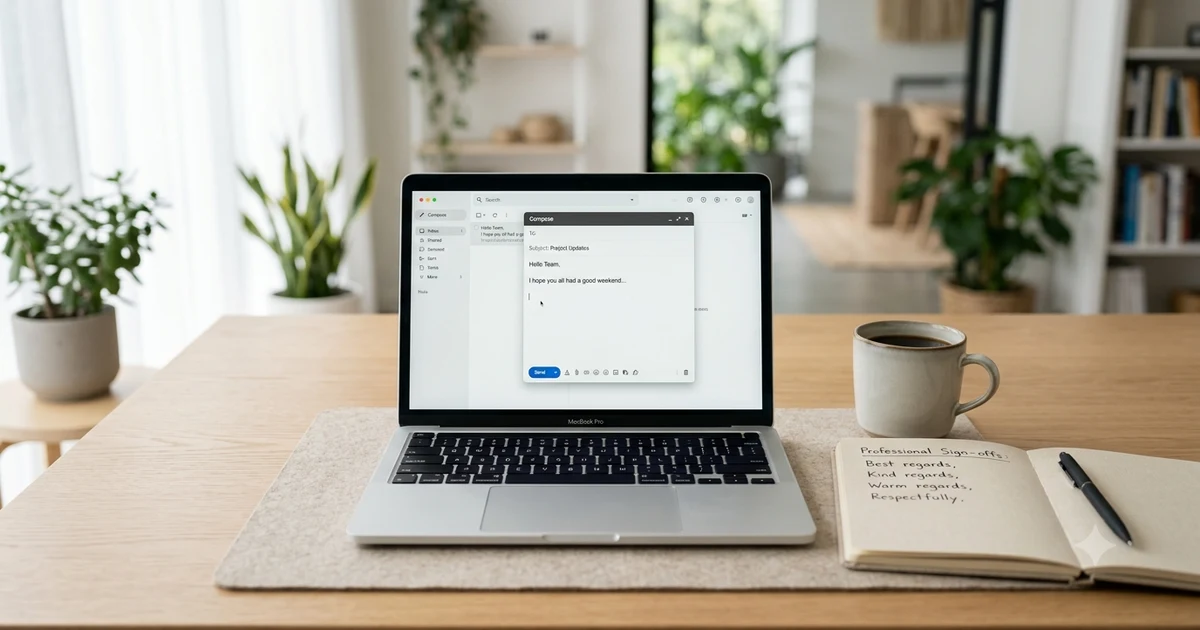
Ending an email or letter with sincerely works well in many situations, but it is not always the best choice. Sometimes you may want a warmer closing, a more professional sign-off, or something that better matches your relationship with the reader.
If you are looking for other ways to say sincerely, this guide explains the best alternatives, when to use them, and what tone each one creates. You will also find practical examples for business emails, job applications, thank-you notes, and personal messages.
Quick Answer
Other ways to say sincerely include Best regards, Kind regards, Respectfully, Yours truly, Warm regards, With appreciation, Many thanks, and Best wishes. The best option depends on your audience, the purpose of your message, and how formal you want your closing to sound.
TL;DR
- Sincerely is a formal and respectful email closing.
- Best regards and Kind regards work well in most professional emails.
- Warm regards and Best wishes create a friendlier tone.
- Respectfully fits very formal or official communication.
- Choose a closing that matches your relationship with the recipient and the purpose of your message.
What Sincerely Means
Sincerely is a traditional closing used before your name at the end of a letter or email. It shows respect, honesty, and professionalism.
People commonly use it for:
- Job applications
- Business correspondence
- Cover letters
- Formal requests
- Official letters
- Academic communication
Although it remains widely accepted, many people now choose alternatives that sound a little warmer or more conversational, especially in email.
Is Sincerely Formal or Informal?
Sincerely is considered a formal sign-off.
It fits situations where you want to sound polite without being overly friendly. In business communication, it is still one of the safest choices.
Here is a general guide.
| Closing | Tone | Best Used For |
|---|---|---|
| Sincerely | Formal | Business letters, applications |
| Best regards | Professional | Everyday work emails |
| Kind regards | Professional and friendly | Clients and coworkers |
| Warm regards | Friendly | Ongoing professional relationships |
| Best wishes | Casual to semi-formal | Colleagues and acquaintances |
| Respectfully | Very formal | Government, legal, or official communication |
Other Ways to Say Sincerely
Here are some of the best alternatives and when each one works best.
Best Regards
One of the most popular professional email closings.
Best for:
- Business emails
- Client communication
- Workplace conversations
- Networking
Example
Best regards,
Sarah Wilson
Kind Regards
Slightly warmer than Best regards while remaining professional.
Best for:
- Customer service
- Team communication
- Professional introductions
- International business emails
Example
Kind regards,
Michael Brown
Warm Regards
Adds a personal touch without becoming too casual.
Best for:
- Long-term clients
- Mentors
- Colleagues you know well
Example
Warm regards,
Emma Carter
Respectfully
Shows a high level of respect.
Best for:
- Government agencies
- Military communication
- Formal complaints
- Official requests
Example
Respectfully,
David Lee
Yours Truly
A classic closing that still appears in formal letters.
Best for:
- Traditional business letters
- Formal correspondence
- Legal communication
It is less common in modern workplace emails but remains correct.
Faithfully Yours
Often used when writing to someone whose name you do not know, particularly in British English.
Best for:
- Formal letters
- Traditional correspondence
Example
Faithfully yours,
Alex Green
Best Wishes
Friendly and positive.
Best for:
- Coworkers
- Professional contacts
- Personal acquaintances
Avoid using it in highly formal legal or business documents.
With Appreciation
Expresses gratitude directly.
Best for:
- Thank-you emails
- Volunteer communication
- Customer appreciation
- Professional acknowledgments
Example
With appreciation,
Jennifer Hall
Many Thanks
Ideal when your message mainly expresses gratitude.
Best for:
- Follow-up emails
- Project updates
- Professional favors
- Customer support
Example
Many thanks,
Ryan Cooper
Thank You
Simple, direct, and increasingly common in professional emails.
Best for:
- Customer communication
- Sales emails
- Internal workplace messages
- Requests
Example
Thank you,
Olivia Davis
All the Best
Friendly without sounding too informal.
Best for:
- Colleagues
- Networking contacts
- Career advice emails
- Farewell messages
Example
All the best,
Daniel Morgan
Take Care
Suitable only when you already know the recipient reasonably well.
Best for:
- Friends
- Close coworkers
- Long-term clients
- Personal emails
Avoid it in formal applications or official letters.
How People Use These Alternatives in Professional Emails
Email communication has become more conversational than traditional business letters. While sincerely remains appropriate, many professionals now choose closings that feel natural and approachable.
Here are common situations where different sign-offs work well.
Job Applications
Good choices include:
- Sincerely
- Best regards
- Respectfully
- Yours truly
These closings show professionalism and respect.
Business Emails
Common options include:
- Best regards
- Kind regards
- Thank you
- Many thanks
These sound polished without feeling overly formal.
Thank-You Emails
Good alternatives include:
- With appreciation
- Thank you
- Many thanks
- Warm regards
These reinforce the grateful tone of your message.
Networking Messages
Better choices include:
- Best wishes
- All the best
- Kind regards
- Warm regards
These help create a friendly yet professional impression.
Personal Letters
Suitable endings include:
- Best wishes
- Warm regards
- Take care
- With love (for close family or friends)
Choose a closing that matches your relationship with the recipient.
Tone and Emotional Meaning
Every email closing sends a subtle message. Even if the body of your email stays the same, changing the final sign-off can affect how your message feels.
| Closing | Emotional Tone |
|---|---|
| Sincerely | Respectful and professional |
| Best regards | Polite and balanced |
| Kind regards | Warm and courteous |
| Warm regards | Friendly and genuine |
| Respectfully | Formal and deferential |
| Thank you | Appreciative |
| Many thanks | Grateful and positive |
| Best wishes | Friendly and optimistic |
| All the best | Encouraging and relaxed |
| Take care | Caring and personal |
Choosing the right tone helps your message feel more natural and appropriate for the situation.
Common Situations Where These Closings Appear
Different sign-offs suit different types of communication.
- Applying for a new job
- Sending a cover letter
- Following up after an interview
- Responding to a client
- Writing to a professor
- Thanking a coworker
- Sending a project update
- Contacting customer support
- Writing a recommendation request
- Sending a networking email
- Ending a business proposal
- Writing a formal complaint
- Sending a personal letter
Matching the closing to the situation helps your message leave the right impression.
Examples in Real Conversations
Situation
Applying for a marketing position.
Example
Thank you for considering my application. I look forward to hearing from you.
Sincerely,
Emily Johnson
Meaning
Shows professionalism and respect.
Situation
Following up after a client meeting.
Example
I appreciate your time today and look forward to working together.
Best regards,
James Carter
Meaning
Professional while sounding approachable.
Situation
Thanking a colleague for their support.
Example
I really appreciate your help with the project.
Many thanks,
Sophia Miller
Meaning
Expresses genuine gratitude without sounding overly formal.
Situation
Emailing a long-term business partner.
Example
I look forward to our continued collaboration.
Warm regards,
Daniel Scott
Meaning
Maintains professionalism while adding warmth.
Situation
Writing to a government office.
Example
Thank you for reviewing my request.
Respectfully,
Amanda Clark
Meaning
Shows courtesy and respect in formal communication.
Similar Terms and Related Phrases
Several email sign-offs have similar meanings, but each creates a slightly different impression.
| Closing | How It Differs from Sincerely |
|---|---|
| Best regards | More modern and commonly used in everyday business emails |
| Kind regards | Slightly warmer and friendlier |
| Warm regards | More personal while remaining professional |
| Respectfully | More formal and shows extra respect |
| Yours truly | Traditional and formal, often seen in printed letters |
| Faithfully yours | Common in formal British English when the recipient’s name is unknown |
| Best wishes | Friendly and suitable for semi-formal communication |
| Many thanks | Focuses on gratitude rather than simply ending the message |
| Thank you | Directly expresses appreciation |
| All the best | Casual, positive, and encouraging |
Although these closings overlap, choosing one that matches your audience helps your email feel more natural.
When You Should Use These Alternatives
The best sign-off depends on your relationship with the recipient and the purpose of your email.
Choose Sincerely when you are:
- Applying for a job
- Writing a formal letter
- Contacting someone for the first time
- Sending official business correspondence
Express Best regards when you are:
- Emailing coworkers
- Speaking with clients
- Following up after meetings
- Communicating with vendors
Articulate Kind regards when you want to:
- Sound professional but approachable
- Build positive client relationships
- Communicate with international contacts
Choose Warm regards when:
- You already know the recipient
- You want a more personal tone
- The conversation is ongoing
Choose Many thanks or Thank you when:
- Someone has helped you
- You are requesting assistance
- You appreciate the recipient’s time
When You Should Avoid Certain Closings
Not every sign-off fits every situation.
Avoid Take care if:
- You are applying for a job.
- You are writing to government agencies.
- The relationship is strictly professional.
Do not articulate Best wishes when:
- Sending legal documents.
- Writing highly formal business letters.
- Communicating with courts or regulatory organizations.
Avoid Warm regards if:
- The recipient does not know you.
- The situation requires complete neutrality.
- You are making a formal complaint.
Do not utter Many thanks if:
- You have no reason to express gratitude.
- The email communicates bad news.
- The message is purely informational.
Selecting the wrong closing usually does not offend people, but it can make your message feel less appropriate.
Are These Closings Formal or Informal?
Here is a quick comparison.
| Closing | Formality Level | Typical Use |
|---|---|---|
| Sincerely | Formal | Job applications, official letters |
| Respectfully | Very formal | Government and legal communication |
| Yours truly | Formal | Traditional correspondence |
| Faithfully yours | Formal | Formal British letters |
| Best regards | Professional | Everyday business emails |
| Kind regards | Professional | Workplace and client emails |
| Warm regards | Semi-formal | Established professional relationships |
| Best wishes | Semi-formal | Friendly business communication |
| Many thanks | Semi-formal | Thank-you emails |
| Thank you | Professional | Requests and customer communication |
| All the best | Casual to semi-formal | Colleagues and networking |
| Take care | Casual | Friends and close coworkers |
For most workplace emails, Best regards and Kind regards are the safest alternatives.
Common Misunderstandings
People sometimes assume every email ending means the same thing. In reality, small differences can change how your message feels.
Some common misunderstandings include:
- Thinking Sincerely sounds old-fashioned. It is still widely accepted for formal communication.
- Believing Best regards is informal. It remains one of the most professional email closings.
- Assuming Warm regards is too personal. It is appropriate once you have an established professional relationship.
- Using Respectfully in everyday workplace emails. It can sound overly formal unless the situation calls for it.
- Ending every email with Thanks even when no gratitude is involved. This may seem awkward or forced.
Context matters more than the closing itself.
How These Closings Are Used in the USA and Other English-Speaking Countries
Across the United States, Canada, Australia, and many other English-speaking countries, email styles have become more conversational over the past decade.
A few general patterns stand out:
- Best regards is one of the most common business sign-offs.
- Kind regards appears frequently in international business communication and is especially common in the UK.
- Sincerely remains standard for cover letters, official correspondence, and formal requests.
- Warm regards is popular when people have an ongoing professional relationship.
- Thank you often replaces traditional closings in customer service and workplace emails because it feels polite and efficient.
There is no single correct choice. Most professionals select the closing that best matches the tone of the message.
Quick Reference Table
| Context | What It Means | Tone | Best Use | Avoid If |
|---|---|---|---|---|
| Job application | Professional respect | Formal | Cover letters and applications | Casual emails |
| Client email | Professional courtesy | Professional | Business communication | Personal messages |
| Thank-you email | Appreciation | Friendly and professional | Showing gratitude | Neutral announcements |
| Government letter | Respect | Very formal | Official requests | Casual workplace chats |
| Team update | Professional friendliness | Semi-formal | Internal communication | Legal documents |
| Networking email | Positive relationship | Friendly | Professional networking | Formal complaints |
| Personal letter | Warm closing | Casual | Friends and family | Official correspondence |
Conclusion
Knowing other ways to say sincerely helps you match your email closing to the situation instead of using the same sign-off every time.
For formal letters, Sincerely remains an excellent choice. In everyday business communication, Best regards and Kind regards often feel more natural. If your message includes appreciation, Thank you or Many thanks can leave a positive impression. For people you know well, Warm regards or Best wishes adds a friendly touch while remaining professional.
The best closing is the one that reflects your relationship with the recipient and supports the tone of your message. A thoughtful sign-off helps your email end as professionally as it begins.
Frequently Asked Questions
What are other ways to say sincerely in an email?
Some of the best alternatives include Best regards, Kind regards, Warm regards, Respectfully, Yours truly, Best wishes, Thank you, Many thanks, and With appreciation. The right choice depends on how formal or personal you want your message to sound.
Is sincerely too formal for email?
Not at all. Sincerely is still a standard closing for formal emails, cover letters, and official correspondence. For everyday workplace emails, many people prefer Best regards or Kind regards because they sound slightly more conversational.
Can I use Best regards instead of sincerely?
Yes. Best regards is one of the most common replacements for sincerely. It works well for business emails, client communication, networking, and most professional situations.
What is the difference between sincerely and kind regards?
Sincerely has a more formal and traditional tone. Kind regards feels a little warmer and more personal while remaining professional. Both are appropriate in business communication.
Which email closing is best for a job application?
Sincerely remains one of the safest and most widely accepted choices for job applications and cover letters. Best regards is also acceptable unless the employer specifically requests a different format.
Is warm regards professional?
Yes. Warm regards is professional when you already have an established relationship with the recipient. It may feel too personal for a first email or highly formal correspondence.
What should I avoid instead of sincerely?
Avoid very casual closings such as Cheers, Take care, or See you soon in formal job applications, legal correspondence, or official business letters. Choose a sign-off that matches the purpose and tone of your message.