
When you write an email, essay, report, or even a social media post, you may find yourself using the phrase other ways to say on the other hand because you want to avoid repeating the same transition. While on the other hand works well to introduce a contrasting idea, English offers many alternatives that sound more formal, conversational, or natural depending on the situation.
This guide explains what the phrase means, when to use it, and more than 50 alternatives with practical examples so you can choose the right expression for any context.
Quick Answer
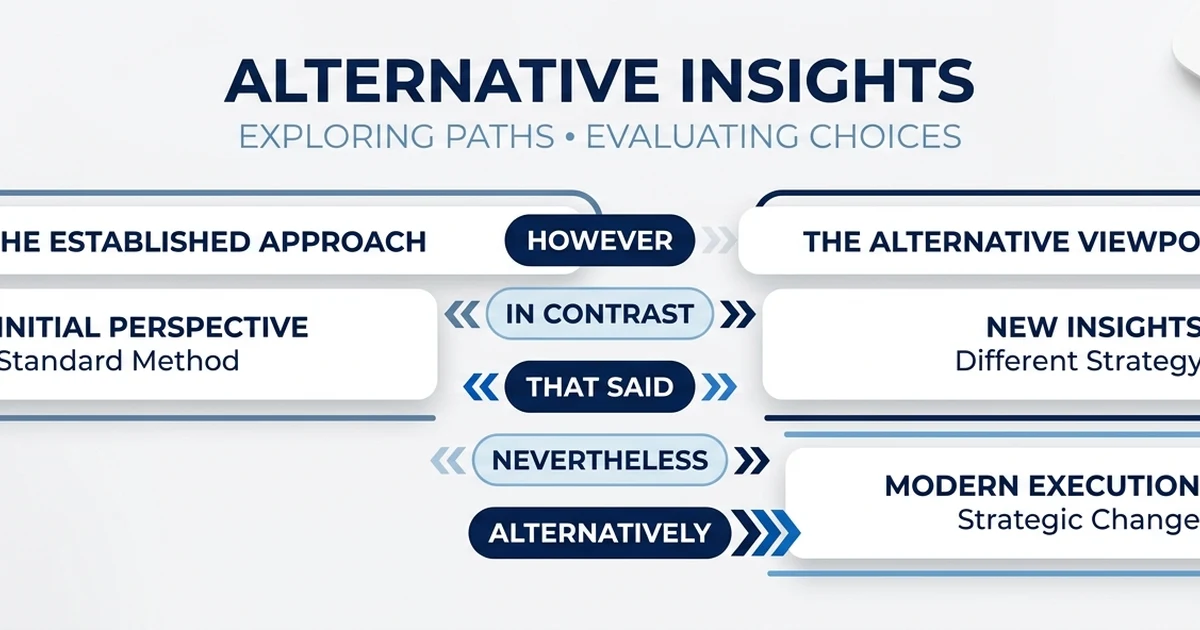
If you’re looking for other ways to say on the other hand, you can use alternatives such as however, in contrast, conversely, then again, alternatively, even so, by comparison, despite that, still, or having said that. The best choice depends on whether you’re writing formally, speaking casually, or trying to create a balanced comparison.
TL;DR
- Meaning: Introduces a contrasting or opposite point.
- Tone: Usually neutral and balanced.
- Common use: Essays, emails, conversations, articles, and presentations.
- Where it appears: Academic writing, business communication, and everyday speech.
- Formality: Suitable for both formal and informal contexts, though some alternatives fit specific situations better.
What Does On the Other Hand Mean?
The phrase on the other hand signals that you’re about to present a different perspective, an opposing argument, or another side of a situation.
It helps readers and listeners understand that two ideas are being compared or weighed against each other.
For example:
- Buying a house gives you long-term stability. On the other hand, renting offers greater flexibility.
- Working from home saves commuting time. On the other hand, some people miss face-to-face collaboration.
Rather than simply disagreeing, the phrase often presents a balanced view by acknowledging another possibility.
Basic Explanation
Unlike abbreviations or internet slang, on the other hand is an established English transition phrase.
People use it to:
- Compare two options
- Introduce a contrasting opinion
- Present advantages and disadvantages
- Show another perspective
- Make writing flow more naturally
It is especially common in:
- Academic essays
- Workplace reports
- Business emails
- Blog articles
- News writing
- Everyday conversations
Other Ways to Say On the Other Hand
Here are more than 50 useful alternatives organized by tone and context.
| Alternative | Best For | Tone |
|---|---|---|
| However | Formal writing | Neutral |
| In contrast | Academic writing | Formal |
| Conversely | Research papers | Formal |
| Alternatively | Offering another option | Neutral |
| Then again | Conversation | Casual |
| Still | Everyday writing | Neutral |
| Even so | Balanced contrast | Neutral |
| Having said that | Business writing | Professional |
| That said | Professional communication | Professional |
| Nevertheless | Formal writing | Formal |
| Nonetheless | Reports and essays | Formal |
| Yet | General writing | Neutral |
| Even then | Specific situations | Neutral |
| By comparison | Comparing ideas | Formal |
| On the contrary | Correcting a statement | Formal |
| At the same time | Balanced discussion | Neutral |
| Despite that | General writing | Neutral |
| Regardless | Strong contrast | Neutral |
| Whereas | Comparing two facts | Formal |
| While | Comparing ideas | Neutral |
| Instead | Replacing one option | Neutral |
| Rather | Preference or correction | Neutral |
| By contrast | Academic writing | Formal |
| In comparison | Comparative writing | Formal |
| Meanwhile | Parallel ideas | Neutral |
| As opposed to that | Formal comparison | Formal |
| Looking at it differently | Conversation | Casual |
| From another perspective | Presentations | Neutral |
| Viewed another way | Analytical writing | Formal |
| On the flip side | Casual conversation | Informal |
| The downside is | Reviews | Casual |
| The upside is | Balanced discussion | Casual |
| A different viewpoint is | Discussions | Neutral |
| Another consideration is | Reports | Professional |
| Even though | Showing contrast | Neutral |
| Though | Casual writing | Informal |
| Although | Formal comparison | Neutral |
| Regardless of that | Formal writing | Professional |
| In spite of that | Neutral writing | Neutral |
| By the same token | Logical discussion | Formal |
| At the same time | Balanced analysis | Neutral |
| Mind you | British English | Informal |
| Then again | Spoken English | Informal |
| Still and all | Regional usage | Informal |
| Even if that’s true | Debate | Neutral |
| Be that as it may | Very formal | Formal |
| All the same | Conversation | Informal |
| Notwithstanding | Legal or formal writing | Very formal |
| In another respect | Academic writing | Formal |
| From a different angle | Conversation | Casual |
| On balance | Summarizing both sides | Neutral |
| By the same measure | Analytical writing | Formal |
| In another sense | Essays | Formal |
| At the same moment | Time-based comparison | Neutral |
How People Use It in Everyday Writing and Online Conversations
Although on the other hand is more common in writing than texting, people still use it regularly in emails, discussion forums, LinkedIn posts, blogs, and longer social media comments.
In quick text messages, people often choose shorter alternatives because they sound more natural.
For example:
Instead of:
I love living in the city. On the other hand, it can be expensive.
People often write:
I love living in the city. Still, it’s expensive.
Or:
I love living in the city. That said, the cost of living is high.
Or:
I love living in the city. Then again, everything is close by.
These shorter transitions keep conversations flowing without sounding overly formal.
Tone and Meaning
The phrase itself is neither positive nor negative. Its tone depends on the surrounding sentence.
It often sounds:
- Balanced
- Objective
- Thoughtful
- Logical
- Neutral
- Analytical
Different alternatives can slightly change the tone.
For example:
- However sounds professional.
- Conversely sounds academic.
- Then again sounds conversational.
- On the flip side feels relaxed and informal.
- Having said that sounds diplomatic.
- Nevertheless adds emphasis while remaining formal.
Choosing the right alternative helps your writing match your audience and purpose.
Common Situations Where These Alternatives Work
You can replace on the other hand in many everyday situations.
a-In business emails
- Explaining pros and cons
- Comparing two proposals
- Presenting another recommendation
b-In academic writing
- Comparing research findings
- Discussing opposing viewpoints
- Evaluating evidence
c-In blog posts
- Reviewing products
- Comparing services
- Discussing advantages and disadvantages
d-In conversations
- Giving balanced advice
- Sharing another opinion
- Discussing choices
e-On social media
- Explaining both sides of an issue
- Comparing products
- Offering a thoughtful opinion
Examples in Real Conversations
Situation
Choosing between two jobs.
Example
Job A pays more. However, Job B offers much better work-life balance.
Meaning
The speaker compares two advantages before making a decision.
Situation
Buying a new phone.
Example
This phone has an excellent camera. On the flip side, the battery life could be better.
Meaning
The speaker points out a drawback after mentioning a benefit.
Situation
Discussing vacation plans.
Example
We could visit Italy. Alternatively, we could spend a week in Canada instead.
Meaning
The speaker introduces another possible choice.
Situation
Writing an essay.
Example
Some experts support the policy. Conversely, others believe it could create new problems.
Meaning
The writer presents an opposing viewpoint.
Situation
Giving advice to a friend.
Example
You could accept the offer. Then again, waiting another month might bring better opportunities.
Meaning
The speaker encourages the listener to consider another perspective.
Similar Terms and Related Phrases
Many transition words can introduce contrast, but they do not all mean exactly the same thing. Choosing the right one depends on whether you want to show a simple contrast, present another option, or disagree with a previous point.
| Phrase | Best Use | Key Difference |
|---|---|---|
| However | Formal and everyday writing | Introduces a contrast directly. |
| Nevertheless | Formal writing | Shows that something remains true despite a previous point. |
| Nonetheless | Reports and essays | Similar to nevertheless but slightly less common. |
| In contrast | Comparing two ideas | Highlights clear differences. |
| Conversely | Academic writing | Presents an opposite viewpoint or result. |
| Alternatively | Offering choices | Suggests another option rather than a contrast. |
| Then again | Casual conversation | Introduces another thought in a relaxed way. |
| On the flip side | Informal speech | Casual version of on the other hand. |
| That said | Professional communication | Softens a contrasting statement. |
| Having said that | Business writing | A polite way to acknowledge another perspective. |
| Still | Everyday conversation | Indicates that something remains true despite another fact. |
| Yet | General writing | Adds a brief and natural contrast. |
Which alternative should you choose?
- Use however for reports, essays, and emails.
- Choose then again in casual conversations.
- Use alternatively when presenting another choice.
- Pick in contrast when comparing two different ideas.
- Use having said that if you want your writing to sound diplomatic.
- Choose on the flip side when speaking casually with friends.
When You Should Use These Alternatives
Replacing on the other hand can make your writing smoother and less repetitive.
These alternatives work well when you want to:
- Compare two products
- Discuss advantages and disadvantages
- Present both sides of an argument
- Offer another viewpoint
- Write more naturally
- Improve the flow of essays and reports
- Avoid repeating the same transition word
For example:
Instead of writing:
The software is affordable. On the other hand, it lacks advanced features.
You could write:
- The software is affordable. However, it lacks advanced features.
- The software is affordable. That said, it lacks advanced features.
- The software is affordable. Still, it lacks advanced features.
Each version communicates the same basic idea but creates a slightly different tone.
When You Should Avoid Certain Alternatives
Not every alternative fits every situation.
Avoid very casual expressions in professional writing.
For example:
- On the flip side
- Then again
- Mind you
- Still and all
These phrases sound natural in conversation but may feel too informal in:
- Business proposals
- Research papers
- Legal documents
- Academic essays
Likewise, avoid highly formal phrases such as notwithstanding or be that as it may in casual emails or text messages because they can sound old-fashioned or overly formal.
Matching the transition to your audience helps your writing sound natural.
Are These Alternatives Formal or Informal?
Some expressions work almost everywhere, while others belong mainly in formal or casual communication.
| Expression | Formal | Informal |
|---|---|---|
| However | ✓ | ✓ |
| Nevertheless | ✓ | |
| Nonetheless | ✓ | |
| In contrast | ✓ | |
| Conversely | ✓ | |
| Alternatively | ✓ | ✓ |
| That said | ✓ | ✓ |
| Having said that | ✓ | |
| Still | ✓ | |
| Then again | ✓ | |
| On the flip side | ✓ | |
| Mind you | ✓ |
If you are writing:
- A business email, choose however, that said, or having said that.
- A college essay, use in contrast, conversely, or nevertheless.
- A text message, try still, then again, or on the flip side.
Common Misunderstandings
People sometimes assume that every contrasting phrase has the same meaning. In reality, each one serves a slightly different purpose.
Here are a few common mistakes:
Using alternatively when you mean contrast
Incorrect:
The weather is sunny. Alternatively, it is very hot.
Better:
The weather is sunny. However, it is very hot.
Using on the contrary incorrectly
Many learners use on the contrary instead of on the other hand.
These phrases are different.
- On the other hand introduces another perspective.
- On the contrary corrects or directly contradicts a statement.
Example:
Incorrect:
The hotel was affordable. On the contrary, it was close to the beach.
Correct:
The hotel was affordable. On the other hand, it was far from the city center.
How These Expressions Are Used in the USA and Other English-Speaking Countries
These transition phrases are widely understood across the United States, Canada, the United Kingdom, Australia, and New Zealand.
Some differences in everyday use include:
- However is common in both speech and writing.
- That said appears frequently in professional communication.
- Having said that is especially common in business discussions and interviews.
- Then again is popular in everyday conversations.
- Mind you appears more often in British English than in American English.
- On the flip side is especially common in casual North American speech.
No matter where English is spoken, readers will understand on the other hand. Choosing a suitable alternative simply helps your writing sound more varied and natural.
Quick Reference Table
| Context | What It Means | Tone | Best Use | Avoid If |
|---|---|---|---|---|
| Academic essay | Present a contrasting argument | Formal | Research papers and essays | Casual conversation |
| Business email | Introduce another consideration | Professional | Workplace communication | Very informal chats |
| Casual conversation | Offer another opinion | Friendly | Talking with friends | Formal reports |
| Blog article | Compare two ideas | Neutral | Reviews and guides | Legal documents |
| Presentation | Balance different viewpoints | Professional | Meetings and speeches | Informal texting |
| Social media post | Share another perspective | Casual | Thoughtful discussions | Highly formal writing |
| Product review | Explain strengths and weaknesses | Neutral | Comparing products | Direct persuasion |
| Text message | Mention another possibility | Informal | Everyday chats | Academic assignments |
Conclusion
Knowing other ways to say on the other hand can make your writing sound smoother, more natural, and better suited to your audience. While on the other hand remains a clear and useful transition, you do not have to rely on it every time you introduce a contrasting idea.
For formal writing, options like however, in contrast, conversely, and nevertheless work well. In professional emails, that said and having said that create a balanced tone. For conversations and casual writing, expressions such as then again, still, or on the flip side often feel more natural.
The best choice depends on your purpose, your audience, and the level of formality you want. By using a variety of transition phrases, you can keep your writing engaging while making your ideas easier to follow.
FAQs
What are other ways to say on the other hand?
Some of the best alternatives include:
- However
- In contrast
- Conversely
- That said
- Having said that
- Nevertheless
- Nonetheless
- Still
- Then again
- Alternatively
- On the flip side
Each one has a slightly different tone, so choose the one that best matches your context.
Is on the other hand formal or informal?
It is generally considered neutral. You can use it in formal writing, business communication, academic essays, and everyday conversations. Depending on the situation, another transition may sound more natural or concise.
What is the difference between however and on the other hand?
However introduces a contrast directly and is often shorter and more concise.
On the other hand usually compares two sides of the same issue or presents another perspective after discussing the first one.
Example:
- The hotel is affordable. However, it is far from downtown.
- The hotel is affordable. On the other hand, another hotel costs more but offers a better location.
Can I use on the other hand in a professional email?
Yes. It is appropriate for workplace emails, reports, proposals, and presentations. If you want a slightly more polished style, you can also use however, that said, or having said that.
Is on the flip side a good replacement?
Yes, but only in informal settings. It works well in conversations, blog posts, and casual writing. For academic or business writing, however or in contrast is usually a better choice.
Which alternative is best for academic writing?
For essays and research papers, these transitions are strong choices:
- However
- In contrast
- Conversely
- Nevertheless
- Nonetheless
- By contrast
They create a formal, logical flow between ideas.
How can I avoid repeating on the other hand?
Try varying your transitions based on the situation. For example:
- Use however for a direct contrast.
- Use alternatively when presenting another option.
- Use that said to soften a contrasting point.
- Use still in everyday writing.
- Use conversely when presenting an opposite viewpoint.
Changing your transition words makes your writing more engaging without changing the meaning.