
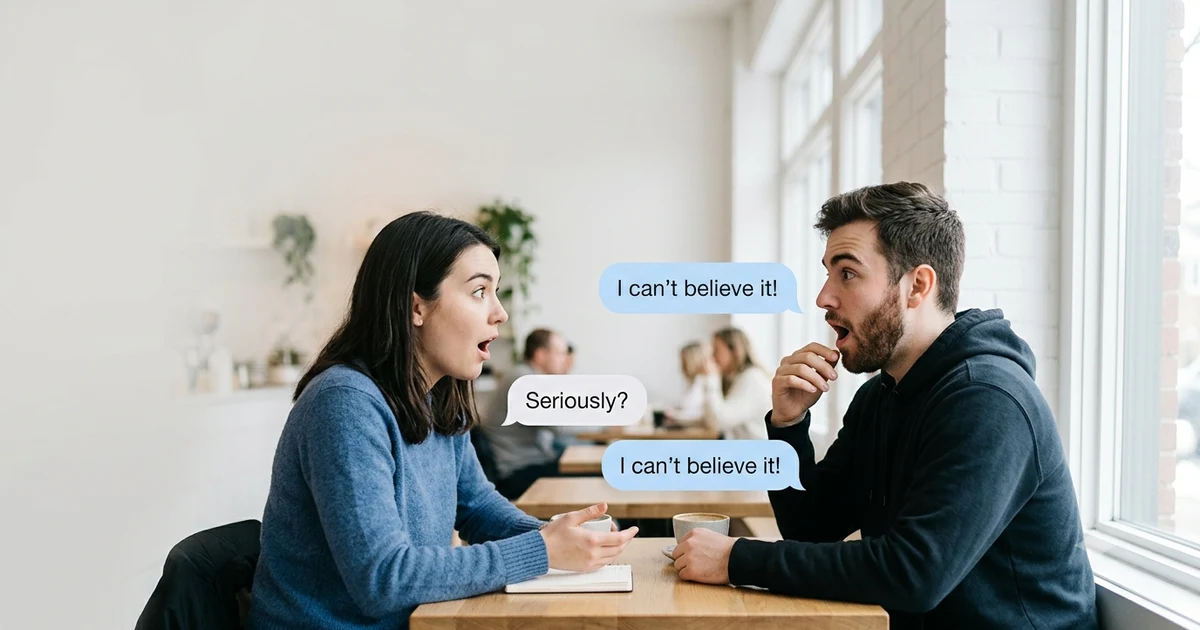
People often use No way to show surprise, disbelief, excitement, or a strong refusal. While it works well in casual conversations, it may not always fit every situation. Sometimes you need a more polite, professional, or expressive alternative depending on who you’re talking to.
This guide covers different ways to say No way, what each one means, when to use it, and examples that sound natural in everyday English. Whether you’re texting a friend, replying on social media, or speaking at work, you’ll find an option that matches the tone you want.
Quick Answer
There are many alternatives to No way, including Absolutely not, I don’t think so, That’s impossible, No chance, I can’t believe it, You’re kidding, and Not at all. The best choice depends on whether you want to express surprise, disagreement, disbelief, or a firm refusal.
TL;DR
- Meaning: A phrase used to express surprise, disbelief, excitement, or refusal.
- Tone: Usually casual and emotional.
- Common use: Everyday conversations, texting, and social media.
- Where it appears: Messages, chats, comments, and spoken English.
- Formal or informal: Mostly informal. More professional alternatives work better in business settings.
What No Way Means
No way is a common English expression with more than one meaning. The exact meaning depends on the situation and the speaker’s tone.
People commonly use it to:
- Express surprise
- Show disbelief
- Reject an idea or request
- React to exciting news
- Emphasize that something seems impossible
For example:
Friend: I won free concert tickets.
Reply: No way. That’s amazing.
Here, the phrase shows surprise and excitement.
Another example:
Coworker: Can you finish the whole project in an hour?
Reply: No way.
In this case, it means something is impossible or unlikely.
Because context changes its meaning, listeners usually understand it from the conversation rather than the words alone.
Basic Explanation
Unlike internet abbreviations, No way is a complete English phrase rather than an acronym.
It has become a natural part of everyday conversation in many English-speaking countries. People use it because it is short, expressive, and easy to understand.
Depending on how it is spoken, it can communicate:
- Genuine surprise
- Friendly excitement
- Strong disagreement
- Complete refusal
- Disbelief
- Amazement
Voice tone and facial expressions often make the intended meaning clearer during face-to-face conversations.
Other Ways to Say No Way
Here are some natural alternatives, grouped by meaning.
| Alternative | Best Used For | Tone |
|---|---|---|
| Absolutely not | Strong refusal | Firm |
| No chance | Impossible or refusal | Casual |
| I don’t think so | Polite disagreement | Neutral |
| Not at all | Polite refusal | Professional |
| That’s impossible | Something cannot happen | Serious |
| You’re kidding | Surprise or disbelief | Casual |
| Seriously? | Shock or disbelief | Informal |
| I can’t believe it | Amazement | Friendly |
| You must be joking | Disbelief | Informal |
| Unbelievable | Surprise | Casual |
| Over my dead body | Strong refusal | Dramatic |
| Not happening | Firm rejection | Casual |
| There’s no way | Impossible | Neutral |
| No thanks | Polite decline | Friendly |
| I’d rather not | Gentle refusal | Polite |
| I can’t agree with that | Professional disagreement | Formal |
| That’s out of the question | Strong professional refusal | Formal |
| Impossible | Brief disbelief | Neutral |
| I seriously doubt it | Skepticism | Neutral |
| Not a chance | Strong refusal | Casual |
How People Use It in Texting or Online Conversations
In text messages and social media, No way usually appears as a quick emotional reaction.
You might see it in:
- Private text conversations
- Group chats
- Instagram comments
- TikTok replies
- Snapchat messages
- Facebook posts
- Reddit discussions
Examples:
Friend: We just got front-row seats.
Reply: No way. That’s incredible.
Sibling: Mom said we can order pizza tonight.
Reply: No way. Best news today.
Friend: I think I’ll finish this marathon without training.
Reply: No way.
Online, people sometimes extend the phrase to make it more expressive.
Examples include:
- No way lol
- No way haha
- No way seriously
- Noooo way
- No way that’s crazy
These variations make the reaction feel more emotional while keeping the same basic meaning.
Tone and Emotional Meaning
No way can express several different emotions.
Surprise
Someone shares unexpected news.
Example:
I met my favorite actor today.
Reply:
No way. Really?
Excitement
The speaker reacts positively.
Example:
We got free upgrades on our flight.
Reply:
No way. That’s awesome.
Disbelief
The speaker finds something hard to believe.
Example:
He finished the race in under three hours.
Reply:
No way.
Strong Refusal
Someone clearly rejects an idea.
Example:
Can you work every weekend this month?
Reply:
No way.
Playful Reaction
Friends often use it jokingly.
Example:
I beat you at every game today.
Reply:
No way. That never happened.
Common Situations Where It Appears
People use this expression in many everyday situations, including:
- Reacting to surprising news
- Responding to exciting announcements
- Showing disbelief during conversations
- Declining invitations casually
- Refusing unreasonable requests
- Chatting with friends
- Commenting on social media posts
- Responding in online gaming chats
- Talking with classmates
- Casual family conversations
Its flexibility is one reason it remains one of the most common expressions in everyday spoken English.

Examples in Real Conversations
These examples show how different alternatives fit naturally into everyday conversations.
Situation: Reacting to surprising news
Example
Alex: I won tickets to the championship game.
Jordan: I can’t believe it. That’s amazing.
Meaning
Jordan is expressing genuine surprise and excitement.
Situation: Turning down an unreasonable request
Example
Manager: Can you finish this week’s work by lunchtime?
Employee: I don’t think that’s realistic.
Meaning
This response politely communicates that the request is unlikely to be possible.
Situation: Friendly disbelief
Example
Friend: I ran into my favorite singer at the airport.
Reply: Seriously? That’s incredible.
Meaning
The speaker finds the story surprising but is interested in hearing more.
Situation: Declining an invitation
Example
Friend: Want to go hiking at 5 a.m. tomorrow?
Reply: No thanks. I’ll pass this time.
Meaning
The invitation is declined politely without sounding rude.
Situation: Something seems impossible
Example
Coworker: We can complete six months of work today.
Reply: There’s no way.
Meaning
The speaker believes the goal is unrealistic.
Situation: Lighthearted conversation
Example
Friend: I finished the entire pizza by myself.
Reply: You’re kidding.
Meaning
The reply expresses playful disbelief rather than actual doubt.
Similar Terms and Related Phrases
Many English expressions communicate a similar idea, but each has a slightly different tone.
| Phrase | Best Used When | Tone |
|---|---|---|
| Absolutely not | Strong refusal | Firm |
| No chance | Something will not happen | Casual |
| There’s no way | Something seems impossible | Neutral |
| You’re kidding | Surprised by unexpected news | Friendly |
| Seriously? | Asking for confirmation | Curious |
| I can’t believe it | Positive surprise | Warm |
| Impossible | Something cannot happen | Direct |
| Not a chance | Strong rejection | Informal |
| I don’t think so | Polite disagreement | Neutral |
| That’s out of the question | Formal refusal | Professional |
Although these phrases are similar, choosing the right one depends on the situation and the relationship between the speakers.
When You Should Use It
This expression works best in relaxed conversations where casual language feels natural.
Good situations include:
- Talking with friends
- Text messaging
- Family conversations
- Reacting to surprising news
- Social media comments
- Casual group chats
- Friendly online gaming conversations
- Celebrating exciting moments
- Showing disbelief in a humorous way
It also works well when your goal is to sound expressive rather than formal.
When You Should Avoid It
Although common, this phrase is not appropriate everywhere.
Consider using a different expression when:
- Writing professional emails
- Speaking with clients
- Giving presentations
- Responding to customers
- Writing academic papers
- Communicating in formal business meetings
- Speaking with someone who expects a more respectful tone
Instead, consider alternatives such as:
- I don’t believe that’s possible.
- Unfortunately, I can’t agree.
- That may not be feasible.
- I don’t think that would work.
- I’m afraid that’s not possible.
These options sound more professional while communicating the same basic idea.
Is It Formal or Informal?
No way is considered an informal expression.
People commonly use it in:
- Everyday conversations
- Casual texting
- Social media
- Friendly emails
- Online chats
It is usually not suitable for:
- Business correspondence
- Job interviews
- Official presentations
- Academic writing
- Legal or government documents
If you’re speaking with coworkers you know well, it may occasionally sound natural during informal conversations. However, more neutral language is usually the safer choice in professional settings.
Common Misunderstandings
Because this phrase has several meanings, people sometimes misunderstand it.
Here are a few common examples.
It can sound like excitement or rejection
Someone says:
I got promoted today.
Reply:
No way.
Depending on your voice, this could mean:
- That’s amazing.
- I don’t believe you.
Adding another sentence removes the confusion.
For example:
- No way. Congratulations.
- No way. Are you serious?
Tone matters
In spoken conversation, facial expressions and voice help explain what you mean.
In texting, readers only see the words.
That is why many people add:
- Really?
- That’s awesome.
- Seriously?
- I can’t believe it.
These extra words make the intended meaning much clearer.
It may sound rude if used alone
A short response can sometimes appear dismissive.
For example:
Can you help me tomorrow?
No way.
This sounds much harsher than:
I’d love to help another day, but I can’t tomorrow.
Adding a brief explanation often creates a friendlier conversation.
USA and Tier 1 Country Usage
This expression is widely understood across English-speaking countries, including the United States, Canada, the United Kingdom, Australia, and New Zealand.
While people everywhere recognize it, they may choose slightly different alternatives depending on local habits.
- United States: Frequently used in casual speech to express surprise, excitement, or disbelief.
- Canada: Common in everyday conversations and text messages, often with a friendly tone.
- United Kingdom: People may also use expressions such as You’re joking, Seriously, or You’re having me on in informal settings.
- Australia: Along with No way, phrases like No chance and You’re kidding are common in casual conversations.
- New Zealand: Everyday speech often includes No way, Seriously, and similar conversational reactions.
Across these countries, context and tone matter more than the words themselves. Friends often use these expressions freely, while workplaces generally favor more neutral language.
Quick Reference Table
| Context | What It Means | Tone | Best Use | Avoid If |
|---|---|---|---|---|
| Friend shares exciting news | Surprise | Friendly | Casual conversation | Formal meetings |
| Someone makes an unbelievable claim | Disbelief | Curious | Texting and chat | Professional emails |
| Rejecting an idea | Strong refusal | Direct | Friends and family | Customer communication |
| Social media comment | Excitement | Casual | Instagram, TikTok, Facebook | Business pages |
| Group chat | Amazement | Relaxed | Everyday messaging | Academic discussions |
| Workplace discussion | Better replaced with a formal alternative | Professional | Use neutral wording instead | Official documents |
Conclusion
No way is one of the most versatile expressions in everyday English. Depending on the situation, it can show surprise, excitement, disbelief, or a firm refusal. Because its meaning changes with context and tone, it works best in casual conversations, text messages, and social media. If you need a more professional or polite option, alternatives such as I don’t think so, That may not be possible, Absolutely not, or I’d rather not often fit better. Choosing the right phrase helps your message sound natural and appropriate for the person and situation.
FAQs
What does No way mean in text?
In text messages, No way usually expresses surprise, disbelief, or excitement. The exact meaning depends on the conversation and any additional words or emojis.
Example
Friend: I won the raffle.
Reply: No way. Congratulations.
What does No way mean in texting?
In texting, it is commonly used as a quick reaction to unexpected news. It can also politely or firmly reject an idea when the context makes that meaning clear.
Is No way rude?
Not usually. Among friends and family, it often sounds natural and friendly. However, using it by itself without any explanation can sound abrupt or dismissive, especially in serious conversations.
Can I use No way in a professional message?
It is generally better to avoid it in formal workplace communication. Professional alternatives include:
- I don’t think that’s possible.
- Unfortunately, I can’t agree.
- That may not be feasible.
- I’m afraid that won’t work.
These phrases sound more appropriate in business emails and meetings.
What is the difference between No way and No chance?
Both express refusal or disbelief, but No chance usually sounds firmer and more definite.
Example
No way. I didn’t expect that.
This expresses surprise.
No chance I’m working on Saturday.
This expresses a strong refusal.
Is No way common on social media?
Yes. It is widely used on platforms such as Instagram, TikTok, Facebook, Reddit, and X. People often use it to react to surprising stories, funny videos, or exciting announcements.
Can No way have a positive meaning?
Yes. Although it literally contains the word No, it often communicates positive surprise or excitement.
Example
Friend: We got upgraded to first class.
Reply: No way. That’s incredible.
Here, the speaker is expressing happiness rather than disagreement.