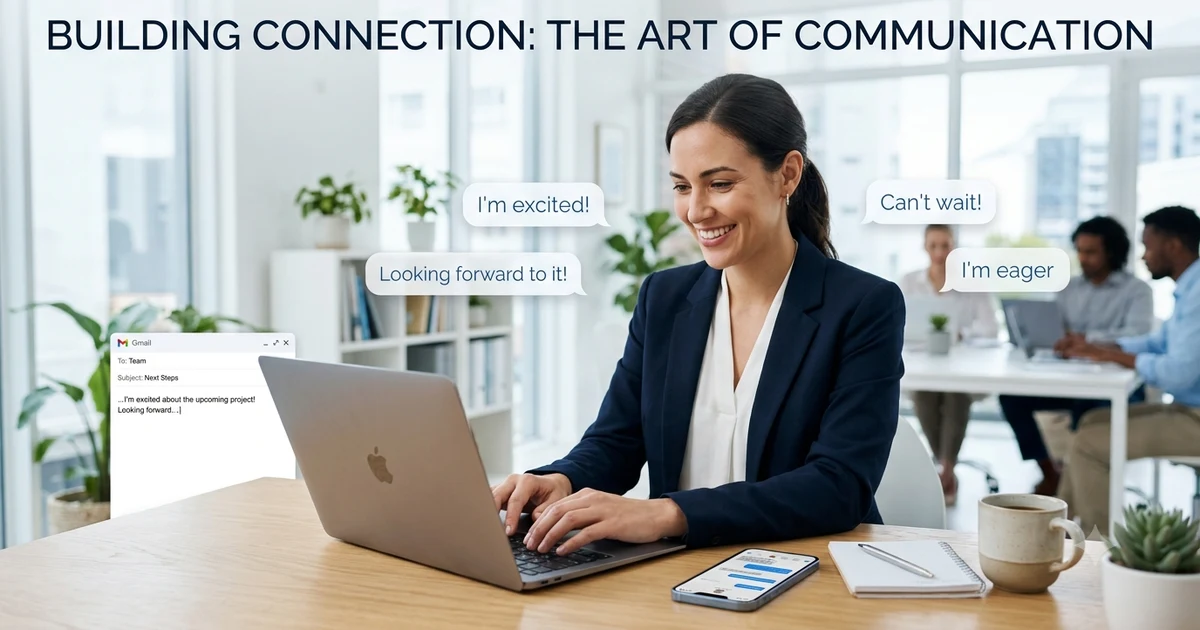
Looking for other ways to say I look forward to it can help you sound more natural, professional, or friendly depending on the situation. While the phrase is polite and widely used, repeating it too often can make your writing feel repetitive. Whether you are replying to a work email, sending a text to a friend, or writing to a client, there are many alternatives that fit different tones and situations.
Quick Answer
Other ways to say I look forward to it include I can’t wait, I’m excited about it, I’m eager to hear more, I’m looking forward to that, It will be great, I’m happy to be part of it, and I’m anticipating it. The best choice depends on whether your message is formal, casual, professional, or personal.
TL;DR
- Meaning: Shows that you feel positive or excited about something that will happen in the future.
- Tone: Usually polite, friendly, and optimistic.
- Common use: Emails, text messages, meetings, invitations, and everyday conversations.
- Where it appears: Professional messages, casual chats, and social media.
- Formal or informal: Works in both, but many alternatives fit specific situations better.
What Other Ways to Say I Look Forward to It Mean
The phrase I look forward to it tells someone that you expect a future event with positive feelings. It shows interest, appreciation, or excitement without sounding overly emotional.
People often use it after discussing:
- A meeting
- A phone call
- An event
- A project
- A vacation
- A delivery
- Good news
- Spending time with someone
Although it is polite, using the same phrase repeatedly can make emails and conversations feel predictable. Choosing an alternative keeps your communication fresh while matching the tone you want.
For example:
- I look forward to seeing the final design.
- I’m excited to see the final design.
- It will be great to see the final design.
- I can’t wait to see the final design.
Each sentence shares the same basic meaning but creates a slightly different impression.
Basic Explanation
Unlike internet abbreviations or slang, I look forward to it is a complete English expression rather than a shortened form.
Breaking it down makes the meaning clear:
- I refers to the speaker.
- Look forward to means to expect something with pleasure.
- It refers to the future event or activity already mentioned.
Together, the phrase simply means you are happy that something is going to happen.
Because it is widely understood across English-speaking countries, it works well in:
- Business emails
- Job interviews
- Customer communication
- School correspondence
- Friendly conversations
- Family messages
How People Use It in Texting or Online Conversation
Many people replace I look forward to it with shorter or more conversational expressions in texts and online chats. These alternatives sound natural while keeping the same positive meaning.
Casual texting
Instead of saying:
I look forward to it.
People often write:
- Can’t wait
- Sounds good
- Looking forward to that
- That’ll be great
- I’m excited
- See you then
- It’ll be fun
Workplace chat
In platforms like Slack or Microsoft Teams, people often choose phrases such as:
- Looking forward to working together.
- Happy to help.
- Excited to get started.
- I’ll be ready.
- See you at the meeting.
These options sound friendly while remaining professional.
Social media
On Instagram, Facebook, LinkedIn, or TikTok, someone might comment:
- Can’t wait to see it.
- Excited for this.
- Looking forward to the update.
- This will be amazing.
- Wishing you the best. Looking forward to seeing the results.
These phrases show encouragement without sounding overly formal.
Tone and Emotional Meaning
The phrase usually carries a positive and respectful tone. However, the emotion changes depending on the alternative you choose.
| Alternative | Tone | Best Used For |
|---|---|---|
| I’m excited | Warm and enthusiastic | Friends, coworkers |
| I can’t wait | Very enthusiastic | Family, close friends |
| I’m eager | Professional and positive | Work, interviews |
| It’ll be great | Friendly | General conversations |
| I’m anticipating it | Formal | Business writing |
| Sounds good | Relaxed | Casual chats |
| I’m happy to be part of it | Appreciative | Team projects |
| I’m looking forward to that | Friendly and natural | Most situations |
Choosing the right expression helps your message sound more genuine.
For example:
Manager: We’ll review your proposal next Tuesday.
Reply:
I’m looking forward to your feedback.
Friend: Our road trip is finally happening next weekend.
Reply:
I can’t wait.
Client: We’ll begin the project on Monday.
Reply:
I’m excited to work with your team.
Although each response expresses anticipation, the tone changes from professional to casual depending on the situation.
Common Situations Where These Alternatives Appear
You can replace I look forward to it in many everyday conversations.
Professional communication
- Confirming a meeting
- Replying to a client
- Following up after an interview
- Starting a new project
- Thanking someone for an opportunity
Personal conversations
- Planning dinner with friends
- Talking about a vacation
- Meeting family members
- Attending a celebration
- Going to a concert
Online conversations
- Replying to event invitations
- Commenting on social media posts
- Messaging in group chats
- Responding to announcements
- Discussing upcoming livestreams or releases
School and university
- Group assignments
- Meeting professors
- Club activities
- Graduation events
- Class presentations
Customer service
- Waiting for an order
- Receiving an update
- Booking an appointment
- Scheduling a consultation
- Confirming a delivery
.
Examples in Real Conversations
Seeing these alternatives in context makes it easier to choose the right one for your own messages.
Situation: Responding to a job interview invitation
Example
Hiring Manager: We’d like to meet with you on Thursday.
You: I’m excited to speak with you on Thursday.
Meaning
Shows enthusiasm while staying professional.
Situation: Planning dinner with friends
Example
Friend: We’re meeting at 7 p.m. on Friday.
You: I can’t wait to see everyone.
Meaning
Expresses genuine excitement in a casual way.
Situation: Starting a new project
Example
Manager: We’ll begin work next week.
You: I’m eager to get started.
Meaning
Shows motivation and a positive attitude.
Situation: Waiting for results
Example
Teacher: I’ll post the grades tomorrow.
Student: I’m looking forward to seeing the results.
Meaning
Shows interest without sounding impatient.
Situation: Receiving a package
Example
Friend: Your order should arrive tomorrow.
You: It’ll be great to finally have it.
Meaning
Expresses pleasant anticipation.
Situation: Attending a family gathering
Example
Sibling: Everyone will be there this weekend.
You: I’m really looking forward to seeing everyone.
Meaning
Communicates warmth and happiness.
Situation: Meeting a client
Example
Client: Let’s discuss the proposal next Tuesday.
You: I appreciate the opportunity and look forward to our discussion.
Meaning
Sounds polite and professional.
Situation: Watching a movie
Example
Friend: The new movie comes out next week.
You: I’m excited to watch it.
Meaning
Shows enthusiasm in everyday conversation.
Situation: Joining an online event
Example
Organizer: Thanks for registering for the webinar.
You: Looking forward to learning more.
Meaning
Shows interest and appreciation.
Situation: Going on vacation
Example
Friend: Only three more days until the trip.
You: I can’t wait for the vacation.
Meaning
Expresses strong excitement.
Similar Terms or Related Phrases
Many English expressions communicate the same basic idea, but each has a slightly different tone.
| Phrase | Best For | Tone |
|---|---|---|
| I’m excited | Friends, coworkers | Warm |
| I can’t wait | Close friends and family | Very casual |
| I’m eager | Business and interviews | Professional |
| It’ll be great | Everyday conversations | Friendly |
| Looking forward to that | Most situations | Natural |
| I’m anticipating it | Formal writing | Formal |
| Sounds good | Quick replies | Casual |
| See you then | Confirming plans | Friendly |
| I’m happy to be part of it | Team projects | Appreciative |
| I’m thrilled | Celebrations and achievements | Enthusiastic |
How they differ
I’m excited
Shows energy and enthusiasm.
Best for:
- New opportunities
- Events
- Projects
I can’t wait
Expresses stronger excitement.
Best for:
- Friends
- Family
- Vacations
- Birthdays
Avoid using it in formal business emails.
I’m eager
Professional and positive.
Common in:
- Job interviews
- Workplace emails
- Business meetings
Sounds good
A simple confirmation rather than strong excitement.
Works well for:
- Text messages
- Group chats
- Casual plans
I’m thrilled
Stronger than I’m excited.
Often used for:
- Awards
- Big announcements
- Personal milestones
When You Should Use It
Alternatives to I look forward to it work best when you want to show positive expectations about something in the future.
Good situations include:
- Accepting an invitation
- Confirming a meeting
- Starting a new job
- Beginning a project
- Responding to good news
- Waiting for an event
- Thanking someone for an opportunity
- Planning a vacation
- Looking forward to seeing family or friends
Choose an expression that matches the situation.
For example:
Formal email
I’m eager to discuss this with you next week.
Casual text
Can’t wait.
Professional message
I’m excited to work with your team.
Friendly conversation
It’ll be great to catch up.
When You Should Avoid It
Although these expressions are generally positive, they do not fit every situation.
Avoid using very enthusiastic phrases when:
- Delivering bad news
- Discussing serious problems
- Writing legal documents
- Sending formal complaints
- Responding to emergencies
For example, saying I can’t wait in a complaint email may sound inappropriate.
Instead, write:
- I appreciate your prompt attention.
- I look forward to your response.
- Thank you for your assistance.
Also avoid using overly casual alternatives with people you do not know well.
Examples include:
- Can’t wait
- Super excited
- So pumped
These work better with friends than with clients or senior managers.
Is It Formal or Informal?
The phrase I look forward to it is flexible because it works in both formal and informal communication.
Formal situations
Suitable for:
- Business emails
- Job applications
- Client communication
- University correspondence
- Professional networking
Examples:
- I look forward to hearing from you.
- I’m eager to discuss the proposal.
- I appreciate your time and look forward to our meeting.
Informal situations
Friends usually choose shorter alternatives.
Examples:
- Can’t wait.
- Looking forward to it.
- It’ll be fun.
- See you then.
- I’m excited.
Professional messages
Most workplaces prefer expressions that are positive without sounding overly emotional.
Good choices include:
- I’m looking forward to working together.
- I’m eager to learn more.
- I’m pleased to join the discussion.
- I appreciate the opportunity.
Common Misunderstandings
Although the phrase is simple, people sometimes misunderstand its tone.
It always means excitement
Not necessarily.
Sometimes it simply shows politeness rather than strong emotion.
For example:
I look forward to your reply.
This sounds courteous rather than excited.
It sounds too formal
Some people think the phrase belongs only in business emails.
In reality, many native English speakers also use it in everyday conversations.
It is old-fashioned
Not at all.
It remains common in workplaces, schools, customer service, and personal communication.
Some people simply choose newer alternatives in casual texting because they sound shorter and more conversational.
USA and Tier 1 Country Usage
People in the United States, Canada, the United Kingdom, Australia, and New Zealand all understand this phrase and its alternatives without difficulty.
In professional settings, you’ll often see:
- I look forward to working with you.
- I look forward to hearing from you.
- I’m eager to learn more.
In casual conversations, shorter expressions are more common, such as:
- Can’t wait.
- Looking forward to it.
- Sounds great.
- See you then.
- I’m excited.
While preferences vary from person to person, these alternatives sound natural across English-speaking countries and are widely accepted in emails, text messages, workplace chats, and social media.
Quick Reference Table
| Context | What It Means | Tone | Best Use | Avoid If |
|---|---|---|---|---|
| Business email | Positive expectation | Professional | Clients, coworkers | You need a very formal legal tone |
| Job interview | Interest and enthusiasm | Professional | Interview replies | Never |
| Casual text | Excitement | Friendly | Friends and family | Formal communication |
| Social media | Positive anticipation | Relaxed | Comments and captions | Serious discussions |
| Team project | Willingness to participate | Cooperative | Workplace collaboration | Urgent complaints |
| Family event | Happiness about future plans | Warm | Gatherings and celebrations | Sensitive conversations |
| Customer service | Appreciation and expectation | Polite | Appointment confirmations | Complaint letters requiring firm language |
| Academic setting | Interest in future discussions | Respectful | Teachers, professors, classmates | Highly technical or legal writing |
Conclusion
Knowing other ways to say I look forward to it helps you communicate more naturally in every situation. Whether you’re writing a professional email, sending a quick text, or responding on social media, choosing the right expression can make your message sound more genuine and appropriate. For formal communication, phrases like I’m eager to discuss this, I appreciate the opportunity, and I look forward to our meeting work well. In casual conversations, options such as I can’t wait, I’m excited, or It’ll be great sound more relaxed and friendly. The best choice depends on your relationship with the other person, the setting, and the tone you want to create. By using different alternatives, you can avoid repetition while expressing the same positive anticipation clearly and naturally.
Frequently Asked Questions
What are other ways to say I look forward to it?
Some common alternatives include:
- I’m excited.
- I can’t wait.
- I’m eager.
- It’ll be great.
- Looking forward to that.
- I’m anticipating it.
- Sounds good.
- I’m happy to be part of it.
Each expression works best in different situations depending on the level of formality.
Is I look forward to it formal or informal?
It can be both. The phrase is polite enough for business emails and professional communication, but it also sounds natural in everyday conversations. The context determines whether it feels formal or casual.
Can I use I can’t wait instead of I look forward to it?
Yes, but only in casual situations. I can’t wait expresses stronger excitement and works well with friends, family, or informal messages. For workplace emails or communication with clients, a more professional alternative is usually better.
What is the best professional alternative?
Some of the best professional options include:
- I’m eager to discuss this.
- I appreciate the opportunity.
- I’m looking forward to working with you.
- I look forward to our meeting.
- I’m pleased to continue our collaboration.
These phrases sound polite without being overly formal.
Is I look forward to it polite?
Yes. It is one of the most polite and widely accepted ways to express positive anticipation. Native English speakers commonly use it in emails, meetings, customer service, and personal conversations.
Can I use these alternatives in text messages?
Yes. Shorter alternatives are especially common in texting and online chats. Examples include:
- Can’t wait.
- Looking forward to it.
- Sounds great.
- See you then.
- I’m excited.
These sound natural in casual digital conversations.
Which alternative sounds the most enthusiastic?
If you want to express strong excitement, consider using:
- I can’t wait.
- I’m thrilled.
- I’m so excited.
- I’m really looking forward to it.
- This is going to be great.
These phrases show more emotion than the standard expression while remaining natural.