
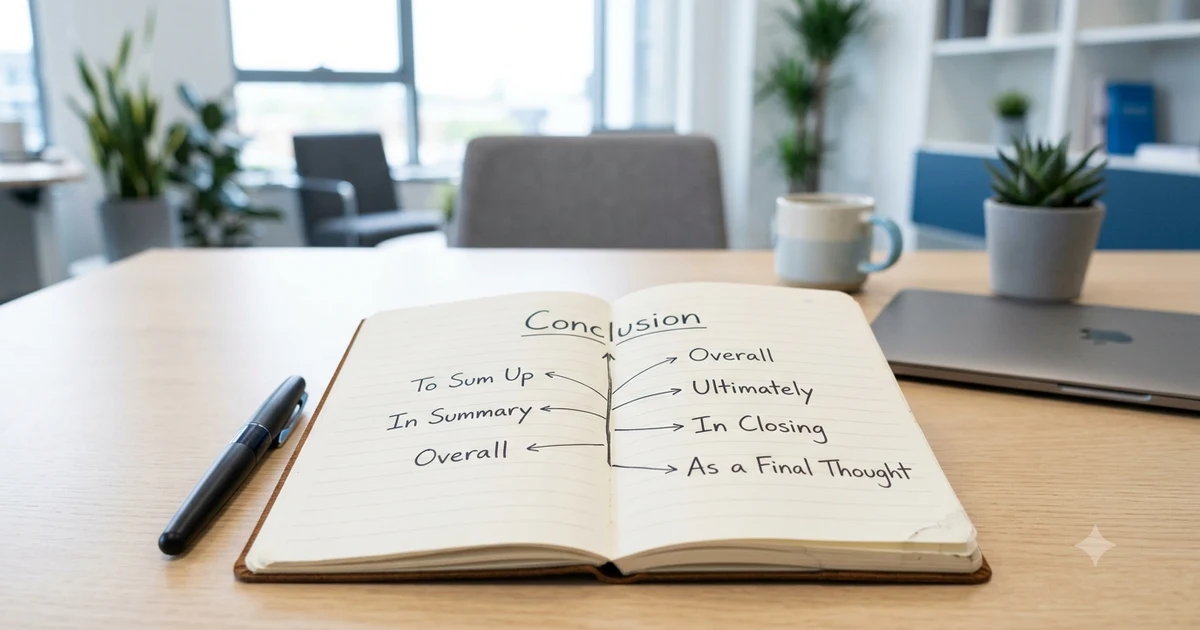
Ending a piece of writing with the same closing phrase every time can make your work sound repetitive. Many people search for other ways to say in conclusion because they want stronger, more natural endings for essays, reports, emails, presentations, or everyday writing.
The good news is that English offers plenty of alternatives. Some work well in formal academic writing, while others fit casual conversations or business communication. Choosing the right phrase depends on your audience, purpose, and tone.
Quick Answer
Other ways to say in conclusion include to sum up, in summary, overall, all things considered, ultimately, in the end, to conclude, finally, and taking everything into account. Each option has a slightly different tone, so choosing the right one helps your writing sound more natural and effective.
TL;DR
- Meaning: Alternatives that help introduce a closing statement or final thought.
- Tone: Can be formal, neutral, or casual depending on the phrase.
- Common use: Essays, reports, presentations, emails, articles, and speeches.
- Where it appears: Academic, professional, and everyday writing.
- Formal or informal: Some expressions are highly formal, while others work best in casual writing.
What Does In Conclusion Mean?
The phrase in conclusion signals that the writer is about to wrap up their ideas. It tells readers that the main discussion has ended and a final summary or opinion is coming next.
Although it is correct and widely understood, many teachers, editors, and professional writers recommend using different transition words to avoid repetition. A fresh closing phrase often makes writing flow more naturally.
For example:
- In conclusion, exercise improves both physical and mental health.
- Overall, exercise improves both physical and mental health.
- To sum up, exercise benefits both the body and the mind.
All three sentences communicate the same idea, but each creates a slightly different tone.
Why Look for Other Ways to Say In Conclusion?
Using the same transition repeatedly can make writing feel predictable. Different situations call for different closing expressions.
A better alternative can help you:
- Improve readability.
- Match the tone of your audience.
- Sound more professional.
- Avoid repetitive language.
- Create smoother transitions between ideas.
For example, a university essay may benefit from a formal ending, while a blog post often sounds more conversational with a simple phrase like overall or in the end.
Best Alternatives to In Conclusion
The table below lists common alternatives along with their typical tone and best use.
| Alternative | Tone | Best For |
|---|---|---|
| To sum up | Neutral | Essays, blogs |
| In summary | Formal | Reports, research papers |
| Overall | Neutral | Articles, reviews |
| To conclude | Formal | Presentations, essays |
| All things considered | Neutral | Opinion writing |
| Ultimately | Neutral | Analysis and arguments |
| In the end | Casual | Blogs, conversations |
| Finally | Neutral | General writing |
| Taking everything into account | Formal | Business writing |
| On the whole | Neutral | Reviews and evaluations |
| As a final point | Formal | Speeches |
| To wrap up | Casual | Presentations and meetings |
| Looking back | Casual | Personal writing |
| At the end of the day | Informal | Conversations and blogs |
| In closing | Formal | Speeches and letters |
Formal Alternatives for Academic Writing
Academic writing usually benefits from precise and professional language. Instead of repeating the same ending phrase, consider these alternatives.
In Summary
This is one of the safest choices for essays and research papers.
Example:
In summary, the evidence supports renewable energy as a practical long-term solution.
To Conclude
This option clearly signals the end of a discussion.
Example:
To conclude, stronger environmental policies can reduce pollution over time.
Overall
Overall works well when you want to give a balanced final opinion.
Example:
Overall, the study demonstrates consistent improvements across all age groups.
Taking Everything Into Account
This phrase fits reports and formal evaluations.
Example:
Taking everything into account, the proposed strategy offers the greatest long-term value.
All Things Considered
This expression summarizes multiple factors before reaching a conclusion.
Example:
All things considered, investing in employee training benefits both workers and employers.
Casual Alternatives for Everyday Writing
Not every piece of writing needs a formal ending. Blog posts, social media captions, and personal messages often sound better with relaxed language.
Popular casual alternatives include:
- In the end
- So
- Overall
- To wrap up
- Looking back
- At the end of the day
- When all is said and done
Example:
Looking back, moving to a smaller apartment turned out to be the right decision.
Example:
In the end, choosing the cheaper option saved us both time and money.
These expressions feel natural in everyday English and are widely understood across the United States, Canada, the United Kingdom, Australia, and other English-speaking countries.
Professional Alternatives for Business Writing
Business communication should sound clear, confident, and respectful. Instead of relying on the same closing phrase, these alternatives often fit better.
- In summary
- Overall
- Taking everything into account
- Based on the information above
- To conclude
- As a final point
- In closing
Example email ending:
In summary, the project remains on schedule and all major milestones have been completed successfully.
Example report ending:
Based on the information above, the recommended solution offers the best balance of cost and performance.
These options help your writing sound polished without appearing repetitive.
Other Ways to Say In Conclusion With Examples
Here are several practical replacements along with example sentences.
To Sum Up
Best for general writing.
Example:
To sum up, regular practice leads to steady improvement.
Overall
Works in both formal and informal writing.
Example:
Overall, customer feedback has been overwhelmingly positive.
Ultimately
Useful when presenting a final judgment.
Example:
Ultimately, the decision depends on your budget and priorities.
Finally
Good for ending discussions naturally.
Example:
Finally, remember that consistency matters more than perfection.
In Closing
Often used in speeches and formal presentations.
Example:
In closing, I would like to thank everyone for their support.
On the Whole
Useful when giving a balanced opinion.
Example:
On the whole, the benefits outweigh the disadvantages.
As a Final Thought
Suitable for blogs and opinion pieces.
Example:
As a final thought, small daily habits often create the biggest long-term results.
When All Is Said and Done
A conversational choice.
Example:
When all is said and done, honesty remains the best approach.
In the Final Analysis
A more formal expression.
Example:
In the final analysis, careful planning reduces unnecessary risks.
To Wrap Up
Popular in presentations and meetings.
Example:
To wrap up, let’s review today’s key action items.
Choosing the Right Alternative
Not every closing phrase fits every situation. The best choice depends on who will read your writing and what you want your ending to achieve.
For school essays
Good options include:
- In summary
- To conclude
- Overall
- To sum up
These phrases sound organized and help readers recognize your final point.
For business reports
Professional alternatives include:
- Taking everything into account
- Based on the evidence
- In summary
- As a final point
These expressions sound clear and objective.
For presentations
Speakers often use:
- To wrap up
- Before we finish
- In closing
- Finally
These transitions help listeners follow the structure of your presentation.
For blog posts
Blog writing usually sounds more natural with conversational endings such as:
- Overall
- In the end
- Looking back
- As a final thought
These create a friendly tone without sounding overly formal.
Common Situations Where These Alternatives Work
Here are a few everyday situations where different closing phrases fit naturally.
- College essays that summarize research
- Workplace reports that present recommendations
- Business emails with final action points
- Blog articles ending with practical advice
- Speeches that leave a lasting impression
- Newsletters that summarize updates
- Reviews that provide an overall opinion
- Personal reflections that share lessons learned
Choosing a phrase that matches the context makes your writing feel smoother and more intentional.
Examples in Real Writing
Situation
A student finishes an argumentative essay.
Example
To sum up, reducing plastic waste requires both government action and individual responsibility.
Meaning
The writer summarizes the main argument before ending the essay.
Situation
A manager writes a project report.
Example
Taking everything into account, the project met its goals despite minor delays.
Meaning
The report reaches a balanced final assessment.
Situation
Someone publishes a travel blog.
Example
Overall, visiting the national parks was the highlight of our trip.
Meaning
The writer shares an overall opinion based on the full experience.
Situation
A team leader ends a meeting.
Example
To wrap up, everyone will submit progress updates by Friday.
Meaning
The speaker summarizes the next steps.
Situation
A speaker finishes a presentation.
Example
In closing, thank you for your time and thoughtful questions.
Meaning
The presentation ends politely and professionally.
Similar Phrases and How They Differ
Many expressions have a similar purpose, but they are not always interchangeable.
| Phrase | Best Use | Difference |
|---|---|---|
| To sum up | General writing | Brief summary of key points |
| In summary | Academic and business | More formal than most alternatives |
| Overall | Reviews and articles | Gives a broad opinion rather than a detailed summary |
| Ultimately | Analysis | Focuses on the final result or decision |
| Finally | Lists and conclusions | Can introduce the last point instead of the final summary |
| In closing | Speeches and letters | Formal ending statement |
| To wrap up | Presentations | Conversational and spoken English |
| At the end of the day | Informal discussion | Emphasizes the most important point |
When You Should Use These Alternatives
Replacing in conclusion works well when you want your writing to sound more natural.
Consider using an alternative when:
- You have already used the phrase several times.
- You want to match a formal or casual tone.
- You want a smoother transition into your final paragraph.
- You are writing for professional or academic audiences.
- You want your conclusion to feel fresh rather than predictable.
Readers usually notice strong conclusions more than standard transition words.
When You Should Avoid Certain Alternatives
Some expressions sound too casual for formal documents.
For example:
- At the end of the day may sound conversational in a research paper.
- To wrap up works well in presentations but feels informal in academic journals.
- Looking back fits personal stories but not technical reports.
Likewise, very formal expressions may feel awkward in casual blog posts or text messages.
Matching the tone to the audience is more important than choosing the most sophisticated phrase.
Are These Alternatives Formal or Informal?
Some closing expressions belong in nearly every type of writing, while others fit only certain situations.
Formal
- In summary
- To conclude
- In closing
- Taking everything into account
- As a final point
Best for:
- Essays
- Reports
- Professional emails
- Business documents
- Academic writing
Neutral
- Overall
- Ultimately
- To sum up
- All things considered
- On the whole
Best for:
- Articles
- Reviews
- Blog posts
- Presentations
Informal
- In the end
- To wrap up
- Looking back
- At the end of the day
- When all is said and done
Best for:
- Blogs
- Conversations
- Personal writing
- Speeches with a relaxed tone
Common Mistakes
Many writers make small mistakes when choosing a concluding phrase.
Avoid these habits:
- Using the exact same transition in every essay.
- Choosing a casual expression for formal academic work.
- Writing a long conclusion that repeats every paragraph.
- Adding new arguments in the conclusion instead of summarizing.
- Using a transition without providing a real conclusion afterward.
A good ending should reinforce your main message rather than introduce something completely new.
How Native English Speakers End Their Writing
Writers in the United States, Canada, the United Kingdom, Australia, and other English-speaking countries often avoid repeating in conclusion in every piece of writing.
Instead, they frequently use:
- Overall
- Ultimately
- To sum up
- In summary
- As a final thought
- In closing
- Looking back
Many professional writers even skip a transition phrase entirely and move naturally into the final paragraph.
For example:
Regular exercise supports physical health, reduces stress, and improves sleep. Making it part of your routine can provide lasting benefits.
This ending feels smooth without needing a traditional transition.
Quick Reference Table
| Context | What Works Best | Tone | Best Use | Avoid If |
|---|---|---|---|---|
| Academic essay | In summary | Formal | Research papers | Casual blogs |
| Business report | Taking everything into account | Formal | Reports | Text messages |
| Presentation | To wrap up | Casual | Meetings | Formal reports |
| Blog article | Overall | Neutral | Online articles | Legal documents |
| Personal reflection | Looking back | Casual | Memoirs | Academic papers |
| Speech | In closing | Formal | Public speaking | Casual texting |
| Review | On the whole | Neutral | Product or book reviews | Highly technical writing |
Conclusion
Knowing other ways to say in conclusion helps your writing sound more natural, polished, and engaging. Instead of relying on the same phrase every time, choose an ending that matches your audience and purpose. Formal writing often works best with expressions such as in summary or taking everything into account. For blogs, presentations, and everyday communication, options like overall, to wrap up, or as a final thought usually sound smoother. The right closing phrase should guide readers to your final message without distracting from it. Using a variety of natural transitions will make your essays, reports, emails, and articles easier to read while keeping your writing fresh and effective.
FAQs
What are the best other ways to say in conclusion?
Some of the best alternatives include:
- To sum up
- In summary
- Overall
- To conclude
- Ultimately
- All things considered
- In closing
- As a final thought
- Taking everything into account
- On the whole
The best choice depends on whether your writing is formal, professional, or casual.
Is in conclusion too formal?
Not necessarily. It is grammatically correct and widely accepted, especially in school essays and formal writing. However, using it repeatedly can make your writing sound predictable. Many writers prefer alternatives such as overall or in summary for a more natural flow.
What can I use instead of in conclusion in an essay?
Good essay alternatives include:
- In summary
- To conclude
- To sum up
- Overall
- All things considered
These expressions clearly introduce your final paragraph while maintaining an academic tone.
What is a professional alternative to in conclusion?
For business reports, presentations, and workplace writing, consider using:
- Taking everything into account
- Based on the information above
- In summary
- As a final point
- In closing
These options sound polished and appropriate in professional communication.
Can I skip a concluding transition completely?
Yes. Many experienced writers end naturally without using a transition phrase.
For example:
Regular exercise improves physical health, reduces stress, and supports better sleep. Making it part of your routine can have lasting benefits.
This approach often feels smoother than starting with a traditional closing phrase.
Is overall a good replacement for in conclusion?
Yes. Overall is one of the most versatile alternatives. It works well in articles, reviews, blog posts, presentations, and many essays. It sounds less formal while still helping readers understand your final point.
Which alternative sounds most natural in everyday writing?
For everyday English, these are among the most natural choices:
- Overall
- In the end
- Looking back
- As a final thought
- To wrap up
These phrases fit blogs, conversations, personal writing, and many online articles.