
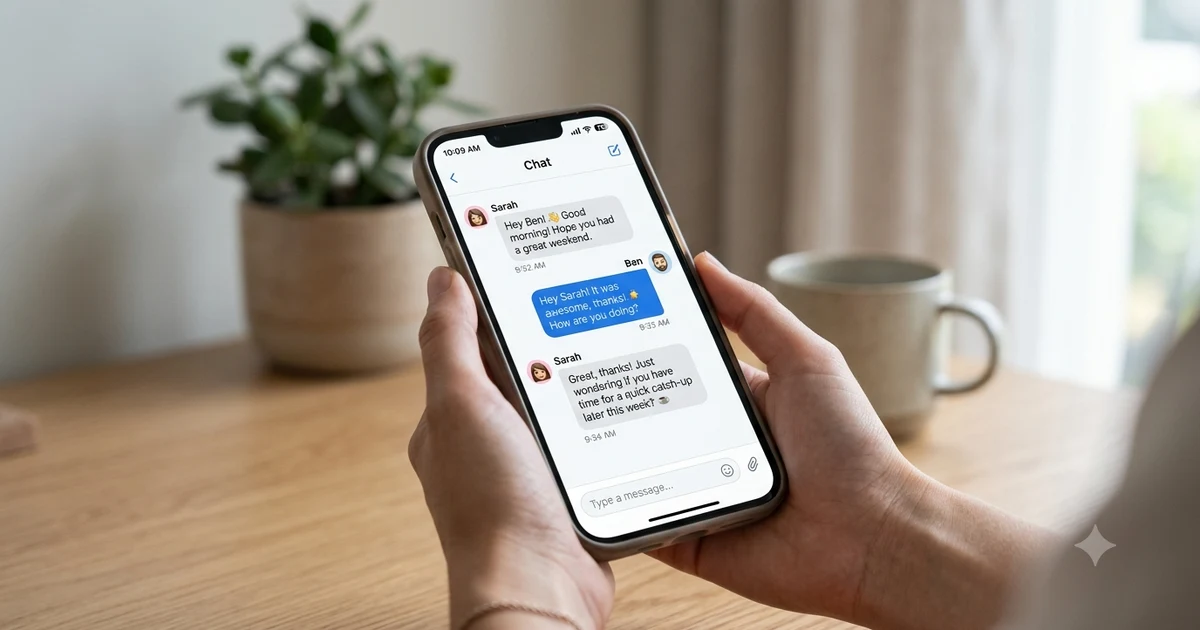
You as well is a polite response when someone shares a wish, greeting, compliment, or kind thought with you. While the phrase works in many situations, it can sometimes sound formal or repetitive. Learning other ways to say you as well helps you choose a reply that matches the person, setting, and message tone.
Quick Answer
Other ways to say you as well include same to you, likewise, you too, right back at you, and the same goes for you. Use you too in casual conversation, likewise in professional settings, and right back at you when you want a warmer or more playful reply.
TL;DR
- Meaning: The same wish, feeling, or comment applies to the other person.
- Tone: Usually polite, friendly, and positive.
- Common use: Replies to greetings, good wishes, compliments, and supportive messages.
- Where it appears: Texts, chats, emails, workplace messages, and social media comments.
- Formality: You as well is suitable for both polite casual exchanges and professional communication.
- Simple alternative: You too is the most common everyday replacement.
What Does You As Well Mean?
You as well means that something another person said also applies to them. It often returns a greeting, wish, compliment, or positive sentiment.
For example:
Person A: Have a great weekend.
Person B: You as well.
The response means I hope you have a great weekend too.
The phrase usually communicates politeness and mutual goodwill. It lets you return the other person’s message without repeating the entire sentence.
Other Ways to Say As Well As With Examples
35 Other Ways to Say You As Well
Simple Everyday Alternatives
1. You too
You too is the most natural choice in everyday conversation. It sounds friendly, brief, and relaxed.
Example:
Have a safe trip.
You too.
Best for: Texting, casual conversations, quick replies
2. Same to you
Same to you returns the same greeting or wish. Your tone determines whether it sounds sincere, playful, or sarcastic.
Example:
Hope you have a relaxing evening.
Same to you.
Best for: Friendly messages, greetings, everyday conversations
3. Likewise
Likewise is concise and slightly more polished. It works well in professional communication and polite introductions.
Example:
It was a pleasure meeting you.
Likewise.
Best for: Workplace conversations, networking, formal introductions
4. And you
And you works best when returning a question or greeting.
Example:
I am doing well. And you?
Best for: Short conversations, greetings, casual chat
5. The same to you
This version sounds a little more complete than same to you.
Example:
Wishing you a peaceful holiday.
The same to you.
Best for: Holiday greetings, polite messages, cards
6. Right back at you
Right back at you sounds warm, confident, and sometimes playful. People often use it after a compliment or friendly wish.
Example:
You always make everyone feel welcome.
Right back at you.
Best for: Friends, partners, social media comments
7. Same here
Same here shows that you share the other person’s feeling or opinion. It does not fit every good wish, but it works well for shared emotions.
Example:
I really enjoyed spending time together.
Same here.
Best for: Shared feelings, agreement, dating texts
8. Back at you
Back at you is a shorter version of right back at you. It feels casual and energetic.
Example:
Looking good today.
Back at you.
Best for: Compliments, friendly teasing, casual chat
9. And the same for you
This response is clear and thoughtful. It suits good wishes that deserve more than a one-word answer.
Example:
I hope the coming year brings you good health.
And the same for you.
Best for: Meaningful wishes, holiday messages, personal notes
10. The same goes for you
The same goes for you can return a compliment, opinion, or supportive statement.
Example:
I am always here if you need help.
The same goes for you.
Best for: Supportive conversations, close friendships, workplace teamwork
Warm and Friendly Replies
11. Wishing you the same
Wishing you the same sounds warm and sincere. It works especially well for holiday, birthday, and New Year messages.
Example:
May the new year bring you happiness and success.
Wishing you the same.
12. I hope you do too
This response feels more personal because it repeats the intention behind the original wish.
Example:
I hope you get some rest this weekend.
I hope you do too.
13. I feel the same way
Use this when someone expresses an emotion, opinion, or feeling about your relationship.
Example:
I am so glad we became friends.
I feel the same way.
14. That goes both ways
That goes both ways shows that a feeling, compliment, or offer applies equally to both people.
Example:
I really respect your honesty.
That goes both ways.
15. Sending the same your way
This phrase has a warm, conversational feel. It works well in supportive texts and social media replies.
Example:
Sending positive thoughts for the week ahead.
Sending the same your way.
16. I wish the same for you
This response sounds sincere and thoughtful.
Example:
I hope you find happiness in everything you do.
I wish the same for you.
17. I appreciate you too
Use this when someone says that they appreciate or value you.
Example:
I appreciate everything you do for the team.
I appreciate you too.
18. Much the same to you
Much the same to you sounds polite and slightly traditional. It may feel more natural in the UK than in casual American texting.
Example:
Best wishes to you and your family.
Much the same to you.
19. I could say the same about you
This reply works especially well after a genuine compliment.
Example:
You are incredibly thoughtful.
I could say the same about you.
20. Sending that good energy back
This is a modern and relaxed response to an encouraging or positive message.
Example:
Sending good energy for your interview.
Sending that good energy back.
Professional and Polite Alternatives
21. Likewise, thank you
Adding thank you makes likewise sound warmer and more appreciative.
Example:
It was wonderful working with you.
Likewise, thank you.
22. I wish you the same
This is suitable for professional emails, farewell messages, and formal good wishes.
Example:
I wish you continued success in your new role.
I wish you the same.
23. The feeling is mutual
The feeling is mutual confirms that you share someone’s opinion or positive feeling.
Example:
I have greatly valued our professional relationship.
The feeling is mutual.
24. It was a pleasure for me as well
This reply works well after a meeting, interview, or professional introduction.
Example:
It was a pleasure speaking with you today.
It was a pleasure for me as well.
25. I extend the same wishes to you
This is a formal option for written greetings and ceremonial messages.
Example:
Best wishes for a successful year ahead.
I extend the same wishes to you.
26. I hope the same for you
This response remains polite without sounding stiff.
Example:
I hope the project goes smoothly for your team.
I hope the same for you.
27. I share that sentiment
Use this when returning appreciation, respect, or a thoughtful professional comment.
Example:
I am grateful for our productive partnership.
I share that sentiment.
28. My best wishes to you as well
This complete response fits formal messages, cards, and professional emails.
Example:
Please accept my best wishes for your new position.
My best wishes to you as well.
Playful and Affectionate Replies
29. Look who is talking
This playful response suits a compliment from a close friend or romantic partner. It may sound sarcastic in the wrong setting.
Example:
You are adorable.
Look who is talking.
30. Takes one to know one
This expression playfully returns a description or compliment.
Example:
You are such a kind person.
Takes one to know one.
31. That makes two of us
Use this when both people share an emotion, preference, or experience.
Example:
I cannot wait to see you again.
That makes two of us.
32. I was about to say the same
This sounds natural when you genuinely share the same thought.
Example:
You made my day better.
I was about to say the same.
33. All that and more for you
This affectionate reply adds warmth to a heartfelt wish.
Example:
You deserve happiness, peace, and success.
All that and more for you.
34. Sending it all back to you
This casual phrase can return love, encouragement, or positive wishes.
Example:
Sending you love and good thoughts.
Sending it all back to you.
35. You know it goes both ways
This warm reply works when someone expresses appreciation, loyalty, or affection.
Example:
You can always count on me.
You know it goes both ways.
Other Ways to Say That Being Said
Meaning in Texting and Online Conversation
In texting, you as well usually serves as a polite return message. The sender does not need to repeat the entire greeting.
Common examples include:
- Have a good night. You as well.
- Enjoy your weekend. You as well.
- Stay safe. You as well.
- It was nice talking to you. You as well.
- Best of luck tomorrow. You as well.
The phrase may look more formal than you too, but it does not normally carry a hidden slang meaning. In a short text, it usually means the same to you.
On Instagram, TikTok, Snapchat, or other social platforms, people may use shorter and more expressive versions such as:
- You too
- Same to you
- Back at you
- Right back at you
- Same here
The best reply depends more on the original comment than the platform.
Tone and Emotional Meaning
You as well generally has a neutral, polite tone. It can feel warm, distant, formal, or automatic depending on the surrounding conversation.
Friendly
A complete and thoughtful message makes it sound friendly.
Example:
I hope you have a lovely weekend with your family.
You as well. Enjoy every minute.
Professional
The phrase fits workplace messages because it stays polite without becoming too personal.
Example:
Thank you for your time today.
Thank you. You as well.
Brief or reserved
A two-word reply can sometimes feel restrained, especially after a long emotional message. That does not automatically make it rude. The person may simply prefer concise texts.
Sarcastic
The phrase can sound sarcastic if someone uses it after criticism or an insult.
Example:
You are being difficult.
You as well.
In that exchange, the response returns the criticism rather than a good wish.
Common Situations Where the Phrase Appears
People commonly use this response after:
- Weekend and holiday wishes
- Good morning or good night messages
- Travel and safety wishes
- Workplace farewells
- Compliments
- Expressions of appreciation
- Birthday and New Year greetings
- Supportive messages
- First meetings and introductions
- Romantic or affectionate comments
Examples in Real Conversations
Situation: Ending a workplace conversation
Example:
Employee: Have a good afternoon.
Manager: You as well.
Meaning: The manager politely returns the wish.
Situation: Replying to a compliment
Example:
Jordan: You look great today.
Taylor: Right back at you.
Meaning: Taylor returns the compliment in a friendly way.
Situation: After meeting someone
Example:
Alex: It was nice meeting you.
Morgan: Likewise.
Meaning: Morgan also enjoyed the meeting.
Situation: Replying to emotional support
Example:
Sam: I am always here if you need to talk.
Chris: The same goes for you.
Meaning: Chris offers the same support in return.
Situation: Responding to a romantic message
Example:
Jamie: I miss you.
Casey: I miss you too.
Meaning: Casey shares the same feeling.
Situation: Returning holiday wishes
Example:
Avery: Wishing you and your family a wonderful Christmas.
Riley: Wishing you the same.
Meaning: Riley returns the holiday greeting warmly.
Situation: Social media comment
Example:
Comment: You are glowing in this photo.
Reply: Back at you.
Meaning: The person casually returns the compliment.
You As Well vs. You Too
Both expressions often communicate the same basic idea, but their tone can differ.
| Phrase | Typical Tone | Best Use | Example |
|---|---|---|---|
| You as well | Polite and slightly formal | Work messages, courteous replies | Have a pleasant evening. You as well. |
| You too | Casual and natural | Texts, family conversations, quick replies | Have fun tonight. You too. |
| Likewise | Polished and concise | Meetings, introductions, professional exchanges | Nice meeting you. Likewise. |
| Same to you | Friendly and direct | Greetings and good wishes | Happy holidays. Same to you. |
| Right back at you | Warm or playful | Compliments and casual messages | You are amazing. Right back at you. |
You too is more common in relaxed speech. You as well may sound more polished, though both can fit polite conversation.
Is You As Well Rude?
You as well is not inherently rude. Most people understand it as a courteous reply.
It may feel cold in a few situations:
- The original message was long and deeply personal.
- The response arrives without any acknowledgement or warmth.
- The speakers have already been arguing.
- The phrase returns criticism rather than kindness.
- The sender usually communicates in a more affectionate way.
If you want to make the reply warmer, add a short personal detail.
Instead of:
You as well.
Try:
Thank you. I hope you have a peaceful weekend too.
Is It Formal or Informal?
You as well works in both formal and informal communication. Its restrained tone makes it especially useful in polite professional exchanges.
Suitable in professional messages
- Thank you for your support. I wish you continued success as well.
- It was a pleasure meeting you. Likewise.
- Have a productive week. You as well.
- Best wishes for the upcoming presentation. I wish you the same.
Suitable in casual messages
- Sleep well. You too.
- Have fun. Same to you.
- You are the best. Right back at you.
- Miss you. Same here.
For a formal email, a complete sentence often sounds better than a short two-word response. In a workplace chat, the shorter version is usually acceptable when the conversation is already casual.
When You Should Use It
Use this phrase or one of its alternatives when:
- You want to return a greeting without repeating it.
- Someone wishes you success, happiness, or safety.
- You share another person’s feeling.
- You want to return a compliment.
- A short, courteous reply suits the conversation.
- You are ending a professional exchange politely.
Choose the alternative that matches the relationship. Likewise fits a business introduction, while right back at you fits a relaxed conversation with someone you know well.
When You Should Avoid It
Consider a more specific reply when:
- Someone shares grief, distress, or another sensitive experience.
- The person asks a direct question that requires an answer.
- The original message contains several separate points.
- A formal email needs a complete closing.
- A playful expression could sound sarcastic.
- The other person deserves personal acknowledgement.
For example, if someone says I am sorry your family is going through this, replying you as well would not make sense. A better response would be Thank you for thinking of us.
Common Misunderstandings
Assuming it always means agreement
The phrase may return a wish rather than confirm agreement.
Have a good evening. You as well.
Here, the speaker returns the wish. They are not agreeing with an opinion.
Reading a short reply as rude
Some people naturally send brief messages. Tone, relationship, and previous conversation matter more than word count alone.
Using same here for every situation
Same here expresses a shared feeling or experience. It may not work as a reply to every wish.
Good example:
I am excited about the trip.
Same here.
Less natural example:
Drive safely.
Same here.
You too would fit the second example better.
Using likewise after bad news
Likewise can return a statement, including a negative one. Make sure the original message expresses something you genuinely want to return.
Usage in the USA, UK, Canada, and Australia
English speakers across the USA, UK, Canada, and Australia can understand you as well, you too, same to you, and likewise. The main difference comes from tone and individual speaking style rather than a strict regional rule.
You too usually sounds natural in everyday conversation. Likewise often feels more polished. Same to you is common in greetings, while right back at you adds a more playful tone.
Regional preferences can vary between individuals, so the safest choice is one that matches the original speaker’s level of formality.
Quick Reference Table
| Context | What It Means | Tone | Best Use | Avoid If |
|---|---|---|---|---|
| Have a good day | I hope you have one too | Polite | You too | You need a warmer farewell |
| Nice meeting you | I also enjoyed meeting you | Professional | Likewise | The setting is highly personal |
| You look amazing | I think you do too | Playful | Right back at you | The person may misread teasing |
| I miss you | I share that feeling | Affectionate | I miss you too | You do not share the feeling |
| Best wishes for your new role | I wish you success too | Formal | I wish you the same | The message requires more detail |
| I am here for you | I offer you the same support | Warm | The same goes for you | The person needs immediate help |
| You are difficult | The criticism also applies to you | Confrontational | You as well | You want to calm the situation |
Conclusion
Other ways to say you as well range from the simple you too to the polished likewise and the playful right back at you. The original phrase is polite and appropriate in most conversations, including workplace chats and everyday texts. For the best result, match your reply to the message, your relationship with the sender, and the amount of warmth the situation needs.
FAQs
What does you as well mean in text?
It means that the same greeting, wish, compliment, or feeling also applies to the other person. It often serves as a short way to say the same to you.
What is the best casual alternative?
You too is usually the simplest casual alternative. Same to you and back at you also work in friendly conversations.
Is you as well rude?
No. It normally sounds polite and neutral. It may feel distant if someone sends you a long or emotional message and you respond with only two words.
Can I use you as well in a professional message?
Yes. It works in workplace chats and polite exchanges. In formal emails, a fuller response such as I wish you the same may sound more polished.
What is the difference between you as well and likewise?
Both can return the same sentiment. You as well works naturally after a wish, while likewise often suits introductions, shared opinions, and professional conversations.
Can right back at you replace you as well?
Yes, especially after a compliment or friendly comment. It sounds more casual and playful, so it may not suit a formal exchange.
How should I reply when someone says have a good day?
You can respond with you too, you as well, same to you, or thanks, I hope you do too. All four options politely return the wish.