
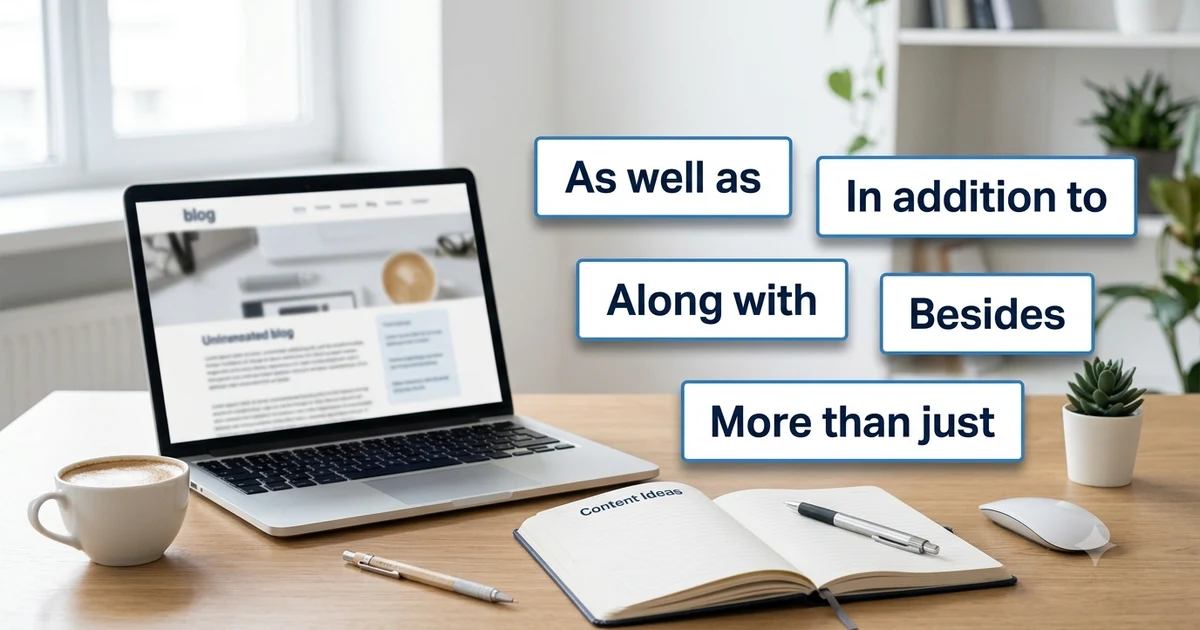
The phrase not only helps you add emphasis and connect ideas, but using it too often can make your writing sound repetitive. Whether you are writing an email, essay, business message, or social media post, knowing other ways to say not only can make your sentences sound more natural and engaging.
This guide explains the best alternatives, when to use them, and includes plenty of real examples so you can choose the right phrase for every situation.
Quick Answer
Other ways to say not only include besides, in addition to, as well as, beyond, along with, coupled with, more than just, over and above, and on top of that. The best choice depends on whether you are writing formally, casually, or professionally.
TL;DR
- Meaning: Alternatives that replace or vary the phrase not only.
- Tone: Can be formal, neutral, or casual depending on the wording.
- Common use: Essays, emails, presentations, conversations, and creative writing.
- Where it appears: Academic writing, workplace communication, blogs, and everyday speech.
- Formal or informal: Some alternatives fit professional writing, while others work better in casual conversation.
What Does Not Only Mean?
Not only is a phrase used to emphasize that one thing is true while introducing another important point. It often appears in the structure not only… but also, which highlights two related ideas.
For example:
- The course was not only informative but also enjoyable.
- She not only completed the project early but also helped her teammates.
In many situations, you can replace not only with another expression that keeps the sentence clear while avoiding repetition.
Why Use an Alternative?
Using different expressions can improve the flow of your writing and help you match the right tone.
Reasons to use an alternative include:
- Avoid repeating the same phrase.
- Make your writing sound more natural.
- Match formal or informal situations.
- Improve readability.
- Add variety to essays, reports, and emails.
15 Other Ways to Say Not Only
| Alternative | Best For | Tone |
|---|---|---|
| As well as | Essays, professional writing | Neutral |
| In addition to | Formal writing | Formal |
| Besides | Everyday conversation | Casual |
| Along with | General writing | Neutral |
| Beyond | Emphasis | Neutral |
| Coupled with | Business writing | Formal |
| More than just | Marketing, blogs | Friendly |
| Not to mention | Conversation | Casual |
| On top of that | Informal speech | Casual |
| Over and above | Business and legal writing | Formal |
| Together with | Reports and documents | Formal |
| Added to that | Conversation | Casual |
| Plus | Informal writing | Casual |
| Including | General writing | Neutral |
| As an added benefit | Professional communication | Formal |
1. As Well As
As well as is one of the closest and most natural replacements. It connects two related ideas without sounding repetitive.
Examples
- She speaks Spanish as well as French.
- The package includes installation as well as technical support.
- The restaurant serves breakfast as well as lunch.
Best for: Professional writing, essays, and everyday English.
2. In Addition To
This phrase works well in formal documents, reports, and business communication.
Examples
- In addition to your resume, please submit two references.
- The company offers health insurance in addition to retirement benefits.
- Students receive online resources in addition to classroom instruction.
Best for: Academic and workplace writing.
3. Besides
Besides is common in everyday conversation and informal writing.
Examples
- Besides saving money, cycling is good exercise.
- Besides that movie, have you watched anything interesting?
- Besides coffee, we also serve tea.
Best for: Casual conversations and blogs.
4. Along With
Along with naturally joins two related items or actions.
Examples
- Please send your portfolio along with your application.
- She brought snacks along with drinks.
- The hotel offers free breakfast along with Wi-Fi.
Best for: General writing and business communication.
5. Beyond
Beyond emphasizes something extra or unexpected.
Examples
- Beyond improving sales, the campaign increased customer trust.
- His support went beyond financial help.
- The software provides features beyond basic editing.
Best for: Professional and persuasive writing.
6. Coupled With
Coupled with creates a polished and professional tone.
Examples
- Experience coupled with strong communication skills makes a great manager.
- Good planning coupled with teamwork leads to better results.
- Affordable pricing coupled with quality service attracts customers.
Best for: Reports, presentations, and business writing.
7. More Than Just
This alternative adds emphasis and sounds conversational.
Examples
- This book is more than just a travel guide.
- The event was more than just a networking opportunity.
- He’s more than just a coworker; he’s a trusted friend.
Best for: Blogs, marketing, and personal writing.
8. Not to Mention
Use this when you want to add another point naturally.
Examples
- The hotel was affordable, not to mention close to the beach.
- She’s talented, not to mention hardworking.
- The laptop is lightweight, not to mention fast.
Best for: Informal speaking and writing.
9. On Top of That
This phrase is common in casual conversation.
Examples
- We finished the project early. On top of that, we stayed under budget.
- It started raining. On top of that, the train was delayed.
- He apologized. On top of that, he offered to fix the problem.
Best for: Friendly conversations and blog posts.
10. Over and Above
This expression has a formal tone and often appears in business or legal writing.
Examples
- Employees may receive bonuses over and above their base salary.
- The donation covered costs over and above our expectations.
- Services over and above the agreement require approval.
Best for: Contracts, reports, and professional documents.
11. Together With
Together with is another formal alternative that connects related ideas smoothly.
Examples
- The proposal, together with supporting documents, has been submitted.
- Parents, together with teachers, attended the meeting.
- The software comes together with free updates.
Best for: Reports and formal correspondence.
12. Added to That
This phrase sounds natural in conversation.
Examples
- Added to that, the customer received a full refund.
- Added to that, everyone arrived on time.
- Added to that, the weather was perfect.
Best for: Informal discussions and storytelling.
13. Plus
Plus is short, simple, and widely used in spoken English.
Examples
- The hotel is affordable, plus it’s downtown.
- Plus, you’ll get free shipping.
- Plus, the warranty lasts two years.
Best for: Casual conversation and online writing.
14. Including
Including works well when introducing additional items.
Examples
- The fee covers everything, including textbooks.
- Several countries, including Canada and Australia, joined the program.
- The package includes installation, training, and support.
Best for: General and professional writing.
15. As an Added Benefit
This phrase highlights an additional advantage.
Examples
- As an added benefit, members receive exclusive discounts.
- As an added benefit, the software includes cloud backup.
- As an added benefit, customers get priority support.
Best for: Marketing materials, presentations, and business communication.
Tone and Emotional Meaning
Different alternatives carry different tones. Choosing the right one helps your writing sound natural.
| Expression | Tone |
|---|---|
| As well as | Neutral |
| In addition to | Formal |
| Besides | Casual |
| Along with | Neutral |
| Plus | Very casual |
| Coupled with | Professional |
| More than just | Friendly |
| Not to mention | Conversational |
| Over and above | Formal |
| As an added benefit | Positive and professional |
Common Situations Where These Alternatives Appear
You can use these expressions in many types of writing and conversation.
- Professional emails where you want to sound polished.
- School essays that need varied sentence structure.
- Business reports and presentations.
- Cover letters and resumes.
- Blog posts and online articles.
- Product descriptions.
- Everyday conversations.
- Social media captions.
- Marketing copy.
- Customer service messages.
These alternatives help you avoid repetition while making your communication smoother and more engaging.
Examples in Real Conversations
Here are realistic examples showing how different alternatives work in everyday situations.
Situation: Workplace Email
Example
Manager: Please send the quarterly report along with the updated budget spreadsheet.
Employee: I’ll send both files before noon.
Meaning
Along with politely asks for an additional item.
Situation: Job Interview
Example
Interviewer: What makes you a strong candidate?
Applicant: I have five years of experience, coupled with strong leadership and communication skills.
Meaning
Coupled with creates a professional, confident tone.
Situation: Talking About a Vacation
Example
Friend: How was your trip?
You: The beaches were beautiful. On top of that, the food was amazing.
Meaning
On top of that adds another positive point naturally.
Situation: Product Recommendation
Example
Customer: Why should I buy this laptop?
Sales Associate: It offers excellent battery life as well as a lightweight design.
Meaning
As well as connects two important features smoothly.
Situation: College Essay
Example
Renewable energy reduces pollution. In addition to lowering emissions, it helps decrease long-term energy costs.
Meaning
In addition to creates a formal, academic tone.
Situation: Everyday Conversation
Example
Friend: Why do you like that café?
You: Besides the great coffee, the staff is always friendly.
Meaning
Besides introduces another reason in a relaxed, conversational way.
Situation: Marketing Copy
Example
This program is more than just an online course. It includes live coaching, downloadable resources, and community support.
Meaning
More than just emphasizes extra value.
Situation: Team Meeting
Example
Team Leader: We completed the project ahead of schedule. Added to that, we stayed within budget.
Meaning
Added to that highlights another achievement.
Similar Terms and Related Phrases
Many expressions have a similar purpose, but they are not always interchangeable.
| Phrase | Best Use | Difference |
|---|---|---|
| As well as | General writing | Smoothly joins two ideas |
| In addition to | Formal writing | More professional |
| Besides | Casual speech | Sounds conversational |
| Along with | Everyday writing | Focuses on accompanying items |
| Plus | Informal conversation | Short and relaxed |
| Not to mention | Speaking and blogs | Adds emphasis naturally |
| Moreover | Academic writing | Strong transition between ideas |
| Furthermore | Formal reports | Very formal connector |
| Also | General English | Simple addition without emphasis |
| Additionally | Professional writing | Formal alternative |
Not Only vs Also
- Also simply adds information.
- Not only… but also gives stronger emphasis.
Example:
Also:
The software is affordable. It also includes free updates.
Not only:
The software is not only affordable but also easy to use.
The second version sounds more emphatic.
Not Only vs As Well As
Both connect related ideas, but they create different emphasis.
Example:
The restaurant serves breakfast as well as lunch.
The restaurant not only serves breakfast but also offers all-day brunch.
The second sentence draws more attention to the added information.
Not Only vs Moreover
Moreover works best when starting a new sentence in formal writing.
Example:
The proposal reduces costs. Moreover, it improves customer satisfaction.
This style is common in reports and academic essays.
When You Should Use These Alternatives
Choose the phrase based on your audience and purpose.
Use as well as when you want a natural replacement that works almost anywhere.
Use in addition to for:
- Business emails
- Reports
- Academic papers
- Professional presentations
Use besides when speaking casually with friends or writing conversational content.
Use along with when mentioning accompanying people, documents, or items.
Use plus for:
- Text messages
- Casual blogs
- Social media posts
- Friendly conversations
Use coupled with when you want a polished, professional tone.
Use more than just when highlighting extra value in marketing or storytelling.
When You Should Avoid Certain Alternatives
Not every expression fits every situation.
Avoid plus in:
- Legal documents
- Academic research
- Formal business proposals
Avoid besides if your writing needs a highly professional tone.
Avoid not to mention in legal or technical documents because it sounds conversational.
Avoid on top of that in formal reports.
Avoid more than just when writing objective or scientific content.
Always match your wording to your audience.
Is It Formal or Informal?
Some alternatives fit nearly every context, while others are better suited to casual conversation.
| Phrase | Formal | Informal |
|---|---|---|
| As well as | ✓ | ✓ |
| In addition to | ✓ | Limited |
| Along with | ✓ | ✓ |
| Coupled with | ✓ | Rare |
| Besides | Sometimes | ✓ |
| Plus | No | ✓ |
| On top of that | No | ✓ |
| Not to mention | Rare | ✓ |
| More than just | Sometimes | ✓ |
| Over and above | ✓ | Rare |
For professional emails and workplace communication, the safest choices are:
- As well as
- In addition to
- Along with
- Coupled with
- Additionally
For conversations and social media, casual options usually sound more natural.
Common Misunderstandings
People sometimes assume these expressions all mean exactly the same thing. In practice, each carries a slightly different tone.
Some common mistakes include:
- Using plus in formal business writing.
- Replacing every instance of not only with besides, even when the sentence becomes awkward.
- Using moreover in casual conversation, where it may sound overly formal.
- Mixing as well as and also in the same sentence without a clear reason.
Reading your sentence aloud is often the easiest way to check whether the alternative sounds natural.
Usage in the USA and Other English-Speaking Countries
These alternatives are widely understood across the United States, Canada, the United Kingdom, Australia, and New Zealand.
A few general preferences include:
- As well as appears frequently in both British and American English.
- Plus is especially common in everyday American conversation.
- In addition to is standard in professional and academic writing across all English-speaking countries.
- Not to mention is common in both spoken and written English when adding emphasis informally.
Although preferences vary slightly by region and personal writing style, all of these expressions are familiar to native English speakers.
Quick Reference Table
| Context | Best Alternative | Tone | Best Use | Avoid If |
|---|---|---|---|---|
| Business email | In addition to | Formal | Professional communication | You want a casual tone |
| Academic essay | As well as | Neutral | Essays and reports | None |
| Workplace report | Coupled with | Professional | Business documents | Casual writing |
| Everyday conversation | Besides | Casual | Friendly discussions | Formal reports |
| Text message | Plus | Casual | Quick chats | Professional emails |
| Blog article | More than just | Friendly | Storytelling and marketing | Academic writing |
| Presentation | Along with | Neutral | Public speaking | Rarely needs avoiding |
| Legal document | Over and above | Formal | Contracts and policies | Casual communication |
Conclusion
Knowing other ways to say not only with examples helps you write with greater variety and confidence. Instead of repeating the same phrase, you can choose an alternative that matches your audience and purpose. For formal writing, expressions such as in addition to, as well as, and coupled with work well. In everyday conversation, besides, plus, and on top of that sound more natural. The best choice depends on the context. By understanding the tone and meaning of each option, you can make your writing clearer, more engaging, and easier to read.
Frequently Asked Questions
What are other ways to say not only?
Some of the most common alternatives include:
- As well as
- In addition to
- Along with
- Besides
- More than just
- Coupled with
- Plus
- Not to mention
- On top of that
Each option works best in different situations depending on the level of formality and the tone you want.
Can I replace not only with as well as?
Yes. In many sentences, as well as is a natural replacement.
Example:
Original:
She not only speaks French but also speaks Spanish.
Alternative:
She speaks French as well as Spanish.
The second version sounds smoother while keeping the same basic meaning.
Is not only formal or informal?
The phrase itself is neutral. It works well in:
- Professional emails
- Academic writing
- Business reports
- Everyday conversations
- Public speaking
Its formality depends more on the surrounding sentence than on the phrase itself.
What is the best alternative for business writing?
For professional communication, these options usually work best:
- In addition to
- As well as
- Along with
- Coupled with
- Additionally
These expressions sound polished and are appropriate for reports, proposals, and workplace emails.
Can I use plus instead of not only?
Yes, but only in casual situations.
Example:The hotel has free breakfast. Plus, it offers free parking.
This sounds natural in conversation, blogs, or text messages. For formal writing, choose in addition to or as well as instead.
Which alternative is best for academic writing?
Academic writing usually benefits from:
- In addition to
- As well as
- Moreover
- Furthermore
- Additionally
These connectors create a clear and professional flow between ideas.
What is the difference between not only and in addition to?
Not only emphasizes two connected ideas, often using the pattern not only… but also.
Example:
The workshop was not only informative but also practical.
In addition to simply adds another item or point.
Example: In addition to the workshop, participants received study materials.
The first emphasizes both qualities, while the second introduces extra information.